

 The Guardian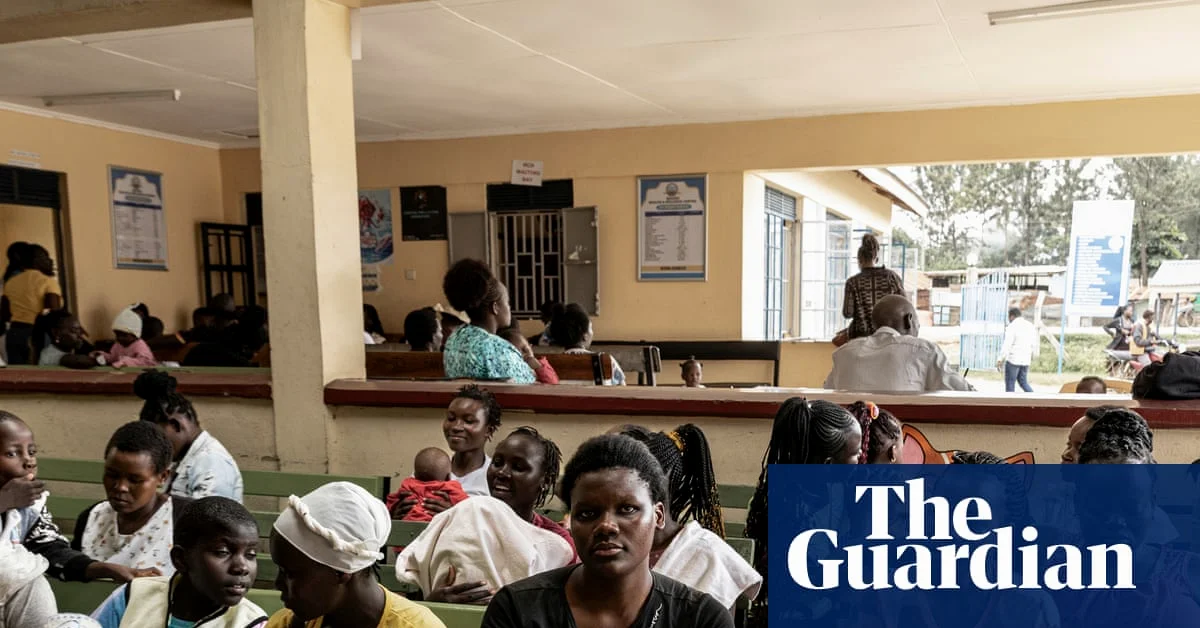
An AI system used to predict how much Kenyans can afford to pay for access to healthcare, has systemically driven up costs for the poor, an investigation has found. The healthcare system being rolled out across the country, a key electoral promise of President William Ruto, was launched in October 2024 and intended to replace Kenya’s decades-old national insurance system.
AI-Powered System Meant to Expand Access, But Overcharging the Poor
Billed as “accelerating digital transformation”, it aimed to expand access to care to Kenya’s large informal economy: the day labourers, hawkers, farmers and non-salaried workers that make up 83% of its workforce. “No Kenyan will be left behind,” Ruto told a crowded stadium in Kericho during his 2023 presidential campaign, announcing that every citizen would soon have access to affordable healthcare.
But his solution has instead sparked protests and anger, as healthcare contributions for millions of people are now calculated via a formula described as “flawed” and which sources have said has almost no transparency. That solution, which Ruto has described as AI-powered, does not rely on the recent advances in artificial intelligence which underpin large language models such as ChatGPT – instead it uses a predictive machine learning algorithm.
Overestimating Poor Households, Underestimating the Wealthy
It now determines healthcare contributions for millions of people through a means-testing process. Through months of investigation, reporters at Africa Uncensored, in collaboration with Lighthouse Reports and the Guardian, were able to obtain key details of this system and audit how it worked. The findings reveal how, from the start, it was systematically overcharging the poorest Kenyans, overestimating their incomes, while undercharging the wealthiest by underestimating their incomes.
Every day, Grace Amani* sits in people’s homes to ask them questions from the odd to the intrusive. What type of toilet do you use? What is your roof made of? Do you own a radio? She helps the occupants answer dozens of these questions – pit latrine, iron-sheet roof, no radio – on a digital questionnaire on their phones. People are often confused; some fear they are under investigation.
When the form is complete, a number comes back as the algorithm calculates the sum the household must pay that year for public health insurance. The mother of 10 is also among those who claim the system is not working as it should and is punishing the least well-off. The people Amani registers are some of the poorest in Nairobi, Kenya’s capital, yet most are charged fees they cannot afford.
Flawed Algorithm Leads to Unaffordable Premiums
She has watched families struggling to feed themselves charged a premium far beyond their means, many facing a sum of between 10% and 20% of meagre incomes. Amani has also seen critically ill people who cannot get treatment because they have not been able to pay the amount the AI system says they should. “People are dying, people are suffering,” she said. The people she sees are exactly those the government promised would benefit most from the AI-driven health reforms.
Those with the lowest incomes were supposed to be charged the minimum premium, or have their costs covered entirely. “They thought it was something that would help them,” Amani said. Since its launch, the Social Health Authority (SHA) has been met with a barrage of criticism for misclassifying people, and setting unaffordable or incomprehensible premiums.
Kenyans without private insurance who do not pay their SHA premiums risk being turned away from health facilities or presented with steep hospital bills. For some, this has meant they can no longer access treatment. “People are dying at home,” Amani said. “Many people have been unable to go to hospital. Will they pay SHA, or pay for food, or pay for the small house they live in?”
On social media, Kenyans have flooded comment sections with accounts of charges they cannot pay. “From struggling to pay 500 Kenyan shillings [£2.90] previously to being billed 1,030 Kenyan shillings,” one wrote. “God have mercy on me,” wrote one single mother, after her monthly contribution was set at 3,500 Kenyan shillings.
David Khaoya, a health economist who advised Kenya’s health ministry, said that when faced with the known flaws in the SHA’s formula, a choice was made. The system’s constraints meant that it could either correctly assess poor households, or correctly assess rich ones. Khaoya said the government chose to prioritise accurately evaluating the wealthy, even if that meant overcharging the poor.
“If you identify a richer person as poor and therefore ask him to pay less, this person will never own up and say, ‘I’m actually supposed to be paying more,’” he said. Kenya’s algorithmic healthcare system is structured on a decades-old World Bank bugbear: proxy means testing (PMT), a way of estimating the incomes of the poor based on their possessions and other life circumstances, such as how many children they have or whether they live alone.
PMT has been used in World Bank-funded programmes “all over Africa, all over Asia and the Pacific”, said Stephen Kidd, a development economist. It has often been set as a condition for a government to receive a loan. In Kenya, this has meant deploying government volunteers such as Amani to households across the country to register their roofing materials, livestock and children, and feeding those details into an opaque algorithm to decide how much they earn and how much they must pay.
The audit tested the system against thousands of real households. For family after family, the system overestimated their means. For two farmers, their income was predicted as twice what it actually was based on the fact that they have electricity and own their house. Systems similar to the one built by SHA have been quickly spreading around the world in recent years, often pushed by the World Bank or other international donors.






Comments
No comments yet
Be the first to share your thoughts