

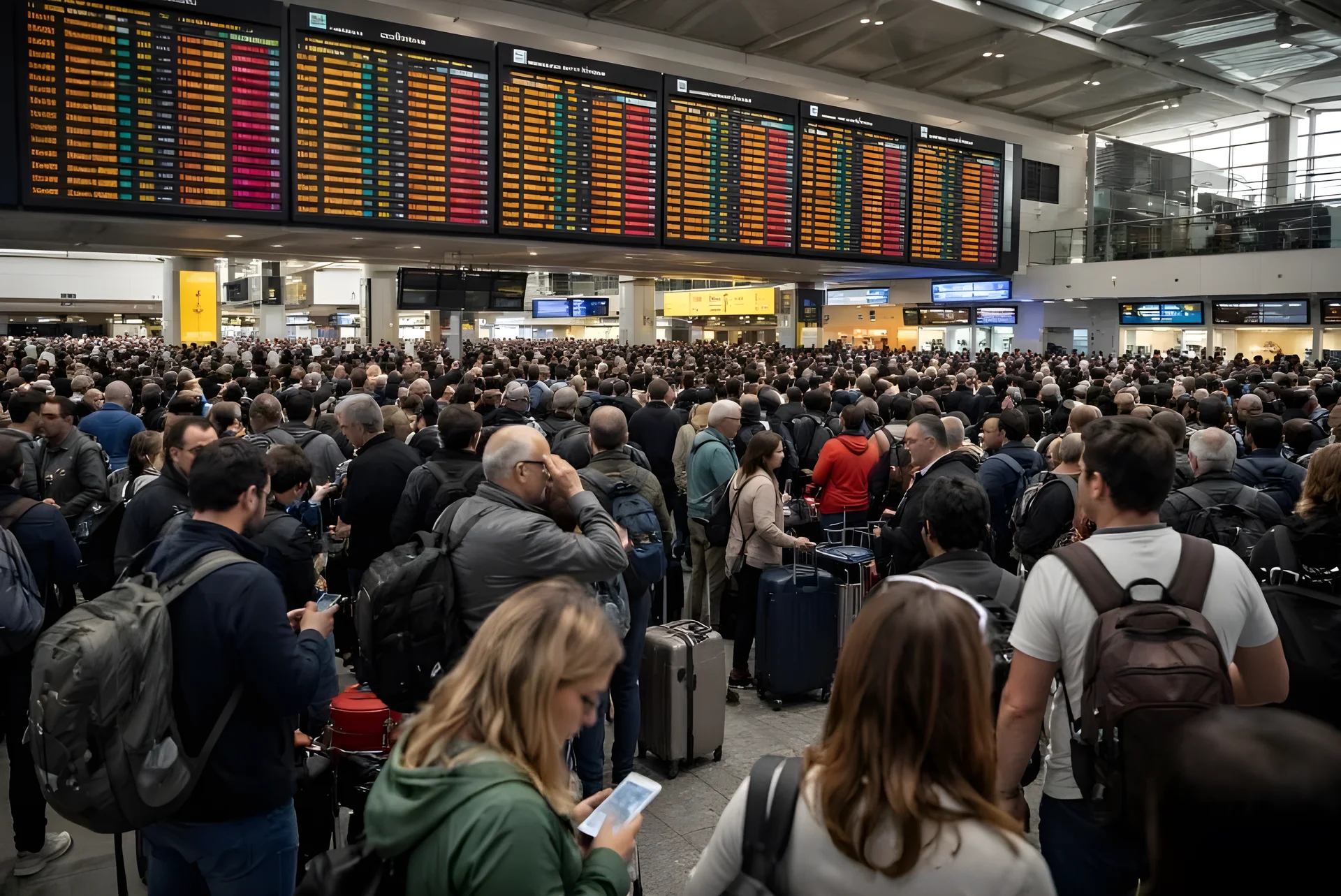
Travelers across France, the Netherlands, Germany, and other European countries are experiencing significant disruptions as major airlines report a staggering 272 delayed flights and 32 cancellations. The chaos has affected key cities including London, Munich, and several other European hubs, straining airport operations and leaving passengers in a state of uncertainty.
Impact on Major Airports
London Heathrow (LHR), one of the world’s busiest airports, has recorded 8 flight cancellations and 35 delays. These disruptions are particularly challenging for passengers on long-haul flights, who may now face extended waits and potential rebooking issues. Heathrow officials have urged travelers to check their flight status frequently and remain in contact with their airlines for updates on rebookings or compensation.
Paris’ Charles de Gaulle Airport (CDG) is facing 7 cancellations and 46 delayed flights. The high volume of delays is causing travelers to adjust their schedules and replan connecting flights. For those traveling to or from Paris, it is advisable to arrive early and be prepared for potential delays, especially on long-haul routes. The disruptions are also impacting the airport’s overall flow, leading to crowded terminals and longer wait times.
Amsterdam Schiphol Airport (AMS) has recorded 9 cancellations and 51 delayed flights. As a hub for European flights, this means a considerable number of passengers are affected, including those traveling to destinations in North America, Asia, and the Middle East. Travelers are advised to stay updated via the Schiphol app or the airline’s notifications to track their flight’s real-time status.
Disruptions Across Key European Airports
Frankfurt Airport (FRA), one of Europe’s largest aviation hubs, has seen 2 cancellations and 37 delayed flights. While these numbers are relatively lower compared to other airports, the cancellations are still causing travel disruptions, particularly for passengers flying to connecting destinations across Europe. Travelers are urged to remain in contact with their airlines for information on alternate flights and potential compensations.
Munich Airport (MUC) has 3 flights canceled and 14 delayed. Although the number of cancellations is relatively small, the delays are significant for both regional and international travelers. Those on connecting flights are encouraged to monitor their next travel leg and allow for extra time between connections. Munich Airport officials recommend arriving at least 2 hours before your scheduled departure time for international flights.
Rome’s Fiumicino Airport (FCO) is reporting 1 cancellation and 33 delays. The cancellations are minimal, but the delays are affecting travelers, especially on European routes. Those with connecting flights from Rome may experience longer waiting times. It’s advised to confirm new boarding times with the airline and make sure you have enough time to reach the gate.
Madrid Barajas (MAD) has reported 0 cancellations and only 16 delays, making it one of the least affected airports in Europe. Although there are still some delays, overall, it’s a smoother experience for passengers traveling through this hub. However, passengers are advised to check their flight status regularly to ensure timely travel.
Airlines Report Mixed Impacts
Zurich Airport (ZRH) is dealing with 23 delayed flights, with no cancellations. Passengers traveling to European and international destinations from Zurich should be prepared for delays but should not expect cancellations. It is important for travelers to monitor their flight status and arrive well in advance to avoid complications.
Copenhagen Airport (CPH) has 2 cancellations and 17 delays. As Denmark’s busiest airport, these disruptions are causing some travel headaches. Passengers are encouraged to confirm with their airlines about any changes to their itinerary and consider alternative transportation options if necessary.
Ryanair, one of Europe’s leading low-cost carriers, is experiencing minimal disruption today with no cancellations and just 2 delayed flights. While delays are always inconvenient, the airline’s efficient operations have ensured that the impact remains relatively low compared to other major airports and airlines facing widespread disruptions. Travelers flying with Ryanair can be reassured that, despite the delays, their journey will likely be smoother.
KLM, the flag carrier of the Netherlands, is facing minimal disruption today, with no cancellations and just 1 delayed flight. This indicates the airline’s strong operational reliability, ensuring that most passengers are able to continue their journeys with minimal inconvenience. Travelers flying with KLM can be confident in the smooth running of their flights, but it’s still advisable to stay updated on any changes through the airline’s app or website.
Austrian Airlines is experiencing minimal disruption today, with no cancellations and just 1 delayed flight. This reflects the airline’s efficient operations, ensuring that most passengers face no significant delays. Although the disruption is minor, travelers are encouraged to check their flight status regularly via the airline’s app or website for any updates.
easyJet is experiencing minimal disruption today, with no cancellations and just 3 delayed flights. While the delays may cause some inconvenience, they are relatively limited compared to other airlines. Travelers flying with easyJet should stay informed by checking the flight status regularly through the airline’s app or website. It’s also recommended to arrive at the airport on time and keep in touch with the airline for any potential updates to ensure a smoother journey.
Iberia is currently experiencing minor disruptions with no cancellations and 4 delayed flights. While the delays are a bit higher than usual, they remain relatively manageable. Passengers are advised to monitor their flight status closely and ensure they are aware of any changes to their travel plans.
The travel disruptions at major European airports are causing significant headaches for passengers, with cancellations and delays affecting both short-haul and long-haul flights. As the travel industry continues to recover, these disruptions can be frustrating for passengers trying to reach their destinations. If you’re traveling through any of these key European airports, it is crucial to stay informed and flexible with your travel plans to handle through the chaos.





Comments
No comments yet
Be the first to share your thoughts