

 BBC News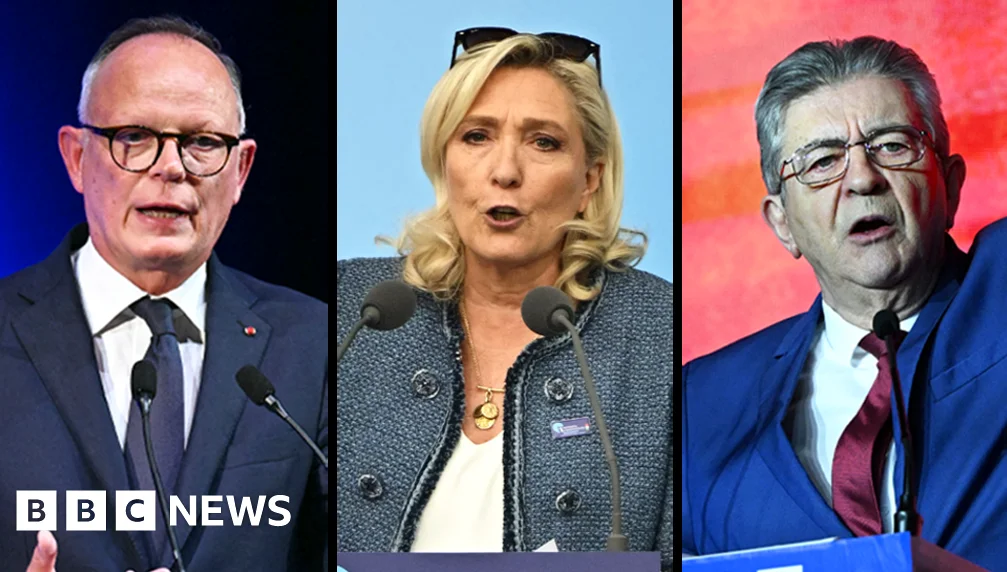
With a year until France chooses its next president, the big question is who can prevent the election from becoming a battle between the political extremes. For now. The answer appears to be Edouard Philippe, the former prime minister under President Emmanuel Macron. According to latest opinion polls. The 55-year-old is the only figure capable of defeating a hard-right candidate like Marine Le Pen or her deputy Jordan Bardella in a second-round vote next May.
Philippe’s Strategic Position in the Race
Philippe, who leads the small centrist party Horizons, is also best positioned to prevent hard-left candidate Jean-Luc Mélenchon from reaching the run-off. This is seen as a nightmare scenario by French business interests and European partners, as it would leave voters choosing between a hard-left and hard-right candidate. Supporters of Philippe believe his emergence as the natural candidate for the French centre-right could set him on a path to victory.
They expect other contenders from the same political space, including Gabriel Attal of Renaissance and Bruno Retailleau of the Republicans, to acknowledge Philippe’s lead by the end of the year and step aside diplomatically. In the unique structure of France’s multi-candidate first round of the presidential election, having too many candidates vying for the same slice of the electorate can split the vote and prevent any from reaching the second round.
Challenges and Uncertainties Ahead
Despite his current lead, Philippe is moving his campaign forward with caution. In a recent meeting in Reims, he announced his three campaign directors and adopted the Gaullist slogan “France Libre (Free France).” On economic matters, he leans to the right, supporting a further increase in the retirement age and a law to ensure balanced budgets—both issues that could be the subjects of early referendums if he is elected next year.
In June, he plans to launch an creative communications stunt by beaming himself into 1,000 living rooms across France for a mass “apartment meeting.” His first rally as a candidate will take place on 5 July in Paris. According to Le Monde, Philippe hopes the election framework will be framed as a face-off between him and the National Rally (RN), with himself as the natural barrier to the far-right coming to power.
However, several challenges remain. There is no guarantee that his rivals in the centre-right space will step aside, and even if they do, they may continue their campaigns, potentially creating divisions that could be exploited by his real opponents. The challenge from the centre-left, including the Socialists and their allies, is also a concern. They are divided over who to choose as a candidate and how to do so, with the possibility of four or five names appearing on the ballot.
Populist Momentum and the Road to May
Philippe’s main challenge comes from the populist right, which is gaining momentum ahead of the election. Anti-elite sentiment, economic insecurity, and declining public services have created a fertile ground for candidates of radical change. Philippe, as a figure from the old power system and a former prime minister under Macron, is an easy target for his critics. A corruption probe into his actions as mayor of Le Havre could further complicate his campaign, with his team insisting the accusations of favoritism are untrue.
On 7 July, two days after Philippe’s Paris rally, an appeal court will deliver a sentence in the National Rally’s EU money trial. The outcome could determine whether Marine Le Pen is ineligible to run next year. Polls suggest that whether she can run or not makes little difference, as Jordan Bardella, the RN’s media-savvy deputy, scores well with the electorate. Philippe is reportedly hoping for Bardella’s candidacy, as he believes the 30-year-old’s inexperience will become a liability, whereas Le Pen is a seasoned campaigner with a strong connection to voters.
The National Rally, a nationalist party, seeks to limit immigration, for example by stopping families from joining migrant workers and ending the right to nationality for those born in France. The party also aims to lower the retirement age to 62. On the hard-left, Jean-Luc Mélenchon of the France Unboud (LFI) has declared his candidacy and promised to dismantle media empires of French billionaires. He has built a strong support base in the high-immigration suburbs and among young, university-educated voters who feel left behind.
In 2022, Mélenchon came close to qualifying for the second round against Macron. He believes his destiny is to face the far right. “When the rest are gone, it’ll be me and her,” he has said. But in a “battle of the extremes,” all polls suggest that the clear winner would not be Mélenchon, but rather someone like Philippe, who is seen as a moderate alternative to the populist extremes.






Comments
No comments yet
Be the first to share your thoughts