

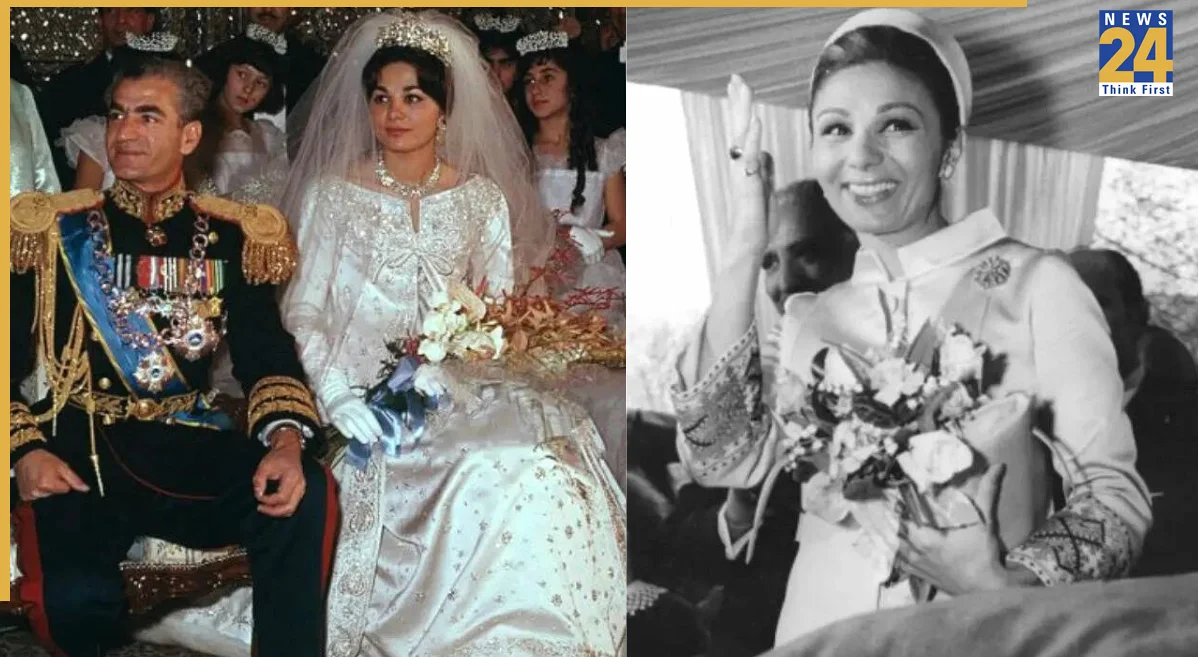
Farah Pahlavi, the last Empress of Iran, once stood at the center of a modernizing monarchy. Born on 14 October 1938, she rose from a modest background to become the wife of Mohammad Reza Pahlavi, the last Shah of Iran, and the first crowned empress in modern Iranian history. Her journey from a young architect in Paris to a symbol of a progressive Iran ended with her departure from the country in 1979, following the Islamic Revolution that overthrew the monarchy.
The Path to the Throne
Farah Pahlavi met Mohammad Reza Pahlavi in 1959 at an embassy reception in Paris, where the Shah was visiting. She was 21 at the time, and the Shah was 39. The couple announced their engagement on 1 December 1959, and married just three weeks later. Their wedding was a global event, blending traditional Islamic rituals with Western pomp.
Farah wore a tiara adorned with the 60-carat Noor-ul-Ain pink diamond, a piece designed by Harry Winston. Her wedding gown was crafted by Yves Saint Laurent. The ceremony was followed by a grand celebration that drew international attention. As the Shah’s third wife, Farah faced the pressure of producing a male heir, a role that would define much of her early life.
She gave birth to four children: Crown Prince Reza (1960), Princess Farahnaz (1963), Prince Alireza (1966), and Princess Leila (1970). Her role as the Shah’s wife evolved into that of a public figure who actively supported social and economic reforms in Iran.
A Progressive Voice in a Changing Iran
Farah Pahlavi was known for her elegance, her advocacy for women’s rights, and her efforts to modernize Iran. She played a key role in promoting education, healthcare, and the welfare of children and the disabled. Her work with leprosy patients was particularly notable; she visited affected communities and convinced the Shah to provide land for them to live and work in better conditions.
She also championed cultural events such as the Shiraz Festival of Arts and the Tehran International Film Festival, helping to elevate Iran’s cultural profile on the world stage. Her influence extended beyond the royal family, and she was often referred to as the ‘Jackie Kennedy of the East’ for her style and grace.
In 1967, during the Shah’s coronation, Farah was officially crowned Shahbanu, the title of the Empress of Iran. This made her the first crowned empress in modern Iranian history. The Shah also declared that she would serve as regent if he died or became incapacitated before the Crown Prince turned 21 — a rare move in the Middle East.
The Fall of the Monarchy and the Exile
The Shah’s rule, while marked by modernization, also faced significant criticism. His regime was known for authoritarian governance, the use of SAVAK (the secret police), and the suppression of dissent. The unequal distribution of oil wealth and corruption further fueled public discontent.
Under the leadership of Ruhollah Khomeini, opposition to the Shah’s Western-oriented policies grew. Khomeini called for an Islamic Republic, and protests against the monarchy intensified. By 1979, the situation had reached a breaking point.
On 16 January 1979, the Shah and Empress Farah left Iran amid widespread protests and political unrest. The monarchy was abolished, and Iran became an Islamic Republic. The Shah never returned to power, and Farah Pahlavi has remained in exile since then.
The fall of the Pahlavi dynasty marked the end of an era. Farah Pahlavi, once a symbol of modernity and progress, became a figure of the past, representing a time when Iran was moving toward Western-style reforms. Her story is a reflection of the complex interplay between tradition and modernity in the Middle East.
Today, Farah Pahlavi is remembered as a woman who championed social reform and the rights of women and children. Her legacy continues to be studied by historians and political analysts who examine the rise and fall of the Iranian monarchy.






Comments
No comments yet
Be the first to share your thoughts