

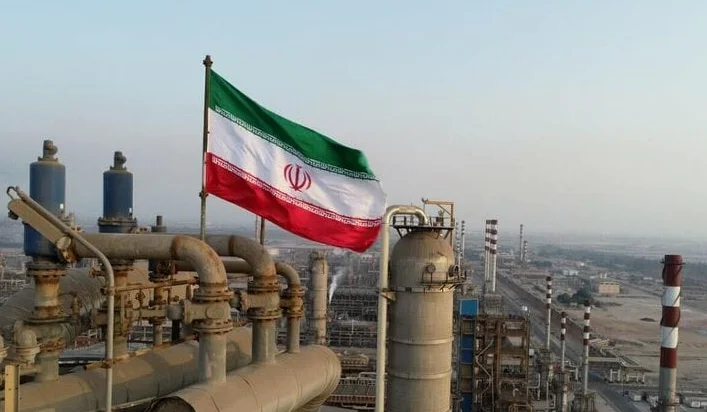
G7 nations have convened an emergency meeting to address surging oil prices, which have climbed above $100 a barrel, as global stock markets plummet amid the escalating US-Israeli conflict with Iran. Finance ministers from leading industrialized countries, including UK Chancellor Rachel Reeves, will gather to discuss the economic impact of the conflict and potential measures to stabilize energy markets.
Energy Supply Disruptions Fuel Price Surge
Global oil prices reached nearly $120 on Monday over fears of a prolonged disruption to energy supplies through the key Strait of Hormuz shipping route. About a fifth of the world’s oil supply is usually shipped through the Strait of Hormuz, but traffic has all but halted since the war started more than a week ago. This has led to a sharp rise in oil prices, with Brent crude jumping over 25% to touch $119.50 a barrel before falling back to around $107.
US West Texas Intermediate (WTI) crude saw similar movements and was trading at about $104 a barrel. The Financial Times reported the G7 meeting will discuss a joint release of petroleum from reserves, coordinated by the International Energy Agency (IEA). If reserves are released by IEA members, it would be the first time since 2022, when action was taken following Russia’s full-scale invasion of Ukraine.
Escalating Conflict and Market Reactions
The US and Israel launched fresh waves of airstrikes across Iran over the weekend, hitting multiple targets including oil depots. Meanwhile, Iran targeted energy infrastructure in neighboring Gulf states. Overnight, Saudi Arabia said it had intercepted and destroyed two waves of drones heading towards a major oilfield.
On Sunday, Iran named Mojtaba Khamenei to succeed his father Ali Khamenei as Supreme Leader, signaling that more than a week into the conflict, hardliners remain in charge of the country. The escalations over the weekend, alongside scenes of destruction of energy infrastructure both in Iran and across the Gulf, saw the markets take rapid fright.
Gas prices also jumped. UK gas prices for month-ahead delivery surged by nearly 25% to 171p a therm when trading started on Monday, before slipping back to about 156p a therm. Gas prices have now doubled since before the war in Iran began, although they remain well below the 640p peak reached in 2022 following Russia’s invasion of Ukraine.
Economic Implications and Market Volatility
European stock markets were lower, following steep falls earlier in Asia. Germany’s Dax index dropped 1.6% while France’s Cac 40 index was down 2%. In London, the vast majority of shares in the FTSE 100 were down, although oil giants BP and Shell were among the few companies to see an increase.
Earlier, Japan’s Nikkei 225 index dropped 5.2%, while South Korea’s Kospi index closed down 6%. At one point trading on the Kospi was halted for 20 minutes by a so-called circuit breaker—a mechanism designed to curb panic selling. UK government borrowing costs have continued to rise. On Monday, the yield—or interest rate—on two-year government bonds rose to 4.12% from 3.93%.
The yield on benchmark 10-year bonds has now risen to 4.76%, up from a rate of about 4.3% before the conflict began. Adnan Mazarei from the Peterson Institute for International Economics said the jump in oil prices was expected, given how production has been halted in some Gulf countries and the signs of a prolonged conflict in the region.
“People are realizing that this won’t end quickly,” he said, adding that the promises of insurances and objectives laid out by the US are “becoming more unrealistic.”
US President Donald Trump, who campaigned on bringing down the cost of living, has repeatedly dismissed concerns about rising oil prices. On Sunday, he posted on his Truth Social platform: “Short term oil prices, which will drop rapidly when the destruction of the Iran nuclear threat is over, is a very small price to pay for U.S.A., and World, Safety and Peace. ONLY FOOLS WOULD THINK DIFFERENTLY!”
His Energy Secretary, Chris Wright, told US broadcasters on Sunday that Israel, not the US, was targeting Iran’s energy infrastructure, amid some concern about rising domestic pump prices caused by the war. Data from motorists group AAA showed the average price for regular gasoline in the US rose 11% last week to $3.32 a gallon.
Paul Gooden, head of natural resources at NinetyOne Asset Management, told the BBC’s Today programme that the question everyone is asking themselves is, “what is the duration of this conflict?” He added that the oil price could rise to a level where “you see so-called demand destruction,” where consumers cut back their consumption of oil, which he considered to be $120-$150 a barrel.
“I think temporarily you could see an oil price in that range. I don’t think it can stay there… at some point there’ll be a resolution.”






Comments
No comments yet
Be the first to share your thoughts