

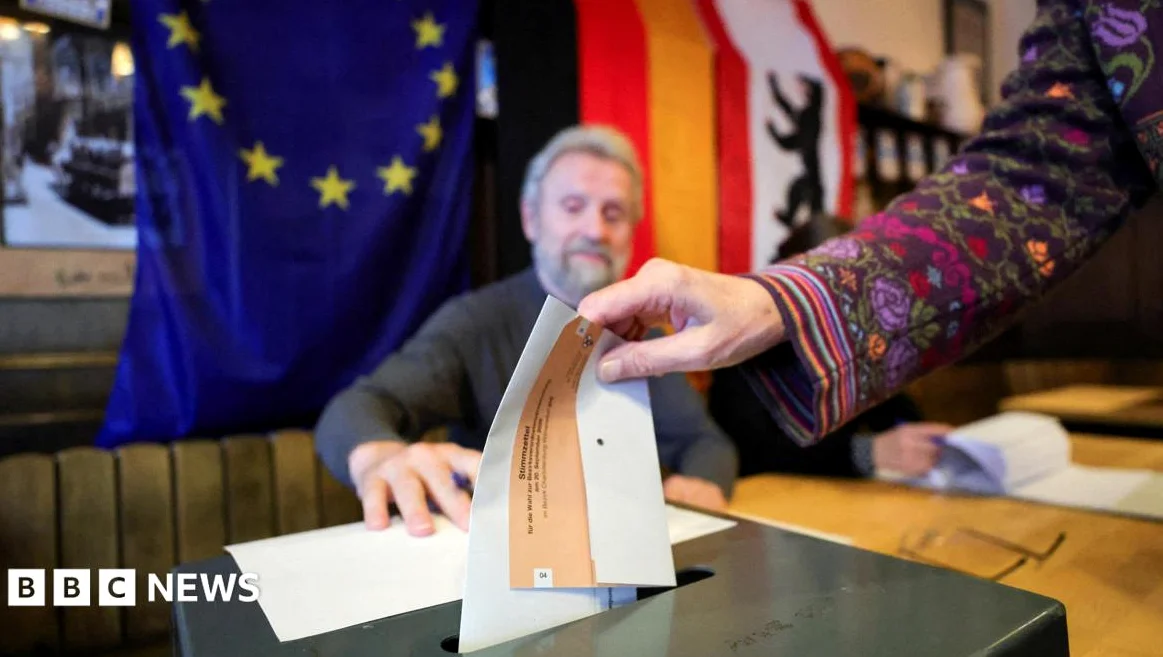
German elections underway in Mecklenburg-Vorpommern could determine the future of Chancellor Friedrich Merz and his CDU party, according to BBC, though the CDU has only just been hovering above the 5% threshold needed to enter the state parliament. It could spell their worst ever result in a state election.
Political Challenges for Merz
Friedrich Merz is having to answer for the tumbling popularity of his own party, while the political force that he aimed to counter,the AfD,continues its rise. Some branches of the AfD are classed as right-wing extremist by domestic intelligence, a designation it strongly rejects, its anti-immigration, Russian-friendly, Germany-first agenda has found fertile ground in the country’s former communist east.
The AfD is hoping to build on its recent landslide win in Saxony-Anhalt by topping the polls in Mecklenburg-Vorpommern — However, the centre-left SPD has staged a late comeback to be in contention for the top spot through its lead candidate, Manuela Schwesig. Currently the state premier, Schwesig is trying to sweep up the anti-AfD vote as she bills herself as the “Die Frau gegen Blau”,”Woman against Blue”, the AfD’s party colours.
Coal Exit and Energy Plans
Germany’s coal exit is progressing quietly and is likely to be completed by 2032, according to a researcher from Clean Energy Wire — the country’s coal exit law, agreed in 2020, provides for the step-by-step decommissioning of coal power plants. It also stipulates that coal-fired power generation must cease by 2038 at the very latest. Germany’s western coal region aims for an earlier phase-out by 2030, but delays in building new gas-fired power plants as a backup for renewables make meeting this earlier deadline increasingly unlikely.
Chancellor Friedrich Merz said Germany’s coal phase-out plans “have become unrealistic” given the fallout from the Iran war, and delays in building gas-fired power plants as a backup for renewables. Hauke Hermann, a researcher, said the previous energy crisis triggered by Russia’s invasion of Ukraine in 2022 showed that the coal exit agreement is well prepared for dealing with this kind of situation. Plant decommissionings can be temporarily halted, and plants can return to the market if needed. The agreement therefore has built-in “responsive” mechanisms that provide implementation flexibility.
Public Sentiment and Political Strategy
In a queue for a campaign event in the city of Neubrandenburg, AfD supporter Reinhart said traditional parties are being washed away. “Not only in Germany. In Italy, in France, in Great Britain. Everywhere the traditional parties go down.” He smiled when asked what he thinks of Merz, saying: “Oh well everyone thinks the same about him.
The SPD’s national party is locked in a loveless coalition with Merz’s CDU. The AfD’s rise continues, fueled by its anti-immigration stance and support in eastern Germany. The SPD’s lead candidate, Schwesig, is attempting to consolidate anti-AfD support, using her local popularity to challenge the CDU’s dominance in the state.
Amid the energy price shock caused by the Iran war, some industry voices called for activating reserve coal plants to curb power prices, an idea already mentioned in the government’s coalition agreement. The energy crisis has triggered calls for slowing Germany’s coal exit, but the flexibility in the coal exit agreement suggests it remains achievable, according to Hauke Hermann.



Comments
No comments yet
Be the first to share your thoughts