

 BBC
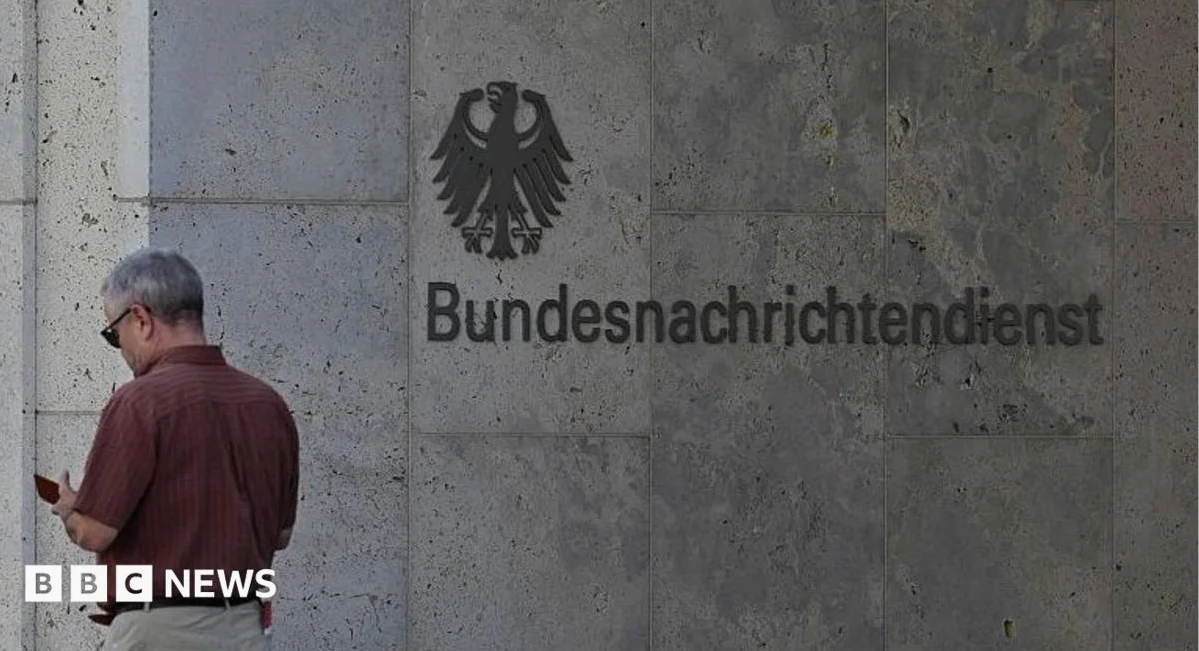
Germany’s parliament, the Bundestag, approved new legislation on 2026-11-13 that significantly expands the powers of the country’s intelligence agencies. The reform, supported by the governing Christian Democrats and Social Democrats, grants the BND (Bundesnachrichtendienst) and the BfV (Federal Office for the Protection of the Constitution) new authority to conduct covert operations and disrupt threats from abroad and within.
Expanded powers for BND and BfV
The legislation allows the BND, which handles foreign intelligence, to conduct sabotage and cyber operations against foreign adversaries. This includes the ability to paralyze servers of state-sponsored hackers, disrupt disinformation networks and interfere with supply chains for weapons. For the first time, the BND will also be able to take direct action abroad to neutralize threats.
For the domestic BfV, the changes mean they can now take protective action against property and IT systems if specific threats are identified. They will be permitted to dismantle explosives, block data flows during cyberattacks, delete or falsify malicious data, and plant false information. BfV agents will also be allowed to enter homes covertly under advance authorization. They will gain expanded digital surveillance capabilities, including the use of AI and biometric analysis.
Controversy and Concerns
The reform has drawn sharp criticism from some opposition politicians. Clara Bünger, security spokeswoman for the Left Party, accused Interior Minister Alexander Dobrindt of creating a new German secret police. She warned that the separation between the police and secret services was being eroded, referencing lessons from the Nazi era.
“This means the secret service is being granted executive powers and will not only be allowed to act pre-emptively, but will also be granted police powers,” Bünger said in an interview with public broadcaster ARD.
Dobrindt, however, defended the reform as necessary to address growing threats. He called it a “reform of the century” and dismissed concerns about creating a secret police as “madness.” He said Germany was a “theatre of operations” for terrorism, extremism and foreign powers.
Context and Recent Events
The reform follows a failed drone attack at Leipzig Airport in August 2026, where a drone carrying an explosive device was discovered near Ukrainian cargo planes. German authorities have linked the incident to Russia, which has denied involvement. The accusation led to the closure of the Russian Consulate General in Bonn and the Russian House in Berlin, with Moscow responding by shutting down a German consulate in St Petersburg and the Goethe-Institut.
Florian Bigge, programme director at think tank Korber-Stiftung, told Al Jazeera that the reform is a direct result of the “Zeitenwende” — an epochal change in Germany’s foreign policy since Russia’s invasion of Ukraine in 2022. He said the BND had publicly sought expanded powers since 2024, and the legislation was approved amid an increasingly uncertain international security environment.





Comments
No comments yet
Be the first to share your thoughts