

 The Guardian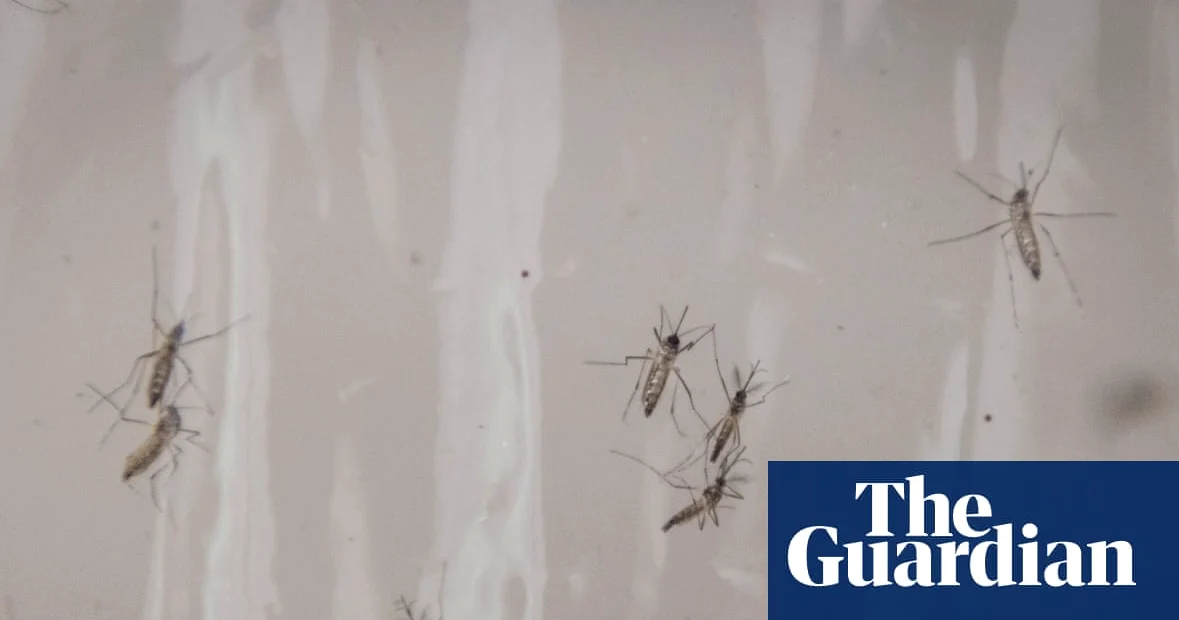
Google’s Tech-Driven Approach to Mosquito Control
Google’s “Debug” program aims to “stop bad bugs with good bugs” by using sterilized male mosquitoes to curb the spread of illness. The company has petitioned the US Environmental Protection Agency (EPA) for an experimental use permit to release up to 16 million mosquitoes annually in Florida and California over two years.
The initiative builds on a scientific method known as the sterile insect technique, which has been used for decades to manage pest populations, while Google’s approach involves rearing male mosquitoes infected with a naturally occurring bacteria called wolbachia. When these males mate with wild females, the resulting eggs do not hatch, reducing the mosquito population over time.
Eric Caragata. An assistant professor at the University of Florida, told USA Today that the use of wolbachia for sterilization has been in practice for about 15 years. Google, however, is scaling the method using advanced technology and automation to improve efficiency and accuracy in mosquito rearing and release.
Progress in Singapore and Expansion Plans
Google’s Debug program has already seen success in Singapore, where the company has released millions of wolbachia-infected male mosquitoes. According to a May 11 blogpost. The country has achieved 80-90% suppression of the Aedes aegypti mosquito population and more than 70% fewer dengue cases after 6 to 12 months of releases.
Linus Upson. The head of Debug. Said the success in Singapore has given the company the confidence to expand its efforts. “Our goal was to advance mosquito production and releases through technology and bring Debug to more communities in Asia, where 70% of the global dengue burden occurs,” he said.
Google announced in May that it would be expanding its Singapore site and is now seeking to replicate the model in the United States; the Aedes aegypti species, which spreads dengue, Zika, yellow fever, and chikungunya, remains a major target of the initiative.
Alphabet’s Science Legacy and Acquisition of Debug
Verily Health. A former Alphabet subsidiary, has long been behind the Debug program; the company, which began as a “moonshot” project at Google X, has used data science and AI to combat diseases and global health problems. In December 2024, Google fully acquired the Debug initiative, removing it from Verily’s portfolio, according to an email from Verily to The Guardian.
The Debug project has been exploring tech-driven solutions to mosquito control for about a decade, according to a 2016 blogpost. The company says traditional methods such as pesticide spraying have proven toxic and less effective over time. Clearing all mosquito breeding sites is also impractical, making the sterile insect technique an attractive alternative.
Google’s engineers are using AI-powered computer vision to precisely separate male and female mosquitoes and ensure the right number of males are released in the correct locations. Automated rearing systems are being developed to maintain the fragile creatures under controlled conditions.
The EPA is currently reviewing the request and will make a decision after a public comment period, which ends on 5 June. If approved, Google will be permitted to proceed with its two-year mosquito release program in the United States.






Comments
No comments yet
Be the first to share your thoughts