

 NBC News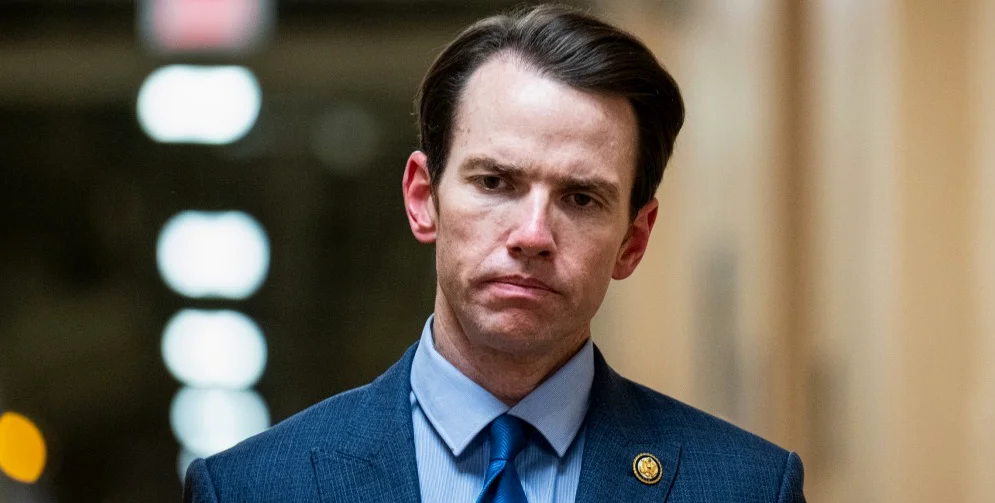
Rep. Kevin Kiley, a two-term Republican congressman representing California’s 6th District, has announced his decision to seek re-election this year as an independent, effectively ending his affiliation with the GOP at the end of his current term. In a statement released Friday, Kiley said he will run as a ‘No Party Preference’ candidate in November, a move that reflects growing frustration with partisanship in Congress.
Partisan Frustrations and Redistricting
Kiley’s decision comes after he recently bucked his party by voting with Democrats to terminate President Donald Trump’s tariffs on Canada. He has also been a vocal critic of California’s redistricting efforts, which have shifted his district boundaries and placed him in a newly redrawn 6th Congressional District.
“It is no secret I’ve been frustrated, at times disgusted, by the hyper-partisanship in Congress,” Kiley said in a statement Friday night. He blamed partisanship for the record-long government shutdown last fall, a spike in healthcare costs, and the redistricting efforts across numerous states ahead of the 2026 midterms.
Kiley accused both major parties of being complicit in what he described as an “epidemic of gerrymandering.” He specifically criticized California Gov. Gavin Newsom for the state’s redistricting efforts, which he said were a response to Texas’s mid-decade redistricting, backed by former President Trump, aimed at securing more Republican seats in November.
Redistricting and Political Realignment
California’s new congressional map has forced several lawmakers to face new constituencies. Kiley won his current district in 2024 with 55.5% of the vote, but the redrawn map now places him in a different district. The House currently has no independent members serving this term, unlike the Senate, which includes two independents—Bernie Sanders of Vermont and Angus King of Maine—who both caucus with the Democrats.
Kiley’s move to run independently follows a similar decision by fellow California Republican Rep. Darrell Issa, who announced Friday that he will not seek re-election. Issa, who has served in Congress for 25 years, said the decision came after much consideration and that it was time for a new chapter.
“After a quarter-century in Congress—and before that, a quarter-century in business—it’s the right time for a new chapter and new challenges,” Issa said in a post on X. He endorsed San Diego Supervisor Jim Desmond as his successor in the 48th Congressional District.
Growing Trend of Retirements
Kiley’s announcement aligns with a broader trend of lawmakers stepping down ahead of the 2026 midterms. The number of House members who have said they will not seek re-election this cycle is at its highest rate since 1992, when 65 lawmakers retired. As of Friday, 55 members have announced they will not run again, including 34 Republicans and 21 Democrats.
Many of the departing Republicans are running for other offices, such as governor or Senate seats, while others have simply opted to retire. The National Republican Congressional Committee, the campaign arm of House Republicans, has not yet responded to a request for comment on Kiley’s decision to run as an independent.
Republicans are currently defending a slim majority in the House, where they hold a 218-214 advantage over Democrats. With several key districts undergoing redistricting, the party faces a challenging re-election campaign in 2026. Kiley’s move to run independently could signal a broader shift in political strategy, particularly in states like California, where partisanship and redistricting have become central issues.
Analysts suggest that Kiley’s decision may also reflect a growing sentiment among voters who are disillusioned with the two major parties. His campaign is expected to focus on issues like healthcare, economic stability, and efforts to reduce gerrymandering, which he has consistently criticized.






1 Comment