

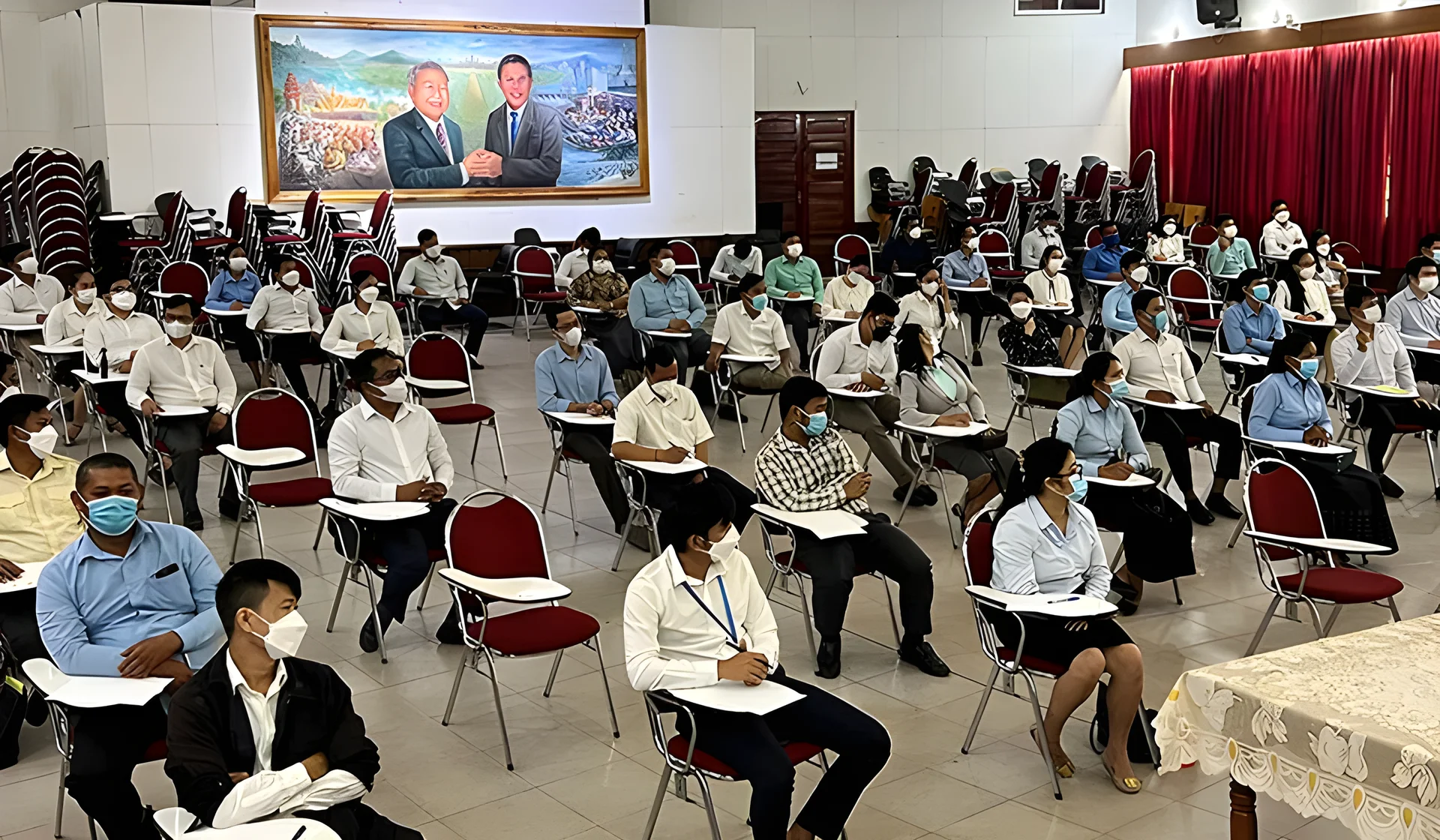
The government is set to recruit civil servants and contract-based officials for four key ministries, according to the Ministry of Civil Service. This move is part of a larger initiative to modernize the nation’s administrative framework and improve public service delivery. The recruitment process will focus on ensuring transparency, efficiency, and the integrity of the public sector.
Key Ministries and Positions
The four ministries involved in the recruitment drive are the Ministry of Foreign Affairs and International Cooperation, which will hire 52 individuals; the Ministry of Justice, which will hire 45; and the State Secretariat for Border Affairs, which will hire 40. The Ministry of Education, Youth and Sport has not yet announced the number of positions it will fill, though it has indicated a focus on hiring teachers on employment contracts.
Civil Service Ministry Permanent Secretary of State Youk Bunna, who also chairs the Sub-Committee on Examinations, emphasized that the recruitment decisions must be made in accordance with strict principles and require formal government approval. He stated that the government has implemented thorough public administration reforms that require all ministries and institutions to review their functions, structures, workloads, and staffing needs.
According to Bunna, the recruitment of civil servants must be based on clearly defined roles and qualifications to ensure that selected candidates possess the professional skills needed to enhance efficiency and public service delivery. He added that the Ministry of Education, Youth and Sport intends to recruit teachers on employment contracts but has not yet decided on the exact number of positions.
Preparation for 2026 Examinations
Last week, Youk Bunna chaired a meeting with representatives from various ministries and institutions to prepare for the 2026 examinations for permanent and contract-based officials. The discussions centered on job requirements, qualifications, staffing needs, and the examination process, including announcements, testing, and the publication of results.
The goal of the recruitment process is to select qualified candidates who can improve the performance of state institutions. The Ministry of Civil Service emphasized that the exams will follow principles of transparency, integrity, and fairness to maintain public trust in the process.
Bunna noted that the recruitment initiative is part of a broader strategy to increase productivity, transparency, and service delivery across the public sector. He said that all ministries and institutions are being asked to review their functions, structures, workloads, and staffing requirements to ensure that the recruitment is aligned with the needs of the state.
The initiative comes at a time when the government is focusing on modernizing its administrative framework. Similar recruitment drives have been conducted in the past, but this one is particularly significant due to the number of positions being offered and the emphasis on transparency and efficiency.
Significance for Public Service
The recruitment of civil servants is a critical step in strengthening the public sector. By ensuring that only qualified individuals are hired, the government aims to improve the quality of public services provided to citizens. This includes everything from administrative tasks to policy implementation and service delivery.
The focus on transparency and fairness in the recruitment process is also a response to public concerns about corruption and inefficiency in the public sector. By adhering to strict principles and ensuring that all candidates are evaluated based on merit, the government hopes to restore public confidence in its institutions.
For ordinary citizens, this means that public services such as education, justice, and border management may become more efficient and effective. The hiring of contract-based officials and civil servants is expected to reduce delays and improve the overall performance of these critical areas of government work.
According to recent studies, the public sector has been facing challenges in terms of staffing and efficiency. The current recruitment drive is expected to address some of these issues by bringing in new talent and improving the overall structure of government operations.
With the 2026 examinations on the horizon, the government is working to ensure that the process is well-organized and that all necessary preparations are made. The Ministry of Civil Service has stated that it will continue to monitor the progress of the recruitment initiative and make adjustments as needed to meet the goals of the reforms.
As the recruitment drive moves forward, it will be important to assess its impact on the public sector and whether it leads to the improvements that the government has promised. The success of this initiative will depend on the ability of the government to implement its reforms effectively and ensure that the recruitment process is both transparent and fair.






Comments
No comments yet
Be the first to share your thoughts