

 BBC
BBC 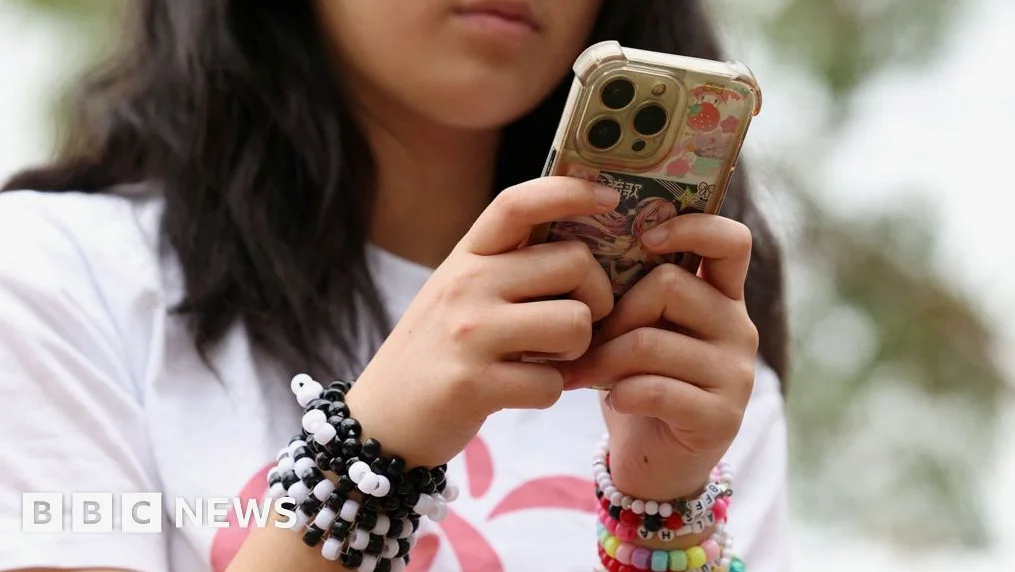
Greece is set to become the latest European country to implement a ban on social media access for children under the age of 15, with the measure expected to take effect from January 2025. The decision. Announced by Prime Minister Kyriakos Mitsotakis, aims to address growing concerns about the impact of social media on the mental health of young people in the country.
Rising Concerns About Mental Health
Mitsotakis stated that the move is intended to tackle rising anxiety and sleep problems among young people, as well as what he described as the ‘addictive design’ of social media. In a video message posted on TikTok on Wednesday, he said: ‘Many young people tell me they feel exhausted from comparisons, from comments, from the pressure to always be online.’
The prime minister added that he had spoken with parents who reported that their children do not sleep well, are anxious, and are constantly on their phones. He described the planned restriction as ‘difficult but necessary,’ emphasizing that the government’s goal was not to distance young people from technology, which ‘can be a source of inspiration, knowledge and creativity.’
Mitsotakis also criticized the ‘addictive design of certain applications’ and a business model that ‘captures your attention’ by keeping users in front of screens for extended periods. He said that such practices ‘take away your innocence and your freedom. That has to stop somewhere.’
Global Trends in Social Media Regulation
Greece is not the first country to take steps toward restricting children’s access to social media. In December. Australia became the first country in the world to require TikTok, YouTube, Snapchat, and other top sites to remove accounts held by under-16s, or face heavy fines. France, Austria, and Spain are among other nations pursuing similar measures.
Social media companies have expressed concerns about the effectiveness and enforceability of such bans, and they argue that blanket restrictions may be difficult to implement and could potentially isolate vulnerable teenagers. Reddit, for instance, is challenging Australia’s law in court.
Mitsotakis also highlighted the need for a European-level response to the issue. In a letter to European Commission President Ursula von der Leyen, he called for a common EU framework to ‘complement and reinforce the necessary national initiatives for the protection of minors.’
His proposals include mandatory age verification for under-15s across all platforms, a pan-European ban for that age group, and a requirement for platforms to re-check users’ ages every six months. These measures are intended to ensure that younger users are not exposed to platforms that may negatively affect their mental health and development.
Legal and Ethical Debates Continue
The debate over children’s use of social media has intensified in recent months, fueled by increasing evidence of the damaging effects it can have on mental health. In a recent case. Jurors concluded that Meta. Which owns Instagram. Facebook, and WhatsApp, and Google, the parent company of YouTube, had intentionally built addictive social media platforms that harmed a teenager’s mental health.
Both Meta and Google said they disagreed with the verdict and intended to appeal. Meta stated: ‘Teen mental health is profoundly complex and cannot be linked to a single app.’
Further details of the regulatory framework to enforce the ban in Greece will be outlined later on Wednesday. The government’s approach reflects a broader global trend of seeking to balance the benefits of digital access with the need to protect the well-being of children in an increasingly connected world.





Comments
No comments yet
Be the first to share your thoughts