

 France24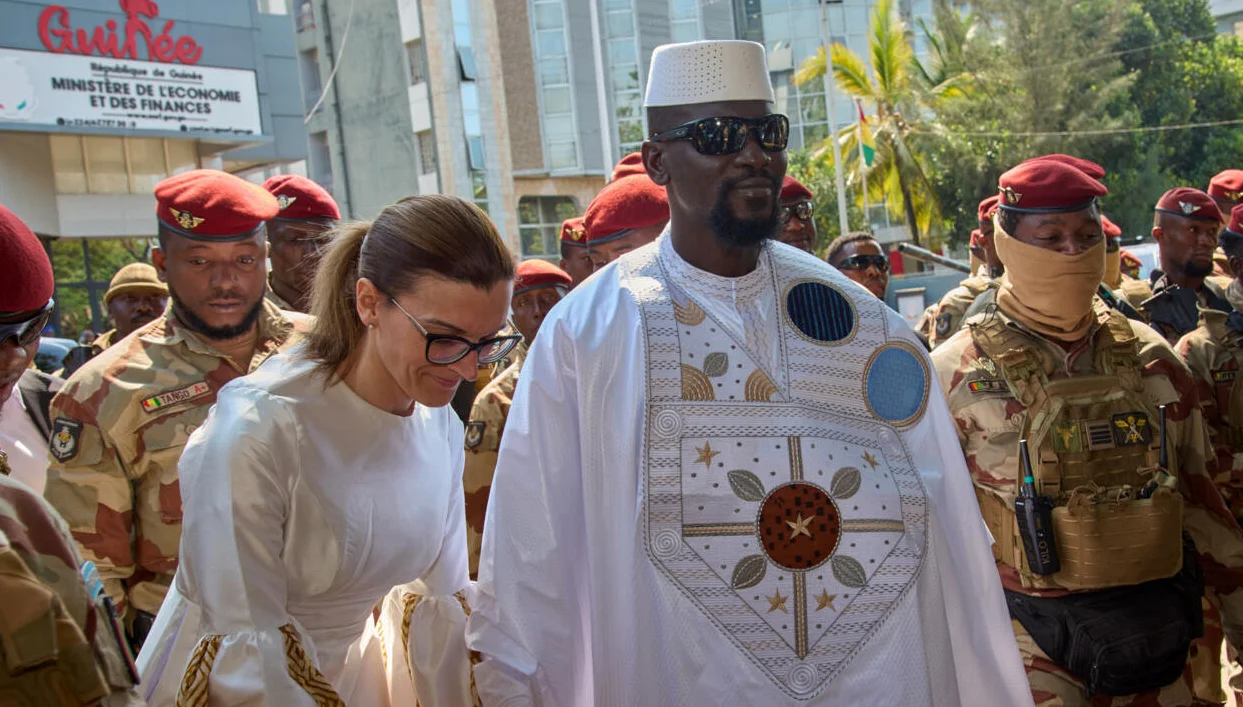
Guinea has dissolved 40 political parties, including its three main opposition groups, via a late-night decree less than two months after President Mamady Doumbouya took office. The move, announced on Friday night, marks a significant escalation in the consolidation of power by the former junta leader, who has ruled the West African nation with an iron fist since a 2021 coup.
Legal and Political Consequences
The decree, signed by Guinea’s minister of territorial administration and decentralisation, cited the parties’ failure to fulfill their obligations as the reason for their dissolution. The order stripped the groups of their legal status and control over their assets, which are now placed under sequestration with a curator overseeing their transfer, though the final destination of these assets remains unclear.
The dissolved parties include the Union of Democratic Forces of Guinea (UFDG), led by exiled opposition leader Cellou Dalein Diallo; the Rally of the People of Guinea (RPG), led by former President Alpha Condé; and the Union of Republican Forces (UFR). According to the decree, the parties lose their legal personality and status, along with all associated political activities, symbols, and emblems.
“This dissolution entails the immediate loss of the legal personality and status of the parties concerned,” the order stated. The move has been widely condemned by civil society groups, who accuse the government of consolidating power through authoritarian means.
Impact on Civil Liberties
Since assuming power in 2021, Doumbouya has imposed strict controls on civil liberties, banning protests and cracking down on dissent. Political opponents have been arrested, put on trial, or driven into exile, while enforced disappearances and kidnappings have become increasingly common.
Ibrahima Diallo, a leader in the pro-democracy National Front for the Defence of the Constitution (FNDC), said the dissolution of the parties “formalized a dictatorship now established as the mode of governance. The country is sinking into profound uncertainty.”
Two prominent FNDC activists, Oumar Sylla—better known as Fonike Mengue—and Mamadou Billo Bah, have been missing since July 2024, raising concerns about the government’s tactics against critics.
Constitutional Changes and Power Consolidation
Doumbouya, 41, came to power in 2021 after ousting Alpha Condé, Guinea’s first freely elected president. The new constitution, approved in a September 2023 referendum, allowed junta members, including Doumbouya, to run for office and extended presidential terms from five to seven years, renewable once.
Not only have opposition voices disappeared, but their families have also become targets. Earlier this week, three relatives of Tibou Kamara, a former minister and Condé’s spokesman, were kidnapped. In November, four family members of exiled musician and opposition figure Elie Kamano were abducted. In September, the father of exiled journalist Mamoudou Babila Keita was kidnapped.
Guinea has a long history of military and authoritarian rule since gaining independence from France in 1958. Despite its wealth in minerals, more than half of its population lives below the poverty line, according to World Bank data from 2024.
The dissolution of the 40 parties comes as the country faces mounting international criticism over its democratic backsliding. The move is seen as a power grab that undermines the fragile political landscape and further isolates Guinea from regional and global partners.
With no clear timeline for the return of the dissolved parties or the restoration of their legal status, the situation remains uncertain. Analysts warn that the decree signals a shift toward a more centralized and repressive regime, with potential implications for regional stability and Guinea’s economic future.






Comments
No comments yet
Be the first to share your thoughts