

 Reuters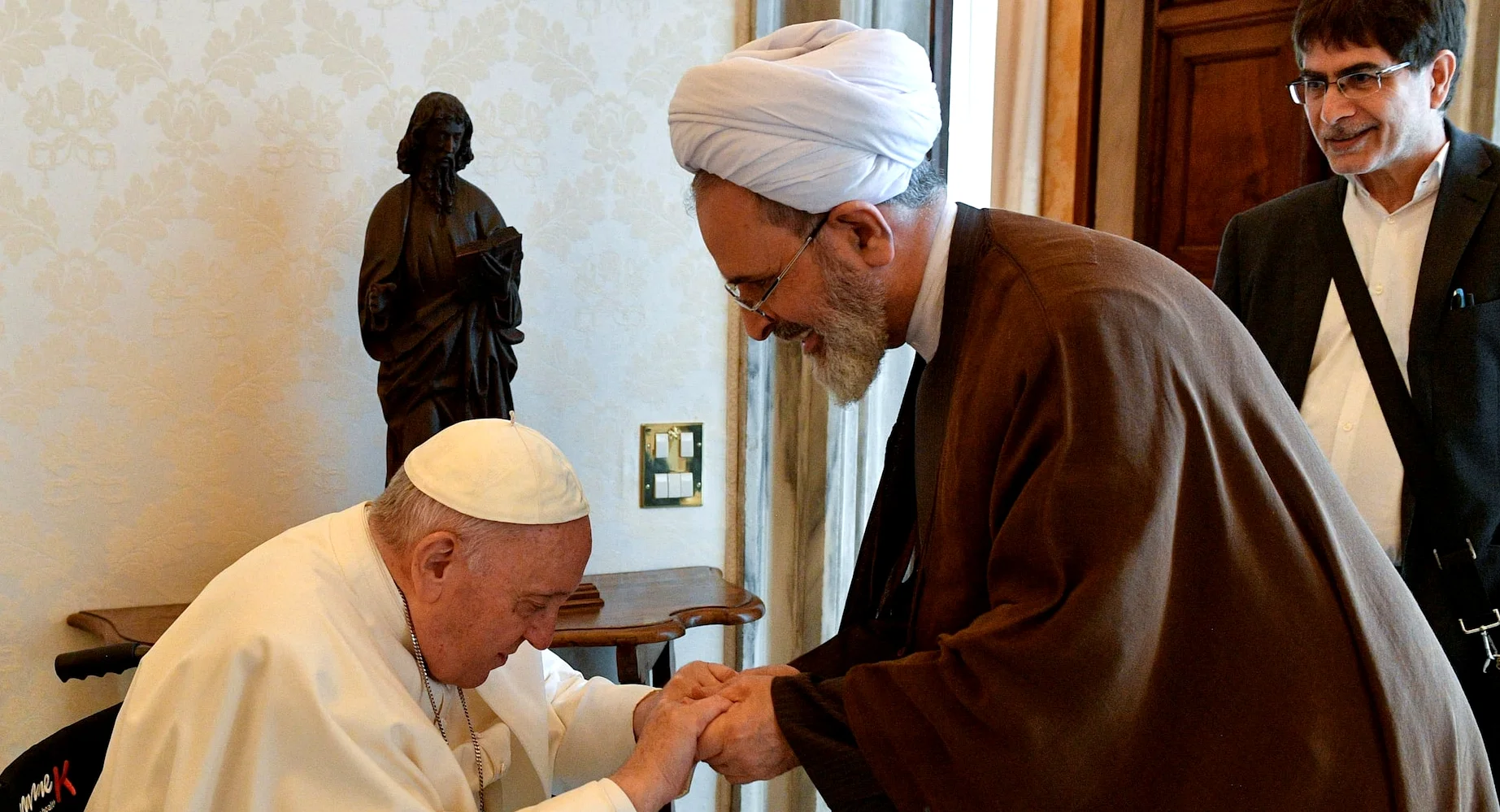
Ayatollah Alireza Arafi has emerged as a central figure in Iran’s power structure amid unprecedented turmoil following the killing of Supreme Leader Ayatollah Ali Khamenei. The hardline cleric, now one of three senior officials steering the state through its most volatile period since the 1979 revolution, was appointed to an interim leadership council on February 28, after U.S.-Israeli attacks on Iran began.
Leadership Challenges Amid War
Arafi, along with President Masoud Pezeshkian and Chief Justice Gholam-Hossein Mohseni-Ejei, has been tasked with managing state affairs during a period of intense external pressure. The leadership’s top priority, alongside responding to U.S.-Israeli attacks, is managing the succession process for the supreme leader role, a critical function in Iran’s theocratic governance.
If a supreme leader is not named quickly, the clerical establishment risks being seen as weak and unable to guarantee continuity. The process is subject to extraordinary pressure, as the nation faces war on multiple fronts and internal political uncertainty.
Arafi’s Rise and Political Alignment
Arafi, in his late 60s, is less well known abroad than other prominent clerics, but successive promotions by Khamenei have shaped his career and given him moments in the spotlight. Some within the clerical establishment have viewed Arafi as a potential successor to Khamenei, despite his relative lack of political experience.
For Arafi to ascend to the role of supreme leader, he would need to clear several procedural hurdles. A committee within the 88-member Assembly of Experts — the body responsible for selecting the next leader — would first have to put his name forward at a session attended by at least two-thirds of its members.
From there, he would still require the backing of two-thirds of those present — roughly 40 senior clerics. There are no guarantees at any stage of the process, highlighting the complexity of the succession mechanism.
Although he lacks hands-on political experience, Arafi, born in 1959, is widely seen as firmly aligned with Khamenei and his ideological vision. He has consistently argued that governance should be rooted in the thorough application of Shi’ite jurisprudence.
Clerical Influence and Institutional Roles
Arafi’s clout is rooted in the powerful posts he has held, including head of Al-Mustafa International University and dean of the seminary at the Iranian holy city of Qom. He is also a member of the Guardian Council, which approves all candidates for elected office, and a member of the Assembly of Experts — positions he secured with Khamenei’s backing and trust.
His credentials as a heavyweight within Iran’s religious establishment date back to his early years as an 11-year-old student of Islam when he moved to the city of Qom, the epicenter of Shi’ite theological scholarship. Over the years, Arafi, the son of an Ayatollah, completed advanced studies in jurisprudence and philosophy.
Arafi’s career began after Khamenei became supreme leader in 1989. He began his work in his hometown of Meybod as a Friday prayer leader at the young age of 33, one of the first signs that he had won the confidence of Khamenei, who strategically loyalists.
He later filled that same role in Iran’s holy Shi’ite city of Qom, gaining religious authority and political clout within the clerical system. Arafi also became chairman of Al-Mustafa International University, which has affiliated religious seminaries and Islamic colleges in over 50 countries and seeks to promote the Islamic Republic’s ideology overseas.
With over 50,000 foreign students enrolled, according to Al-Mustafa’s Persian-language website, students on its Iran campuses receive free housing, home loans, and health care for themselves and their families. He stepped down from the post in 2018.
Two years later, the U.S. State Department formally labeled the Quds Force a foreign terrorist organization, highlighting its recruitment networks. It said the force had enlisted Pakistani and Afghan students from Al-Mustafa International University into the Zaynabiyoun Brigade and the Fatemiyoun Division — militias deployed in Syria under the command of the Major Guards’ Quds Force and previously sanctioned under U.S. counterterrorism and human rights measures.
During his tenure, Arafi claimed that approximately 50 million people converted to Shi’ite Islam within eight years through the institution’s outreach. Critics questioned this assertion.
In 2016, he was appointed head of Iran’s national seminary system. Arafi advanced his political standing three years later when he was handpicked by Khamenei to join the Guardian Council, a powerful election watchdog body that reviews legislation and qualifies candidates for elections.






Comments
No comments yet
Be the first to share your thoughts