

 BBC
BBC 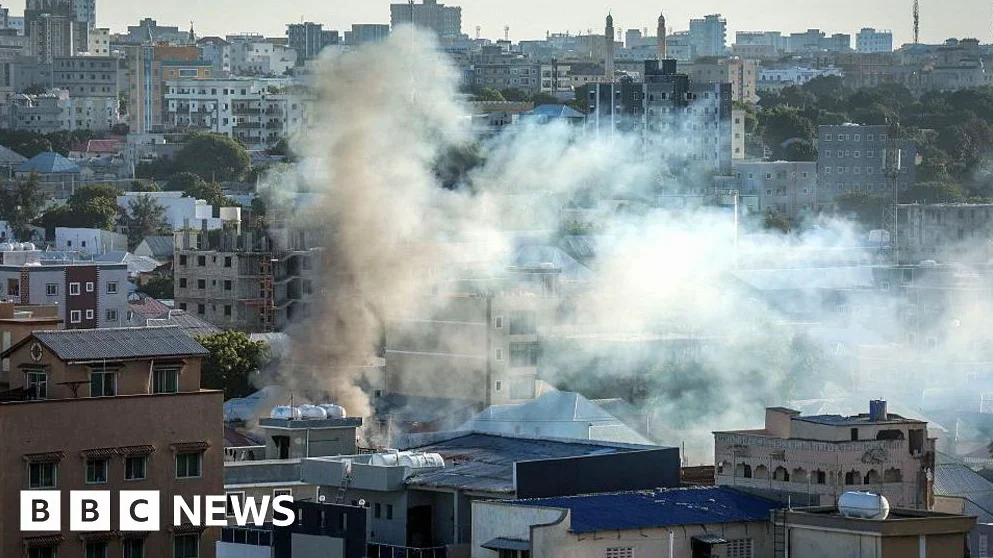
Government forces and opposition fighters exchanged heavy gunfire in Mogadishu after President Hassan Sheikh Mohamud’s term in office ended on 15 May but was extended by a year.
Opposition Condemns Extension as Unconstitutional
The opposition claimed the extension was unconstitutional and called for protests on Thursday, while Gunfire was reported in several neighborhoods of the capital and persisted throughout the night, according to residents.
Police described the situation as a “large-scale security operation” against “heavily armed militias who launched mortar attacks” in some areas.
Political Leaders Report Attacks and Call for Peaceful Assembly
Former Prime Minister Hassan Ali Khaire said he was attacked by government forces while he and other leaders were preparing for Thursday’s “peaceful” demonstrations; “The responsibility for any casualties or damage resulting from this incident lies with the president whose term has expired,” he said on X.
Khaire added, “This attack is a grave assault on the constitutional rights of Somali citizens and a deliberate attempt to suppress peaceful assembly.”
The number of casualties is not yet known and the president has not commented; In a statement on X, former President Sharif Sheikh Ahmed, an ally of Khaire, said the opposition would not be intimidated.
“If the President and his soldiers think that we are afraid or that we will flee, we are not going to run away,” he said.
International Reactions and Airport Operations
The protests did not take place amid the fighting, but the capital is now largely calm, although sporadic gunfire can still be heard in some districts. Somalia’s Civil Aviation Authority denied reports that the violence had disrupted flights, assuring passengers that operations at the city’s airport remained normal.
“All scheduled flights today at Aden Adde Airport are operating as planned, with no cancellations,” the authority said in a statement. The US embassy in Mogadishu described the violence as “reckless” and stated that leaders on all sides “have a responsibility to preserve stability and resolve differences through peaceful means.”
Regional bloc IGAAD condemned all acts of violence and urged parties to exercise restraint and pursue dialogue to resolve their differences. The European Union Delegation in Somalia urged leaders to prioritize national interests and find a “consensus on an election roadmap in the interest of the Somali people.”
Mohamud was elected by parliament in 2022, defeating then President Mohamed Abdullahi Mohamed, better known by his nickname Farmajo. He had served a previous term as president in 2012-2017, which was dominated by the struggle against al-Shabab jihadists, who still control many parts of the country.
Following the expiry of the president’s term, the federal government and the opposition started talks but did not reach an agreement; Mohamud has been attempting to move Somalia towards democratic elections, replacing a system in which clan elders choose MPs, who in turn select a president.
The opposition disagrees on how direct elections should be conducted and rejects the constitutional amendment in March extending the presidency by a year — they also argue that new laws on political parties and the appointment of electoral commissioners were not inclusive and would therefore undermine fair elections.

Comments
No comments yet
Be the first to share your thoughts