

 Al Jazeera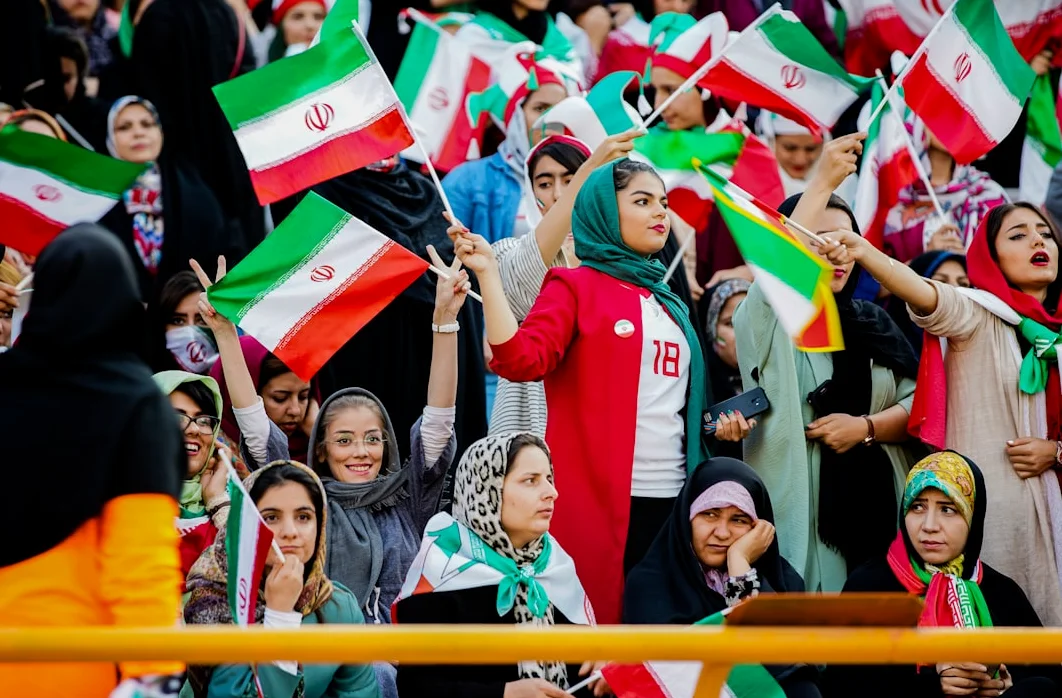
Disappointment and Controversy in Group G
Iran’s national football team. Known as Team Melli. Was eliminated from the 2026 World Cup after finishing third in Group G with just three points from three draws — the team’s final match was a 1-1 draw with Egypt on Friday in Seattle. The result left them just outside the cut for the knockout stage, which expanded to include eight third-placed teams due to the tournament’s increase from 32 to 48 teams.
Milad, a Tehran resident who followed all matches impacting Iran’s World Cup run, told Al Jazeera, “This was very unlikely to happen, I couldn’t believe how we got out again, with just one spot away from advancing.”
Strange Circumstances and Alleged Divine Intervention
The circumstances surrounding Iran’s elimination were so peculiar that the head coach, Amir Ghalenoei, questioned divine intervention, and During the match against Egypt, centre-back Shoja Khalilzadeh appeared to score a 93rd-minute winner that would have sent Iran into the Round of 32. However, VAR ruled the goal out due to a few centimetres of Khalilzadeh’s right foot being offside.
The emotional nature of the moment led to an on-field incident where a member of the coaching staff had his nose broken after being headbutted by another staff member during celebrations of the disallowed goal. Khalilzadeh’s celebration included posing with sunglasses, which Egypt later mocked with an Instagram post of striker Mohamed Salah wearing sunglasses.
Ghalenoei, during a live post-match interview on state television, said it seemed like “God was at odds with us.” He also cited the lack of good luck, including Iran scoring three VAR-overturned goals during the competition — the highest of any team.
War, Diplomacy, and Logistics
The World Cup took place during a period of heightened tensions, with the United States having bombed several islands in the Strait of Hormuz in Iran’s southern waters just hours before the Iran-Egypt match. Football federation officials and media personnel were denied visas to travel to the US due to alleged affiliations with the Islamic Major Guard Corps (IRGC).
Iran’s playing squad faced unusual restrictions, being based in Tijuana, Mexico, instead of the originally designated Tucson in Arizona. They had to enter the US within 24 hours of a match and leave the same day, with only a slight easing for the Seattle match.
After the Egypt match. Iran needed just one of three results to go its way: Croatia had to lose to Ghana (it won 2-1), DR Congo had to fail to beat Uzbekistan (it won 3-1), and Algeria vs. Austria had to produce a winner (the match ended 3-3). Javad Khiabani. A sports presenter known for eccentric commentary, released a video message asking “Muslim brothers in Algeria” to defeat Austria and allow Iran to advance.
Iranian state television commentators experienced an emotional rollercoaster after Algeria’s Riyad Mahrez scored deep into stoppage time, creating a 3-2 result that would have sent Iran through. Moments later. Austria’s Sasa Kalajdzic equalised, sending both teams into the next round but not Iran.
Ralf Rangnick, Austria’s head coach, responded to allegations of match-fixing by saying, “If Alfred Hitchcock had written such a drama, I probably would have said he was completely mad.”
Protests and Divided Loyalties
For a second consecutive World Cup, Iran’s national football team did not enjoy unified support from Iranians inside or outside the country, but this was due to the fallout from public protests against the Islamic Republic, which has governed Iran since the 1979 Revolution. In January 2026, at least 230 children were among the thousands of Iranians killed during nationwide anti-establishment protests. The government blamed “terrorists” linked to the US and Israel, while Amnesty International called it an “first-ever deadly enforcement action.”
Outside the stadiums in the US, some anti-Islamic Republic Iranians protested using Iran’s pre-1979 lion-and-sun flag, rather than the official flag featuring the word “Allah.” Despite the controversy, most diaspora Iranians ended up cheering for the team in packed stadiums.
Mohammad Khakpour, a former Team Melli captain now based in the US, wrote on Instagram that the contrasting emotions after Iran’s elimination carry a social message. “When a part of the society feels that Team Melli is no longer representative of their emotions, pains or hopes, a chasm is created,” he said. “The people may not be happy from a football loss, but they may at times be happy about the collapse of an image that they do not consider to be true.”
Farhad, a 36-year-old resident of eastern Tehran, told Al Jazeera that in decades to come, people may remember Team Melli not only as representing the Islamic Republic but also for the football record it left behind. “Personally, I preferred it if they advanced, but I’m not devastated that they didn’t,” he said.






Comments
No comments yet
Be the first to share your thoughts