

 BBC
BBC 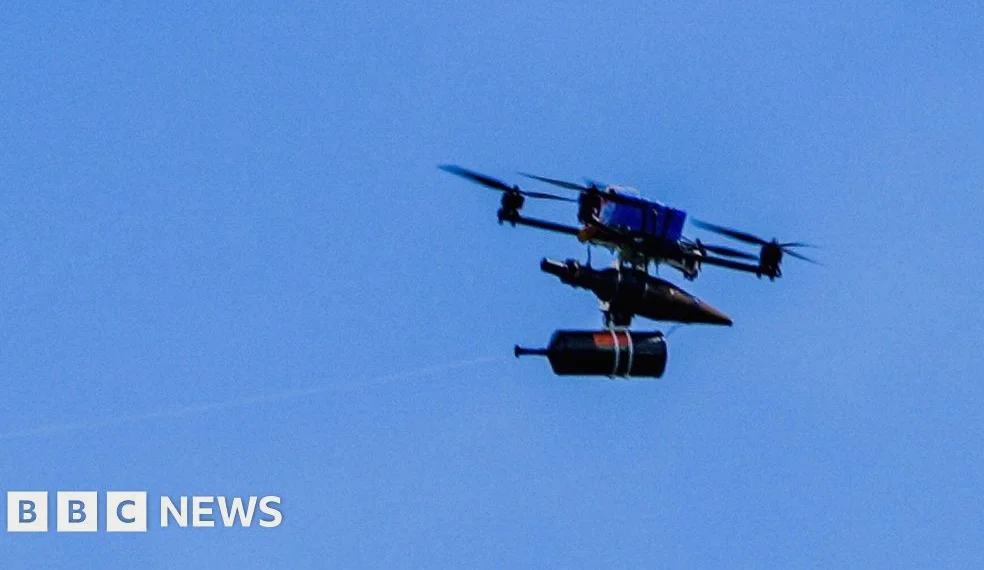
Hezbollah’s use of fiber-optic drones has become its primary weapon against Israeli soldiers and civilians along the Lebanese border, now seen as the biggest threat in the area. Fighting has continued for six weeks despite a supposed ceasefire.
Drone Attacks Rise as Fighting Persists
One Israeli soldier was killed and two others injured in a drone attack near the Israeli border community of Shomera on Wednesday. Of the 11 Israeli soldiers and one civilian defence contractor killed since the ceasefire began, eight were killed by fiber-optic drones.
Most of the attacks have targeted Israeli forces occupying a large area of southern Lebanon, but Hezbollah is increasingly attacking Israeli communities across the border, according to the Alma Research Center, an Israeli think tank monitoring the conflict. The center has recorded more than 100 drone attacks against communities inside Israel since the ceasefire began in April.
Community on Edge
In Shomera, a town at the western end of the border, drone attacks have left trails of fiber-optic wires along the roads and a new sense of fear in the community. “The problem is you don’t feel them coming. You’re sitting there, and suddenly it arrives,” said Shomera’s council chief, Sami Zanetti. “And if you run away, it follows you.”
He showed a bus-stop scarred by a recent drone attack that occurred minutes after a school bus had left. The fiber-optic drones, also known as First-Person View (FPV) drones, are harder to detect than rockets and mortars. They fly low, without a radio signal that can be jammed by Israel’s military, and are connected to their operators by a thin optical wire.
Several times a day, sirens sound in these frontier communities, warning of a drone crossing the border from Lebanon. Here, the warnings and the weapons come seconds apart; sometimes there’s no warning at all. “With rockets, I’ve got 15 seconds to go into a bomb shelter. With drones, you have no way of knowing when it will fall,” Zanetti said.
Technological Challenge and Response
As we were talking, sirens erupted. The alerts on our phones said a drone had been spotted heading straight for Shomera. From inside the public bomb shelter, we scanned the sky. Israel’s army sometimes intercepts drones that cross the border but often loses contact with the small, low-flying devices. This time, the attack never arrived, but the road was strewn with silvery filaments from previous drone strikes.
Just the day before, members of the community’s security team were filmed chasing and firing at a drone flying along this street, next to the house of Amichai Ben David, a peach and nectarine farmer with seven children. “[The drone] came and we rushed into the house,” he said. “The soldiers outside shot at it and managed to knock it out of the air. They saved us, thank god.”
Amichai has lived here all his life. His home has a large hole in the roof from a rocket strike last year, but the drones are a new and different threat. “The missiles stopped because of the ceasefire – and the drones started coming instead. They have cameras attached – if there’s a soldier in uniform, or they don’t like the look of someone, it simply drops and explodes.”
The Alma Research Center says Israel’s military assessment is that Hezbollah has dozens of trained drone operators and a significant stockpile of the small, cheaply-made drones, which cost around $300-$400 each. “They intensified the amount of attacks across the border inside Israel,” said Sarit Zehavi, who heads the center. “And I think that’s a direct order from Iran, against the background of what is happening with the [US] deal. Iran wants to see a situation where Israel is attacking Hezbollah, and everything explodes, and goes back to the beginning.”
“[Hezbollah’s] goal is to harm as many lives as possible, and when they see that Israeli soldiers are finding more ways to protect themselves physically, then they try to harm civilians in civilian communities,” said Capt Adi Stoler, a spokesperson for Israel’s military. “They go outside more, they live their life, take their children to school, and if [Hezbollah] can harm them while they’re doing that, that’s what they’ll do.”
Israel’s military chief of staff has reportedly called for attacks on “buildings in Beirut” in response to Hezbollah’s growing use of explosive drones. For every drone that harms one of its soldiers, far-right Finance Minister Bezalel Smotrich said, Israeli forces should “bring down 100 buildings” in Hezbollah’s southern Beirut stronghold. Earlier this week, Israel’s Prime Minister Benjamin Netanyahu vowed to deal Hezbollah “a crushing blow.”
“It is true they are launching drones at us,” he said. “We have a special team working on this, and we will solve this.” Israeli forces have been criticized for being slow to learn from the experience of troops in Ukraine, who have battled the threat of fiber-optic drones launched by Russia for the past two years.





Comments
No comments yet
Be the first to share your thoughts