

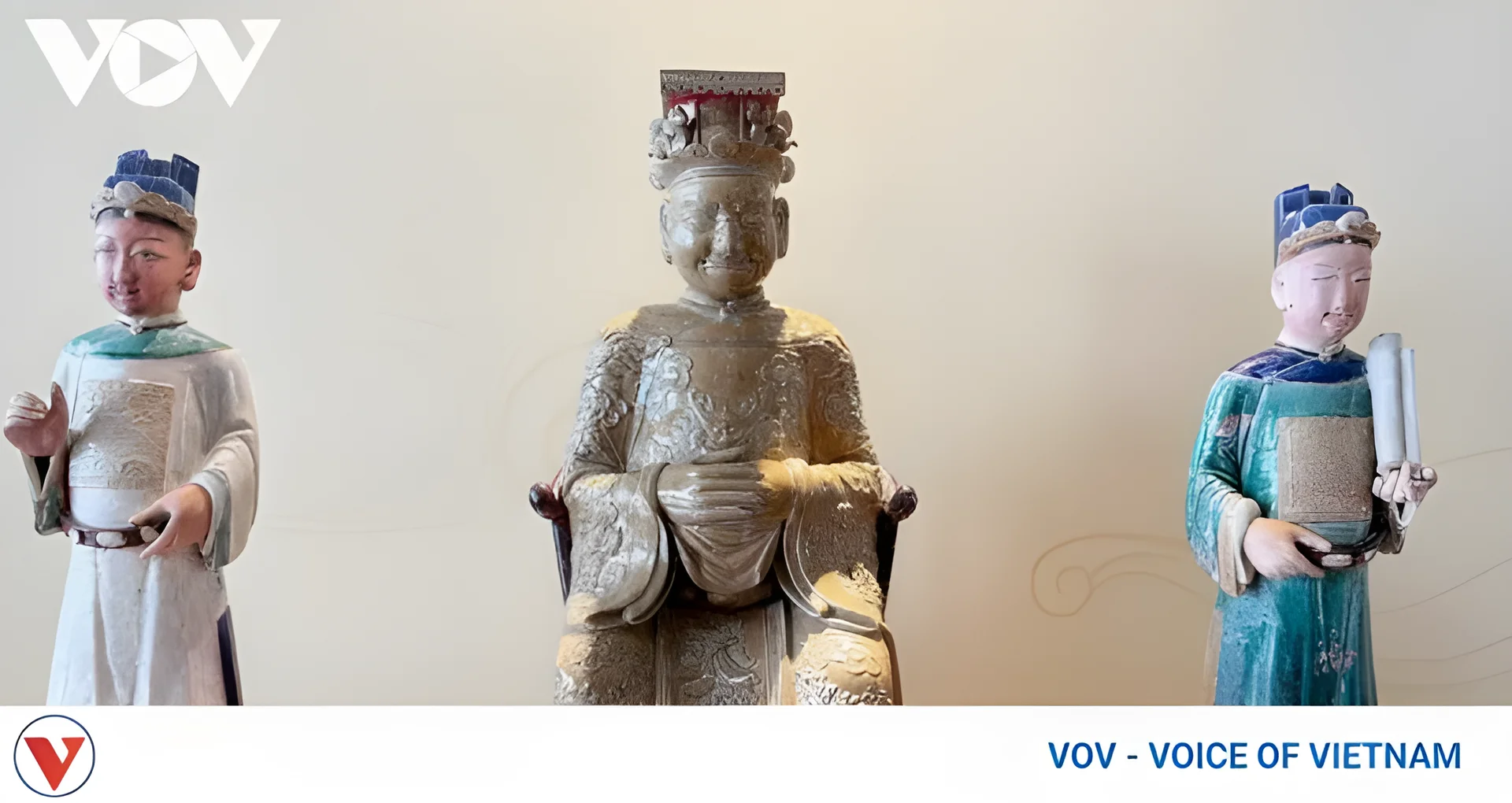
Ho Chi Minh City has recognized two new national treasures, the Hoa Loc Culture ceramic pedestal bowl and a group of polychrome glazed ceramic statues of Tam Quan Dai De, during a ceremony held on March 6 at the Ho Chi Minh City Museum. The artifacts were announced by the Ho Chi Minh City Department of Culture and Sports, marking a significant addition to the city’s cultural heritage.
Significance of the Hoa Loc Culture Ceramic Pedestal Bowl
The Hoa Loc Culture ceramic pedestal bowl, dating back 4,000-3,800 years, was unearthed at the Con Sau Cho mound in Hoa Loc commune, northern Thanh Hoa province. The artifact measures 21 cm in height and 21 cm in mouth diameter, with a ceramic body thickness of 0.5-0.7 cm. It is currently preserved at the Museum of Ceramics of the Nation’s Founding Period.
The bowl is a rare representative of pre-Dong Son ceramics and reflects the social life and ancestor worship practices of elite groups in ancient society. Its balanced form is decorated with incised lines, dotted motifs forming triangles and rhombuses, and rice-stalk pattern impressions on a burnished surface. This artifact provides valuable insights into the exchanges and connections between Hoa Loc Culture communities and others during the early period of state formation.
Artistic and Cultural Value of the Tam Quan Dai De Statues
The second recognized national treasure is a group of polychrome glazed ceramic statues of Tam Quan Dai De, dating from the late 19th century to the early 20th century. These statues are part of the private collection of Le Thanh Nghia and belong to the Sai Gon ceramic tradition.
The group includes three sets of statues: Thien Quan (Heaven Official), Dia Quan (Earth Official), and Thuy Quan (Water Official). The Thuy Quan Dai De statues depict the deity wearing a binh thien crown, a dragon robe, a belt, and boots. The robe is decorated with two dragons on the shoulders and wave motifs below, symbolizing authority over the water area. The Thien Quan statues show the deity seated on a throne in a composed posture, wearing a round crown and dragon robe, emphasizing their role as the deity who receives prayers and grants blessings to people.
These statues reflect the folk religious beliefs of southern Vietnam and represent the high level of traditional ceramic craftsmanship used for worship in the community. They hold notable historical, cultural, artistic, and technical value, offering a glimpse into the spiritual and artistic practices of the region during the colonial period.
Current Status of National Treasures in Ho Chi Minh City
As of now, 25 national treasures associated with Ho Chi Minh City are preserved across several institutions, including the Ho Chi Minh City History Museum, the Ho Chi Minh City Museum, the Ho Chi Minh City Museum of Fine Arts, the Binh Duong Museum, the Ba Ria-Vung Tau Museum, the Museum of Ceramics of the Nation’s Founding Period, and the private collection of Le Thanh Nghia.
These artifacts are not only important for preserving Vietnam’s cultural heritage but also serve as educational resources for future generations. They help in understanding the country’s history, religious practices, and artistic evolution over time.
The recognition of these two new national treasures highlights the importance of protecting and promoting Vietnam’s cultural heritage. It also highlights the role of local institutions and private collectors in preserving and showcasing these invaluable artifacts.
With ongoing efforts to document and preserve cultural heritage, the addition of these artifacts to the national treasure list is expected to have a lasting impact on Vietnam’s cultural identity and historical narrative.




Comments
No comments yet
Be the first to share your thoughts