

 Reuters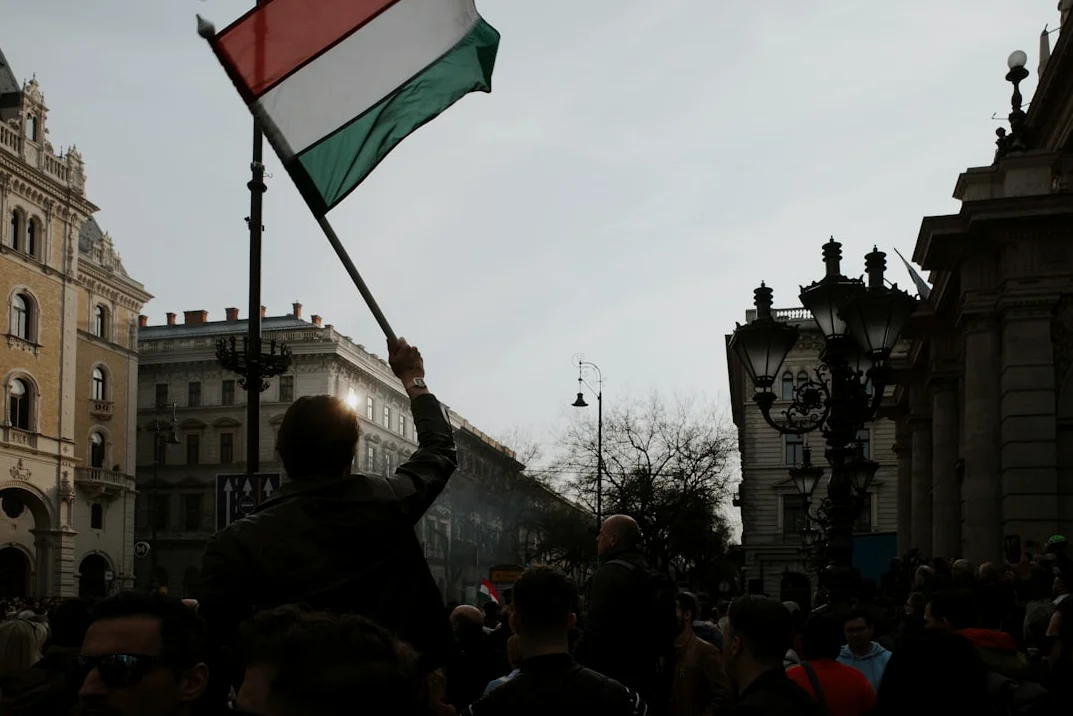
Hungary’s political landscape has reached a boiling point as rival factions led by Prime Minister Viktor Orban and challenger Peter Magyar took to the streets of Budapest on March 15 to stage large-scale rallies. The demonstrations, held on Hungary’s national day, marked a critical moment in the run-up to the April 12 general election, with both sides seeking to rally support from an increasingly polarized electorate. Surveys have shown Magyar’s Tisza party gaining momentum, but Orban remains determined to hold onto power.
Impact on the Election Campaign
Prime Minister Viktor Orban, in power since 2010, faces his most formidable challenge to re-election. His Fidesz party has been embroiled in a fierce campaign against Tisza, a centrist-right party led by Peter Magyar, who has gained traction by positioning himself as a more pro-European Union alternative. The political climate has been marked by economic stagnation, rising living costs, and a growing discontent among voters, all of which have contributed to a shift in public sentiment.
Orban has framed the election as a referendum on whether Hungary should align with the EU or follow a more independent path. He has accused the opposition of attempting to pull the country into the ongoing war in Ukraine, a stance that has drawn criticism from international observers. Meanwhile, Magyar has taken a more measured approach on Ukraine, pledging to put any EU membership for Kyiv to a binding referendum if his party wins power.
The rallies on March 15 were not just symbolic. Orban’s supporters gathered in large numbers, marching to parliament to hear the leader’s speech. Maria Erdelyi, a rally attendee, said, ‘This is only about money and nothing else.’ Her sentiment reflects the concerns of many Hungarians who feel the economic burden of the past few years has been unfairly distributed.
Orban’s Stance on Ukraine and the EU
Orban has long been at odds with the EU over a range of issues, including Hungary’s stance on Ukraine. Despite the ongoing war in the region, he has maintained a close relationship with Russia and has refused to send weapons to Kyiv. Orban has also consistently opposed Ukraine’s potential EU membership, a position that has drawn criticism from European leaders and international organizations.
Jozsef Lados, a supporter of Orban, called the prime minister ‘Europe’s best politician,’ arguing that Hungary should remain with him instead of betting on Magyar, whom he described as an ‘adventurer.’ This rhetoric has helped Orban rally his base, who view him as a strong leader in a time of global uncertainty.
Orban’s alignment with Russia and his reluctance to support Ukraine have not gone unnoticed. The EU has repeatedly urged Hungary to adopt a more pro-European stance, but Orban has resisted these calls, insisting that Hungary’s interests lie in maintaining its independence and sovereignty. This approach has deepened the divide between the ruling party and the opposition.
Magyar has criticized Orban’s campaign as ‘laughable propaganda,’ but his party has been careful not to take an overly confrontational stance on Ukraine. Instead, Tisza has focused on economic issues and the need for a more transparent government. This strategy has helped Magyar gain support from voters who are frustrated with the status quo and are looking for change.
What’s Next in Hungary’s Political Landscape
The April 12 election will be a defining moment for Hungary’s political future. Both Orban and Magyar are expected to push their respective agendas in the final weeks of the campaign, with Orban likely to focus on national security and economic stability, while Magyar will emphasize reform and transparency.
Analysts say the election could have far-reaching implications for Hungary’s relationship with the EU and its role in the broader European political landscape. If Magyar’s party wins, it could lead to a shift in Hungary’s foreign policy, potentially aligning the country more closely with the EU and its stance on Ukraine.
Meanwhile, the opposition is preparing for a potential runoff scenario, should no candidate secure an outright majority. This would add another layer of complexity to the election, as it could prolong the political uncertainty and delay the formation of a new government.
With both sides mobilizing their supporters and the stakes higher than ever, the coming weeks will be crucial in determining the direction of Hungary’s political and economic future. The election will not only decide the next government but also shape Hungary’s role in Europe and beyond.


Comments
No comments yet
Be the first to share your thoughts