

 BBC
BBC 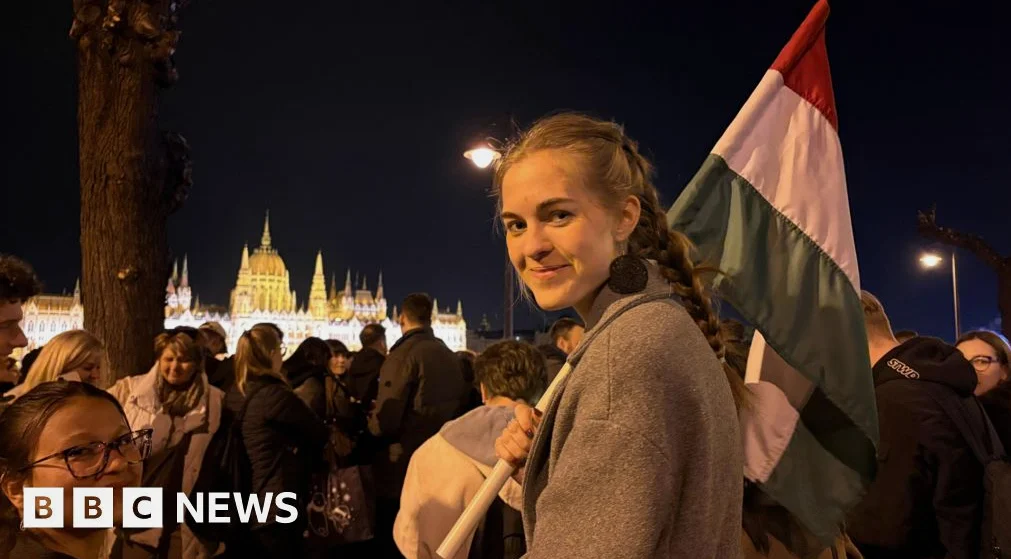
Katya Adler reported that Budapest’s iconic Chain Bridge, usually a popular spot for tourist selfies, was lit up in green, white, and red – the colors of the Hungarian flag – following an historic election result that unceremoniously booted Prime Minister Viktor Orbán out of power after 16 years in government. Supporters of the triumphant Péter Magyar and his Tisza party said they felt they were getting their country back, a sentiment reflected in his victory speech where he said, ‘We did it. We brought down the Orbán regime – together we liberated Hungary. We took back our homeland! Thank you! Thank you all!’
Historic Election and Record-Breaking Voter Turnout
The election marked a historic moment in Hungary, with record-breaking voter turnout despite Orbán’s iron grip on state media and electoral system changes designed to favor his party. Despite these efforts, Orbán was totally trounced at the polls. I watched crowds of first-time voters dancing through Budapest’s backstreets, drunk with a heady mix of hope and incredulity in the early hours of Monday morning.
Zofia, a voter, told me, ‘I cried when I put the X on my ballot paper. I still can’t quite believe we did it. But we did!’ As Zofia spoke, her group of friends were loudly chanting ‘Russians Go home!’ This is an ironic full circle for Orbán, who became famous in 1989 in then-communist Hungary by calling on Russians to go home in a passionate speech he gave in the dying days of the Soviet Union.
Orbán’s Ousting a Blow for Putin
Orbán’s ousting is a real blow for Russian President Vladimir Putin, who benefitted from having an ally inside the EU. Orbán delayed sanction packages after Russia’s full-scale invasion of Ukraine and has been blocking a huge EU loan to Kyiv it says it needs to survive. Russia’s loss is Ukraine’s gain, as President Volodymyr Zelensky was quick to congratulate Magyar on Sunday night, writing on X that he looked forward to ‘constructive work’ together.
President Zelensky’s message, while not effusive, reflects his awareness that many Hungarians are wary of his country. Orbán used campaign posters and rallies to warn voters that only he could keep them safe and prevent the war in Ukraine seeping across the border, endangering the lives of their loved ones.
European Reactions and the Future of Hungary
Orbán’s departure has been met with mixed reactions across Europe. UK Prime Minister Sir Keir Starmer described it as an historic moment for European democracy, while European Commission President Ursula von der Leyen said Hungary had chosen Europe. In contrast, US President Donald Trump, who admires Orbán as a leading figure of the Christian nationalist, ‘anti-globalist’ right, was distinctly less enthusiastic.
Steve Bannon, the former chief Trump strategist, described Orbán as a ‘hero.’ However, some analysts suggest that Orbán’s ignominious fate may not signal the end of populist nationalism in Europe. Despite setbacks for figures like Marine Le Pen and Giorgia Meloni, these outcomes are influenced by national peculiarities and not a unified trend.
Orbán had long alienated sections of Hungarian society, including the left, the LGBTQ+ community, and many women who felt their rights were being eroded by his ‘pro family, pro traditional gender roles’ agenda. The final nail in his political coffin came when even core supporters abandoned him in their droves.
A day before the vote, we visited Orbán’s home village, Felcsút. Once from a humble background, he has now poured money into the community here, building his own football stadium and football academy. His son-in-law is linked to a luxury golf course in the area, while his father is rebuilding a nearby private estate, said to cost around $30m.
Orbán has always denied corruption allegations, and when Hungary’s economy was healthier, many here were willing to turn a blind eye. But in recent years, inflation has soared and standards of living have sunk, while Orbán’s close circle has seemed to be getting ever-richer. Gyárfás Oláh, a former Orbán enthusiast and ex-local mayor, said, ‘He failed us. He failed his country. He hoodwinked us.’
Péter Magyar, the new leader, is an energetic, smart, and telegenic 45-year-old, formerly from Orbán’s party Fidesz. He is likely to continue many of Orbán’s conservative nationalist policies, including anti-migration attitudes. However, he has promised sweeping reforms ‘to roll back the Orbán regime,’ including weakening ties with Russia and rebuilding bridges with Europe.
Magyar won’t officially become prime minister until Hungary’s president asks him to form a government. That is expected to happen in roughly a month’s time. For now, most Hungarians say their priorities are domestic: improving their country’s sagging economy and public services, lowering inflation, and the cost of living. There’s a lot to do, and Magyar, grinning with happiness late on Sunday, told the crowds, ‘Tonight we celebrate. Tomorrow, we get to work!’






Comments
No comments yet
Be the first to share your thoughts