

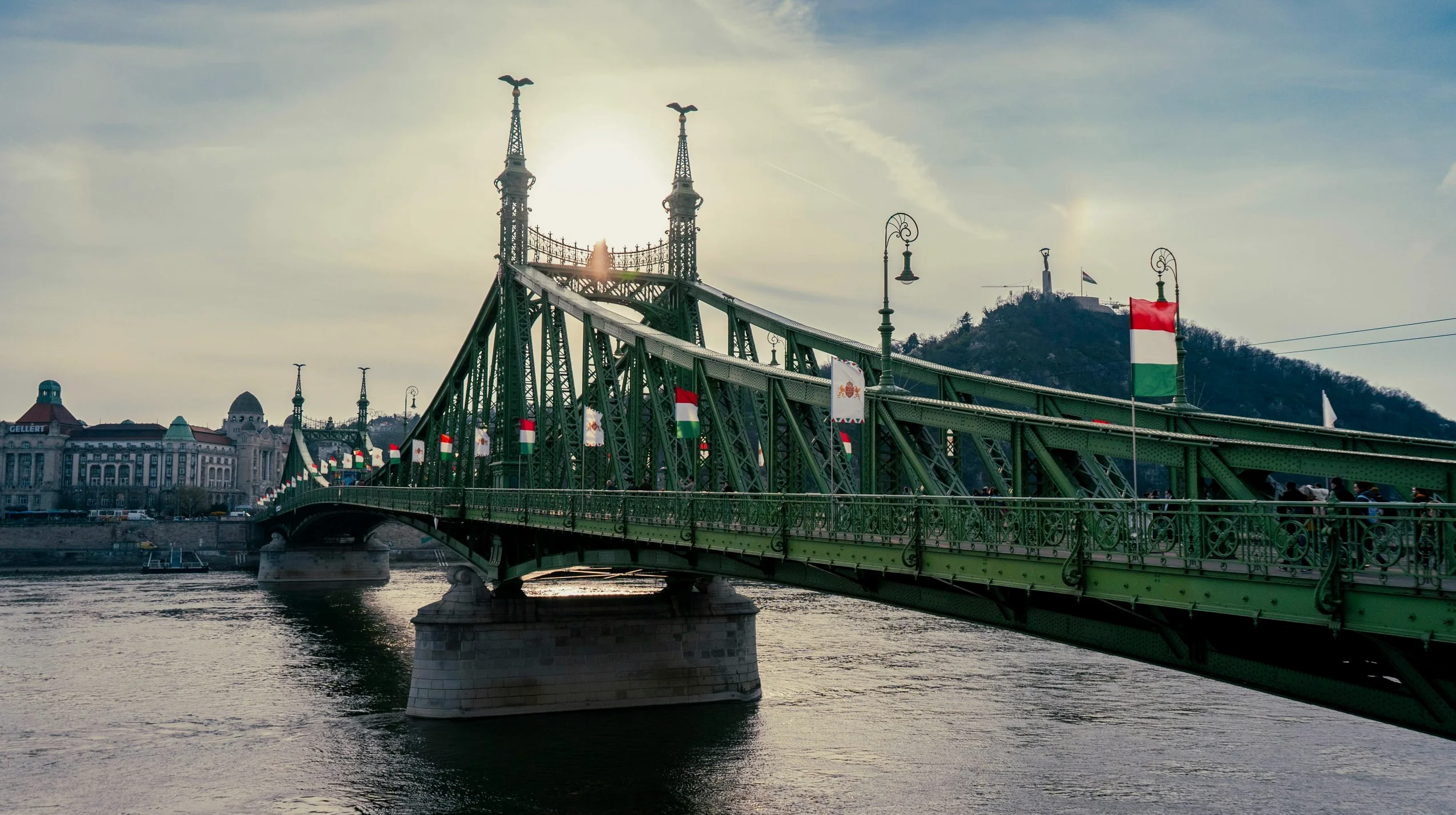
Hungarian Prime Minister Viktor Orbán has chosen to confront the European Union and Ukrainian President Volodymyr Zelensky as a strategic move to bolster his faltering re-election campaign, according to reports from Politico. With Orbán currently trailing his main rival, Péter Magyar, by about eight percentage points in opinion polls, the prime minister is using international tensions to frame his opponent as a pro-European, pro-Ukrainian candidate.
Blocking Ukraine’s Loan as Political Strategy
Orbán’s government has taken a controversial step by blocking a 90 billion euro bailout loan to Ukraine until Kyiv resumes Russian oil supplies through the Druzhba pipeline. This decision comes at a critical time as Hungary approaches its April parliamentary elections, with Orbán seeking to cast Magyar as a traitor to Hungarian interests by aligning with Brussels and Zelensky.
The move has drawn sharp criticism from both the EU and Ukraine. The EU is particularly concerned about the geopolitical implications of prolonging the loan freeze, as Kyiv desperately needs the funds to stabilize its economy and continue the war effort against Russia. Six weeks of uncertainty ahead of the Hungarian election could further strain already tense relations between Budapest and Brussels.
Magyar’s Dilemma: Pro-European or Nationalist?
Péter Magyar, leader of the Tisza party, has positioned himself as a reformer, criticizing Orbán’s 15 years in power for corruption, cronyism, and abuse of power. However, his stance on European and Ukrainian issues has created ambiguity, making it difficult for both the EU and Kyiv to fully support him.
Magyar has opposed fast-tracking Ukraine’s EU accession, a position that has left EU diplomats uncertain about his future policies. In a 2024 interview with Politico, Magyar stated that Tisza is a pro-European party but is aware of the bloc’s shortcomings. He has also expressed skepticism about the idea of a European ‘superstate,’ and said he has no close allies in the European Parliament.
Magyar’s stance on Ukraine has been similarly cautious. He reportedly used a recent conversation with Polish Prime Minister Donald Tusk to reiterate his opposition to Ukraine’s accelerated EU accession, despite the war’s devastation. This has left Kyiv and Brussels questioning whether Magyar would be more cooperative than Orbán if he were to win the election.
Orbán’s Economic and Political Attacks
Orbán has accused Magyar of creating chaos, fuel shortages, and rising gasoline prices through flawed economic policies. In a Facebook post, he claimed that the Tisza party, along with Brussels and Kyiv, seeks to install a pro-Ukrainian government in place of Hungary’s national parliament. Orbán has also asserted that only his Fidesz party can provide stability and security to Hungarians before the April election.
Magyar has countered by highlighting the high prices of fuel in Hungary compared to neighboring countries like Poland, the Czech Republic, and Bulgaria. He accused Orbán of failing to govern effectively and of burdening the country with some of the highest taxes in Europe. ‘Orbán does not govern effectively and shows no interest in the continuously deteriorating situation of Hungarian citizens or businesses,’ Magyar said in a public statement.
The EU is closely watching how long Orbán will continue to challenge Brussels, as the Hungarian leader is seen as one of the Kremlin’s closest allies in Europe. Meanwhile, some in Brussels hope for a Magyar victory, as it could potentially ease the current standoff with Budapest over Ukraine and other EU policies.
However, the uncertainty surrounding Magyar’s policies has left both the EU and Ukraine in a state of cautious optimism. A liberal European Parliament member noted that ‘there is a feeling that anything is better than Orbán,’ but added that it remains unclear what Magyar’s party truly stands for or what its long-term plans are.
As the April elections approach, the outcome could significantly reshape Hungary’s relationship with both the EU and Ukraine. While Kyiv and Brussels hope for a less confrontational approach from a potential Magyar government, the real test will come after the election, when it will become clear whether Magyar can resist the same temptations for power that have defined Orbán’s tenure.




Comments
No comments yet
Be the first to share your thoughts