

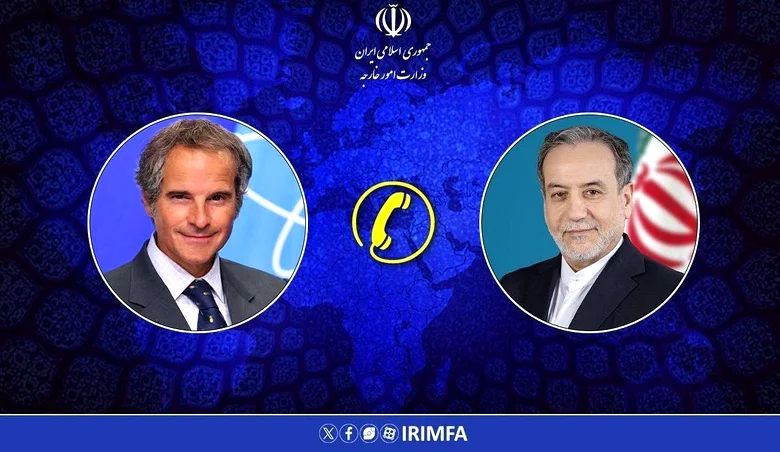
VIENNA — Rafael Grossi, director general of the International Atomic Energy Agency, held a phone conversation Saturday evening with Iranian Foreign Minister Abbas Araghchi. The discussion centered on recent indirect negotiations between Iran and the United States over Tehran’s nuclear activities.
Araghchi’s Telegram channel released a short statement Sunday. It said both men stressed constructive engagement through dialogue to push forward the talks and secure a durable agreement. The Yemeni News Agency reviewed the message.
The latest round of Iran-US discussions took place last Tuesday in Geneva, Switzerland. That session marked the second in the series. Negotiators first met April 12 in Muscat, Oman.
Those Geneva talks involved Iranian and American delegations. They aimed to address longstanding disputes tied to the 2015 nuclear deal, from which the US withdrew in 2018 under President Donald Trump. Iran has since expanded its uranium enrichment, prompting international concern.
Grossi has repeatedly urged Iran to grant IAEA inspectors fuller access to nuclear sites. In recent months, Tehran restricted some monitoring, citing retaliation for sanctions. The agency reported last week that Iran possesses enough enriched uranium for several nuclear weapons if further processed.
Araghchi, a veteran diplomat, leads Iran’s negotiating team. He previously served as deputy foreign minister and handled nuclear file communications. The US side, represented by Special Envoy Steve Witkoff, seeks to curb Iran’s program without direct contact, using European allies as intermediaries.
Saturday’s call came days after the Geneva meeting. Neither side released detailed outcomes from those talks. But diplomats described the atmosphere as pragmatic, with discussions on verification measures and sanctions relief.
The IAEA board meets next month in Vienna. Grossi plans to update members on Iran’s compliance. European powers—Britain, France and Germany—push for tougher measures if progress stalls.
Iran insists its program serves peaceful purposes, like energy and medicine. US officials demand verifiable limits to prevent weaponization. Oman and Switzerland have hosted prior rounds, valued for their neutrality.
Analysts watch for signs of momentum. A third round could follow soon, possibly in another neutral venue. Grossi and Araghchi agreed dialogue offers the best path, the statement noted.
Broader tensions persist. Israel views Iran’s advances as an existential threat. Regional proxy conflicts add urgency to diplomacy.




Comments
No comments yet
Be the first to share your thoughts