

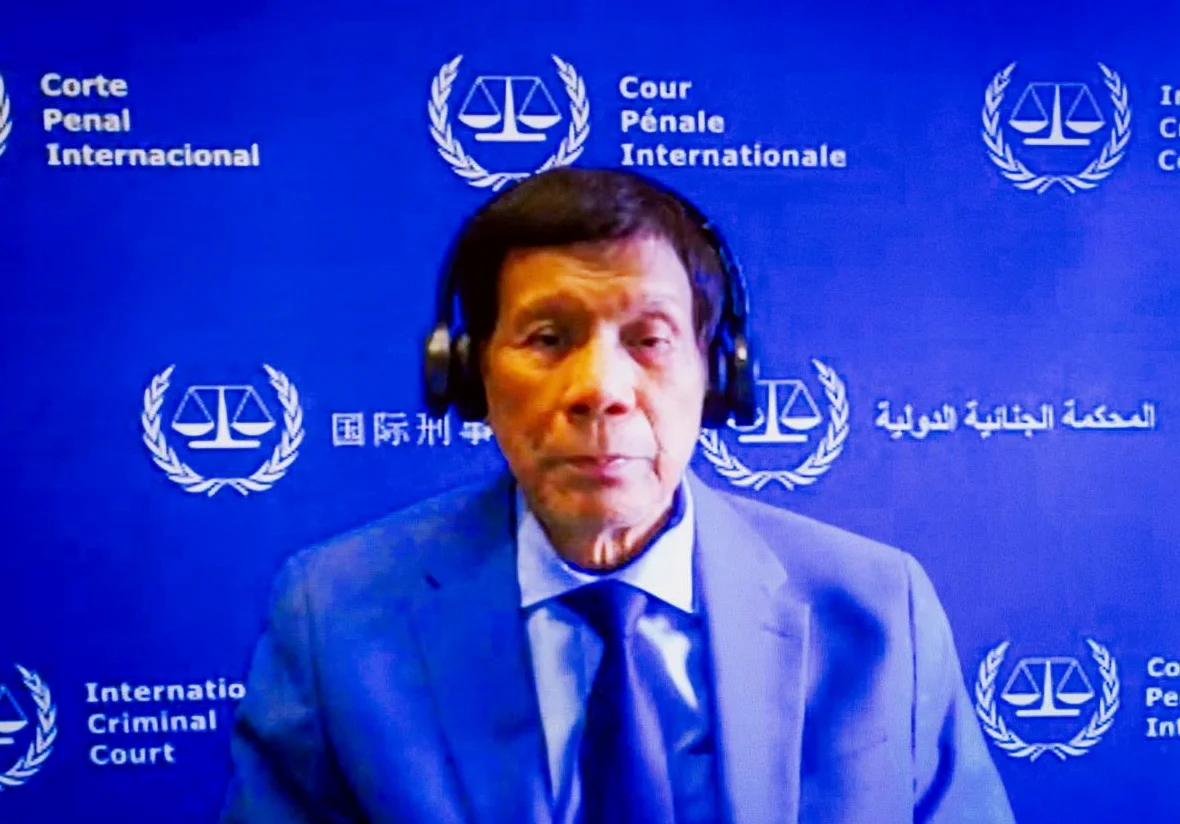
THE HAGUE — Former Philippine President Rodrigo Duterte won’t attend his confirmation hearing next week. The International Criminal Court granted his waiver request in a decision issued Friday.
Pre-Trial Chamber I stated the hearing, scheduled for February 23-27, proceeds in Duterte’s absence. The chamber cited provisions in the Rome Statute, the 1998 treaty that created the ICC. Those rules allow confirmation hearings to continue even if a suspect chooses not to appear.
ICC spokesperson Oriane Maillet said the chamber found Duterte’s signed request met all legal requirements. “Mr. Duterte stated that he understands he has the right to be present at the confirmation hearing and the consequences of waiving this right, which have been thoroughly explained to him by his counsel,” she added.
Duterte remains in custody at the ICC Detention Centre in Scheveningen, on the outskirts of The Hague, Netherlands. He has been held there since March 2024. Maillet stressed the facility upholds the highest international human rights standards for detainees. She noted that detained persons are presumed innocent until proven guilty beyond a reasonable doubt.
The spokesperson clarified Duterte’s absence stems solely from his own waiver. “It is not based on reasons related to health,” Maillet said.
One key limit: Duterte must appear if charges against him are confirmed. The Rome Statute bars trials from proceeding without the accused present.
Tony La Viña, a Filipino lawyer and former dean of Ateneo School of Government’s public policy program, broke down the hearing’s purpose during an interview Friday in Pasay City. He attended a book launch there.
“It’s not yet proof or testimony,” La Viña said. “It’s the basis of the charges — what he’s accused of and the evidence supporting those accusations.”
The defense gets a chance to argue why that evidence falls short, he explained. Guilt isn’t on the table. Judges decide only if the charges warrant a full trial.
La Viña drew parallels to Philippine courts. “It’s like pre-trial proceedings,” he said. Prosecutors must show enough to move forward. The process weeds out weak cases early.
Duterte faces accusations tied to his time in office from 2016 to 2022. ICC prosecutors allege crimes against humanity in the Philippines’ deadly anti-drug campaign. Thousands died in police operations and vigilante killings during that period. Duterte has denied wrongdoing and called the ICC probe biased.
His legal team submitted the waiver after consultations. Counsel explained the risks in detail, according to court records. Duterte, 79, signed off personally.
The hearing marks a key step. Prosecutors present their case file. Defense lawyers challenge it. Chamber judges rule within weeks or months.
If confirmed, Duterte’s trial could stretch years. Appeals follow. The full process tests the Rome Statute’s reach into national matters.
Philippine officials have rejected ICC jurisdiction since withdrawing from the treaty in 2019. Duterte’s arrest last year sparked protests in Manila. Supporters waved banners outside the presidential palace.
Maillet declined further comment on Duterte’s condition or case details. The court prioritizes fair proceedings, she reiterated.
La Viña urged Filipinos to watch closely. “This shapes how international law intersects with our sovereignty,” he said. The outcome could influence future accountability efforts worldwide.






Comments
No comments yet
Be the first to share your thoughts