

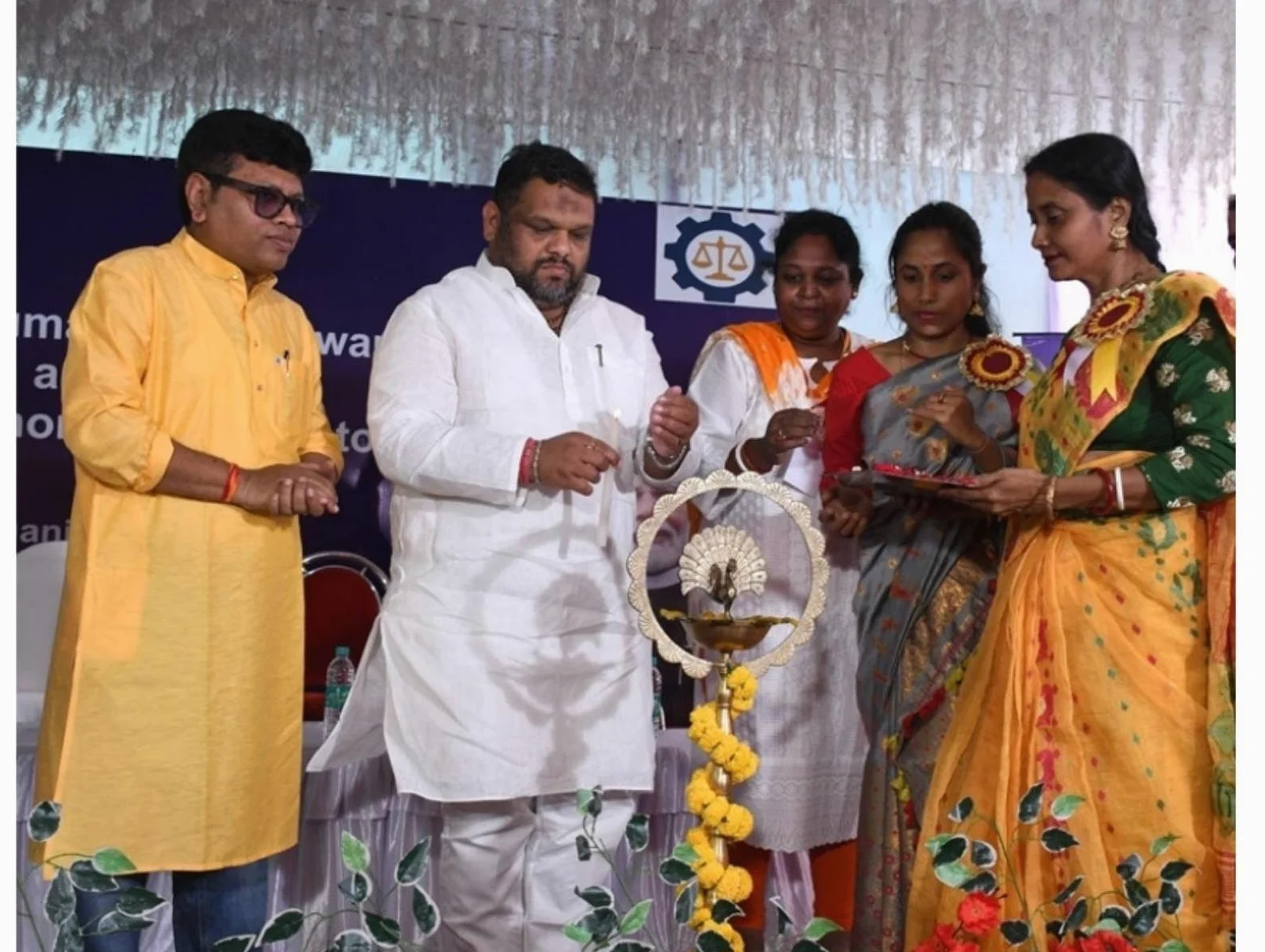
On 14 March 2026, a significant conference was held in Bishnupur, Bankura district, under the initiative of the Bharatiya Railway Mall Godam Shramik Union (BRMGSU). The event aimed to raise awareness about the rights, dignity, and social security of workers in the unorganised sector. The conference, held at the Lalmati Resort, attracted a large number of participants from various districts of the country.
Participants and Representation
The conference saw the participation of a significant number of Mallgodam workers from railway goods sheds across the country. In addition to these workers, representatives from other unorganised sectors such as stone sculpture artists, pottery artisans, masons, bidi workers, private tutors, and marginal farmers were also present. Their attendance underscored the broader unity among unorganised workers and highlighted the need for collective action to address their concerns.
Priyank Kanoongo, Hon’ble Member of the National Human Rights Commission (NHRC), attended the event as the Chief Guest. He was joined by a number of key officials from the BRMGSU, including Dr. Parimal Kanti Mondal, National President; Indu Sekhar Chakraborty, General Secretary; and several other members of the Central Committee. The presence of these leaders reflected the importance of the conference in the context of ongoing efforts to improve the working conditions of unorganised workers.
The event commenced with a traditional Dhamsha-Madal reception to welcome the Chief Guest. This was followed by a welcome address delivered by Haradhan Kaibarta, a member of the Central Committee of BRMGSU. In his speech, Kaibarta spoke about the organisation’s objectives, ongoing initiatives, and the importance of uniting unorganised workers to advocate for their rights and social security.
Emphasis on Human Rights and Social Security
In his address, Priyank Kanoongo highlighted the need to ensure human rights, social security, and dignified working conditions for unorganised workers. He stressed the importance of collective efforts to safeguard the rights and social protection of these workers. Kanoongo’s remarks resonated with the participants, many of whom have long faced challenges related to job insecurity, lack of benefits, and inadequate legal protections.
Later, Dr. Parimal Kanti Mondal, President of BRMGSU, provided an update on the organisation’s recent achievements. He stated that a national data survey covering Mallgodam workers from nearly 200 goods sheds across India had been completed and that the data had already been submitted to the Government of India. Mondal expressed hope that the government would begin administrative preparations from April 2026 to identify these unorganised workers. This step, he said, would facilitate the implementation of identity cards, joining letters, fixed wages, and other social security benefits for these workers.
The conference also featured discussions on the challenges faced by unorganised workers. Several labour leaders present at the event spoke about the need to improve working conditions, ensure fair wages, and provide access to social security benefits. They also shared insights into the future roadmap of the organisation, including plans to expand its outreach and advocacy efforts across the country.
The event concluded with a collective call to strengthen unity among workers and to enhance awareness about the rights and social security of unorganised labour. The participants expressed their commitment to working together to achieve these goals and to push for policy changes that would benefit the unorganised workforce.
Significance and Real-World Impact
The conference held in Bishnupur is significant not only for its scale but also for its potential impact on the lives of millions of unorganised workers in India. These workers, who make up a large portion of the country’s workforce, often lack access to basic social security benefits, including health insurance, pensions, and job security. By bringing together a diverse group of workers and leaders, the event highlighted the need for a more inclusive and equitable approach to labour rights.
According to the National Sample Survey Office, as of 2023, over 400 million people in India were working in the unorganised sector. These workers, who include casual labourers, street vendors, and artisans, often operate in precarious conditions without legal protections. The BRMGSU’s efforts to collect data on Mallgodam workers and submit it to the government represent a crucial step towards addressing these systemic issues.
The proposed administrative preparations by the government, if implemented, could lead to the formal recognition of these workers and the provision of essential benefits. This would not only improve their working conditions but also contribute to the overall economic stability of the country by ensuring that a large portion of the workforce is protected and empowered.
Experts suggest that such initiatives are part of a broader movement to improve the social security framework in India. Similar efforts have been seen in other countries, where governments have taken steps to formalise the status of unorganised workers and provide them with access to social benefits. The success of the BRMGSU’s campaign could serve as a model for other organisations working in this space.
The BRMGSU has set a clear goal for the government to begin administrative preparations from April 2026 to identify unorganised workers and provide them with social security benefits. This timeline is critical, as it sets the stage for concrete policy actions and administrative measures. The organisation is also planning to expand its outreach and advocacy efforts to ensure that the voices of unorganised workers are heard at the highest levels of government.
As the government moves forward with these plans, it will be important to monitor the implementation of these policies and assess their impact on the ground. The BRMGSU and other stakeholders will continue to play a key role in advocating for the rights and welfare of unorganised workers. Their efforts are likely to shape the future of labour policies in India and have a lasting impact on the lives of millions of workers.
The conference in Bishnupur has set the stage for a more inclusive approach to workers’ rights and social security. With continued collaboration between organisations, policymakers, and workers, there is hope that the challenges faced by unorganised workers can be addressed in a meaningful and sustainable way.






Comments
No comments yet
Be the first to share your thoughts