

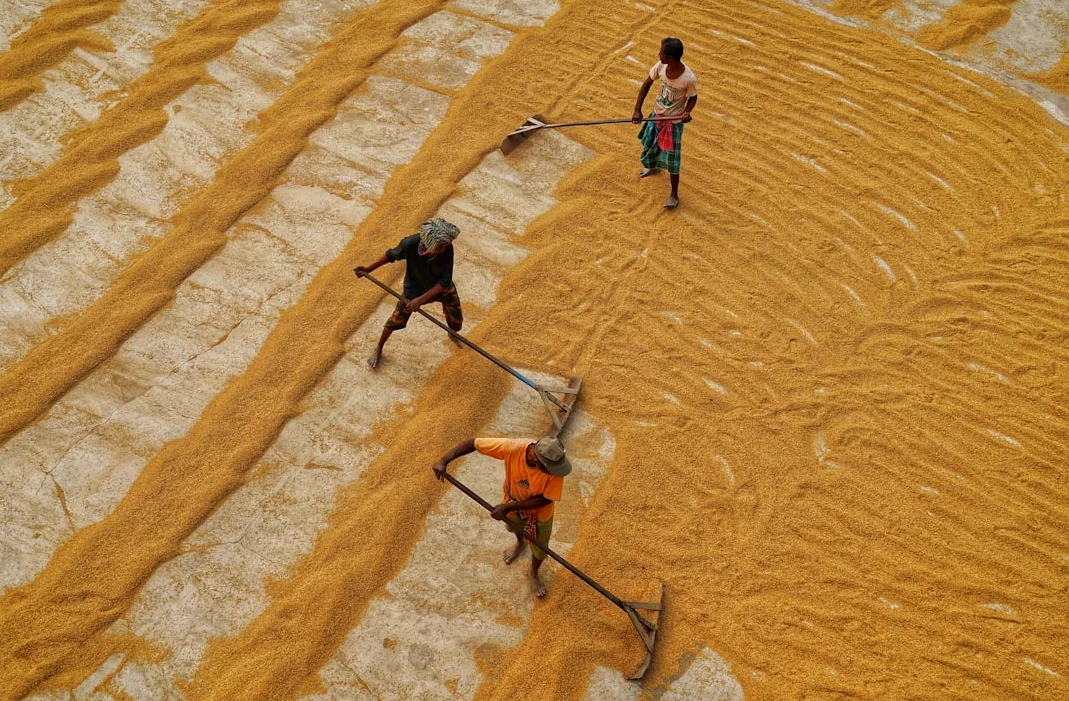
India’s basmati rice exports are expected to remain stable in the coming months despite the ongoing conflict in the Middle East, according to a report from Crisil Ratings. The report suggests that increased demand from countries like Saudi Arabia, Iraq, the United Arab Emirates, and Yemen will help offset the loss of exports to Iran, a key market.
Impact on Trade
Iran accounted for around 14 per cent of the variety’s export volumes last fiscal year, while the Middle East and other West Asian countries together accounted for 70-72 per cent. The ongoing conflict has disrupted supply chains and could impact exports, especially to Iran. If the logistical challenges persist for around a month, basmati rice trade volume might be impacted by 3.5-3.7 lakh tonnes, the ratings agency forecasted.
“Indian basmati rice export volume is likely to remain resilient due to 5-6 per cent higher demand expected from other Middle Eastern countries which account for 55-60 per cent of the export volume,” said Nitin Kansal, Director, Crisil Ratings. This increase in demand from other Middle Eastern countries is expected to cushion the blow from reduced exports to Iran.
Further, exporters will pass on any increase in freight and insurance costs to customers, which will help protect their operating profitability. Balance sheets should remain healthy despite the uptick in debt levels, keeping credit profiles stable, the report noted.
Logistical Challenges and Working Capital
The working capital cycle of basmati rice exporters is likely to stretch due to logistical hurdles such as inadequate availability of ships, longer transit times and payment-related challenges, resulting in a rise in working capital debt. Basmati rice exporters are also exploring alternative routes to avoid the Strait of Hormuz to ensure supply to the Middle East region.
However, this could raise transit times, lengthening the working capital cycle, causing a 10-15 per cent increase in working capital requirements. The report states that this shift in logistics is a strategic move to mitigate the impact of the ongoing conflict, but it comes with its own set of financial implications for exporters.
“The working capital cycle of basmati rice exporters is likely to stretch due to logistical hurdles such as inadequate availability of ships, longer transit times and payment-related challenges, resulting in a rise in working capital debt,” the report said. This is expected to increase the financial burden on exporters as they manage their cash flow and operational needs.
Market Outlook and Industry Resilience
Basmati rice realisation is expected to be steady in FY27 because of resilience in demand and near-stagnant production of basmati paddy in key producing areas following excess rains, the ratings agency noted. This stability in realisation is expected to help exporters maintain their margins despite the logistical challenges.
India is the largest producer and exporter of basmati rice, constituting close to 85 per cent of the global basmati rice volume. Exports constitute nearly two-thirds of India’s annual basmati rice sales by volume, making the industry highly vulnerable to geopolitics. This makes the current situation particularly significant for the Indian basmati rice export industry.
The report highlights that the current situation is not an isolated incident but part of a broader trend of geopolitical risks affecting global trade. Similar disruptions have been seen in previous conflicts, but this time the impact is being mitigated by increased demand from other regions.
What’s next for the Indian basmati rice export industry? The report suggests that exporters will continue to explore alternative routes and logistics strategies to maintain their supply chains. This may include investing in new shipping routes or improving their inventory management systems to handle the increased working capital requirements.
The report also notes that the industry is likely to remain resilient in the short term, but long-term stability will depend on the resolution of the conflict in the Middle East and the ability of exporters to adapt to the changing logistics environment.
“The working capital cycle of basmati rice exporters is likely to stretch due to logistical hurdles such as inadequate availability of ships, longer transit times and payment-related challenges, resulting in a rise in working capital debt,” the report said. This is expected to increase the financial burden on exporters as they manage their cash flow and operational needs.
As the situation in the Middle East continues to evolve, the Indian basmati rice export industry will be closely watched by analysts, investors, and policymakers. The resilience of this industry will have significant implications for global food markets and trade relations.





Comments
No comments yet
Be the first to share your thoughts