

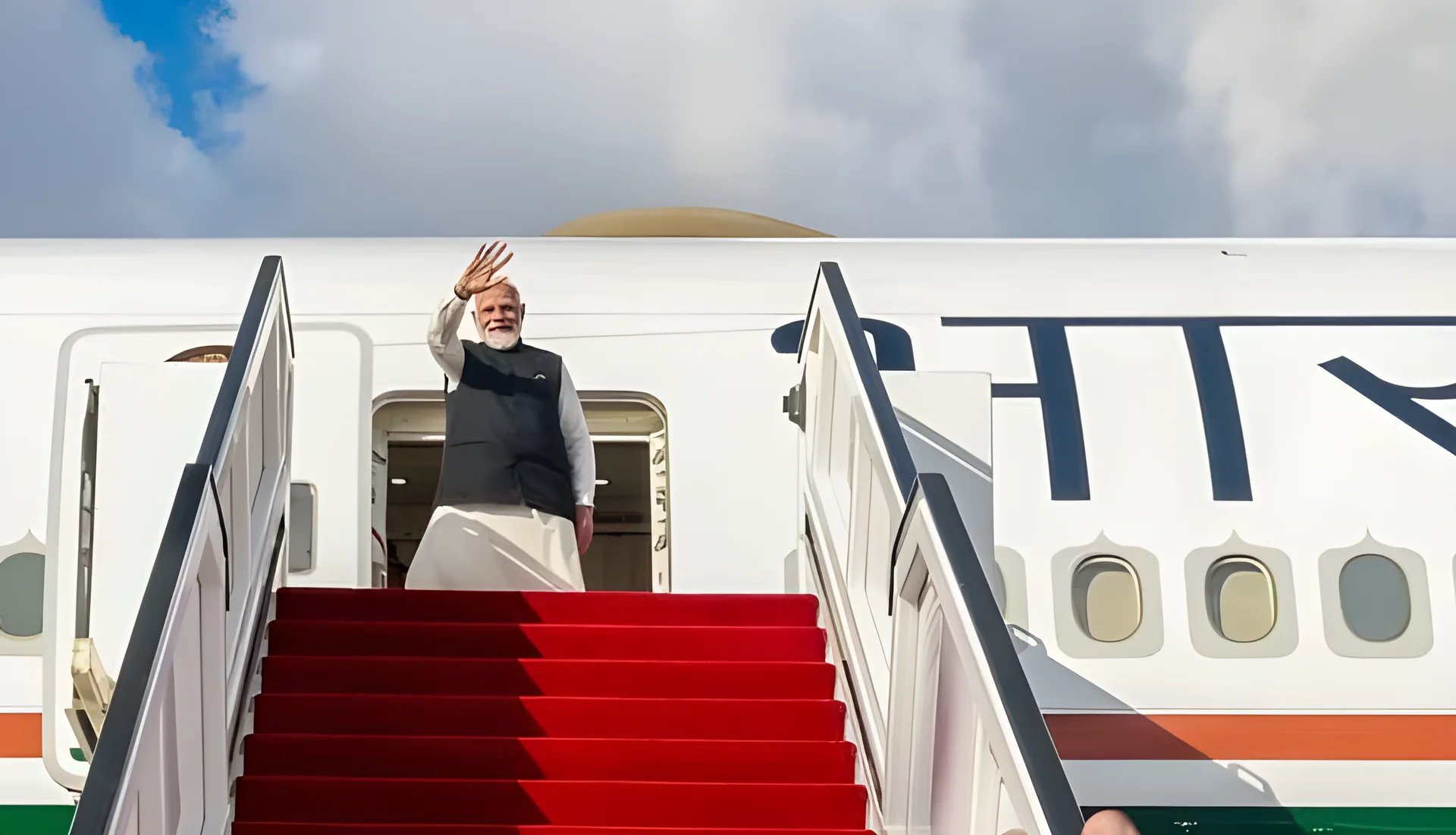
Prime Minister Narendra Modi announced during his historic state visit to Israel that India and Israel are ready to finalize a Free Trade Agreement (FTA), signaling a major boost for bilateral trade and technology cooperation. The announcement came during a joint press briefing in Jerusalem, where Modi concluded his first visit to the country as Prime Minister in nearly a decade.
27 Agreements Signed Across Key Sectors
The visit saw the signing of 27 Memoranda of Understanding (MoUs) across a range of sectors, including cultural exchange, manufacturing, artificial intelligence, and other strategic areas. These agreements are expected to strengthen India-Israel ties in technology, security, and economic collaboration.
Modi’s visit to Israel marked a significant milestone, with his last trip to the country in 2017. This time, he emphasized the deepening of cooperation in critical and emerging technologies, announcing the establishment of a ‘Critical and Emerging Technology Partnership’ between the two nations.
During the visit, Modi met with Israeli Prime Minister Benjamin Netanyahu, where they discussed collaborative efforts in high-tech artificial intelligence, quantum computing, economic partnerships, diplomatic engagement, and security cooperation. Netanyahu described the visit as ‘extraordinarily productive and also extraordinarily moving,’ citing Modi’s speech to the Knesset as particularly impactful.
Symbolic Gestures and Cultural Exchanges
Earlier in the day, Modi visited the Presidential Gardens in Jerusalem and planted a tree under the ‘Ek Ped Maa Ke Naam’ (One Tree in Mother’s Name) initiative, a symbolic gesture of environmental commitment. He also visited Yad Vashem, the World Holocaust Remembrance Center, where he paid homage to Holocaust victims and toured the Book of Names Hall, which preserves the memory of millions who perished during the Holocaust.
Modi’s address to the Knesset was described by Netanyahu as emotionally resonant, with many in the audience moved to tears. ‘I think there wasn’t a dry eye left in Israel after your moving statement yesterday in the Knesset,’ Netanyahu said, highlighting the personal and political significance of Modi’s visit.
Future Collaborations and G2G Meetings
Israeli Prime Minister Netanyahu also announced that India and Israel have agreed to hold a government-to-government (G2G) meeting in India at the earliest opportunity. This meeting will bring together key ministers from both nations to further discuss areas of cooperation and deepen existing partnerships.
Modi’s visit has already triggered a wave of optimism among business leaders and analysts, who see the FTA as a potential game-changer for trade between the two countries. The agreement is expected to reduce tariffs and simplify trade procedures, creating new opportunities for businesses in both nations.
India and Israel have been growing their economic ties in recent years, with bilateral trade reaching $6.5 billion in 2022. The proposed FTA is expected to boost this number significantly, with experts predicting a potential increase to $20 billion within a decade.
Analysts have noted that the FTA could provide Indian businesses with easier access to Israel’s high-tech market, while Israeli companies could benefit from India’s vast manufacturing base and growing consumer market. ‘This agreement is a strategic move that aligns with both countries’ long-term economic goals,’ said Anil Naik, an economic analyst at the Indian Institute of Foreign Trade.
With the FTA on the horizon, the two nations are also expected to deepen their collaboration in areas such as space exploration, cybersecurity, and agriculture. Modi’s visit has set the stage for a new era of cooperation between India and Israel, one that could have far-reaching implications for both economies.






Comments
No comments yet
Be the first to share your thoughts