

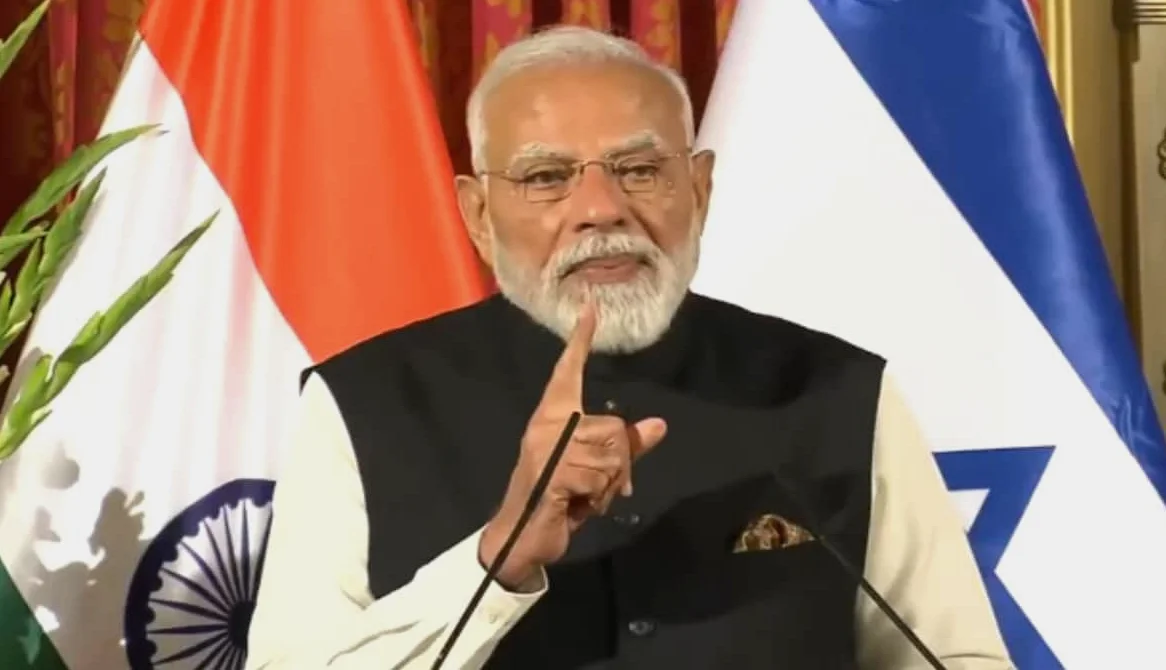
India’s diplomatic response to the escalating tensions involving Iran has been one of strategic silence, a calculated move that reflects its broader geopolitical balancing act. As the Middle East grapples with renewed conflict, New Delhi has chosen neither to openly condemn nor to explicitly support Tehran, instead offering carefully worded statements that underscore its complex relationship with the region.
Historical Ties and Modern Realities
The civilisational link between India and Iran dates back thousands of years, with Persian culture, language, and poetry deeply embedded in the Indian subcontinent. In modern times, this relationship has translated into pragmatic cooperation, most notably through the Chabahar port project in Iran’s southeastern region. The port was envisioned as a vital gateway to Afghanistan and Central Asia, offering India an alternative to Pakistan’s Gwadar port, which is part of China’s expansive Belt and Road Initiative (BRI).
However, the promise of Chabahar has been significantly curtailed by U.S. sanctions on Iran. International shipping companies and banks have largely avoided the port due to fears of American penalties, limiting its utility as a trade corridor. Meanwhile, the competing Gwadar port and CPEC have also faced their own set of challenges, including Baloch separatist unrest and Pakistan’s internal instability, which has undermined the viability of the project.
Diplomatic Tensions and Sovereignty Concerns
India’s relationship with Iran has also been complicated by the actions of Supreme Leader Ayatollah Ali Khamenei. Despite the warmth of diplomatic exchanges, Khamenei has repeatedly raised sensitive issues within India, particularly regarding the status of Kashmir and the treatment of Muslims in the country. These interventions, while diplomatically phrased, have been seen as disrespectful to Indian sovereignty and an attempt to use pan-Islamic sentiment for geopolitical purposes.
India has taken note of these actions. As a rising global power, New Delhi cannot afford to overlook a partner that questions its territorial integrity or incites communal tensions within its borders. Khamenei’s rhetoric has steadily eroded the goodwill built through shared history and geography, making it difficult for India to maintain an unreservedly friendly stance toward Iran.
Economic and Strategic Calculus
India’s strategic calculus is further shaped by its economic and security interests. The United States remains India’s largest trading partner and a critical source of advanced technology and defense systems. The two nations have signed landmark defense agreements, including the sale of American fighter jets and intelligence-sharing arrangements, which have significantly bolstered India’s military modernization.
Israel, too, has become a major defense supplier to India, providing missile systems, drones, and surveillance technology. These partnerships offer India a level of strategic depth and technological advantage that Iran and its allies cannot match. This contrast in capabilities is a key factor in India’s decision to maintain a balanced approach in the region.
India’s diaspora in the Gulf states also plays a crucial role in shaping its foreign policy. Approximately nine million Indians live and work in countries like Saudi Arabia, the United Arab Emirates, and Qatar, which have historically opposed Iran’s regional ambitions. Any foreign policy that alienates these nations could have serious domestic repercussions, disrupting livelihoods and affecting India’s economic ties with the Gulf.
Domestic and Regional Considerations
Additionally, India’s domestic dynamics make it cautious about aligning too closely with Iran. Iran’s foreign policy often seeks to mobilize Shia communities abroad, but India’s Muslim population is predominantly Sunni and has long practiced a syncretic form of Islam that is less politically charged than in the Middle East. As such, Iran’s sectarian appeal finds limited resonance in India, and New Delhi has little incentive to adopt a posture that might inflame communal tensions.
Despite these challenges, India and Iran have maintained a complex relationship rooted in shared civilizational heritage and energy interdependence. Iran was once a major supplier of crude oil to India, and the two nations cooperated on counterterrorism efforts in Afghanistan and Central Asia. However, the persistent irritants in their relationship have made it difficult to sustain the old camaraderie.
As the conflict in Iran continues, India’s stance remains one of strategic clarity. It is not a matter of moral evasion but a reflection of a nation that has learned to hold contradictions simultaneously. India values its historical ties with Iran but is not bound by them, pursuing new partnerships while keeping all options open in an unpredictable world.
India will not join any chorus of condemnation against Iran, but it also will not shield Tehran from the consequences of its actions. It will protect its energy interests, safeguard the welfare of its diaspora, deepen its partnerships with the U.S. and Israel, and observe the region’s developments with the cool eye of a power that has learned, across centuries, that flexibility is the key to survival.






Comments
No comments yet
Be the first to share your thoughts