

 BBC
BBC 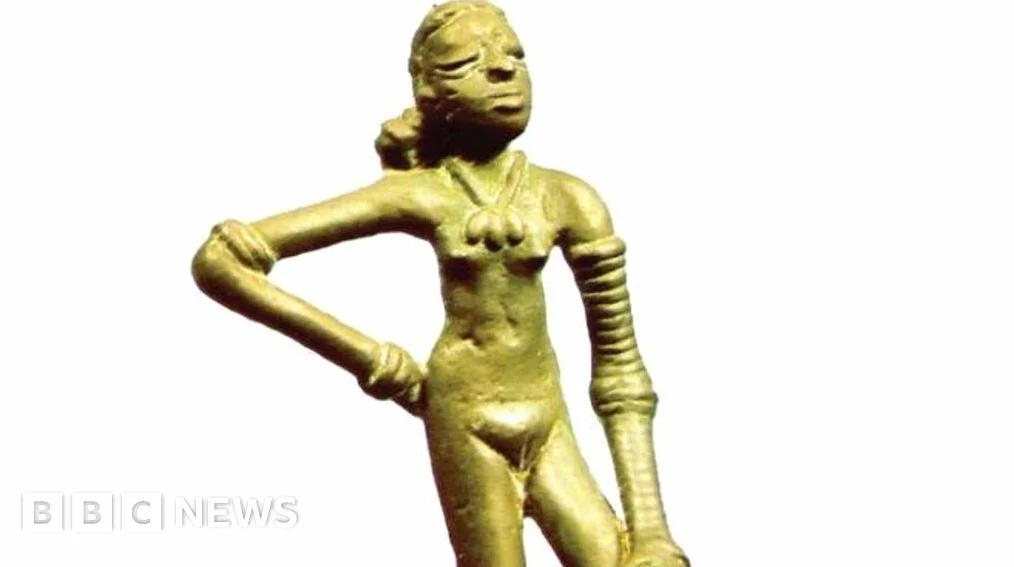
The “covered-up” image of a nude artefact has been withdrawn from an Indian school textbook after it sparked a massive backlash from historians and educationists; In a newly released grade nine textbook, the figurine’s torso was initially covered with dark shading, hiding its anatomical features.
Restoration of Original Image
After it created an uproar. Officials said that the original image has been restored in the digital version of the book and that new print editions would also carry the unedited photo of the bronze sculpture. NCERT director Dinesh Saklani told reporters that the modified image would be withdrawn from the textbook.
Historical Significance
A chapter on the Indus Valley has been a staple in Indian school curriculum, and though the Dancing Girl sculpture has appeared in textbooks for decades – including in earlier versions of NCERT textbooks – its torso has never been censored in any way. The NCERT has not yet shared a reason for introducing the modified image but media reports have speculated that it could be due to concerns over nudity.
An editorial in the Indian Express newspaper, which first broke the news, criticised the modification of the artefact, saying: “The Dancing Girl has been significant not because it conforms to a blindfolded standard of modesty but because it embodies poise, confidence and unmistakable presence. If the task of education is to equip young people to engage with the world as it is, then NCERT would do better to trust both students, and women – both contemporary and millennia old – with a little more agency.”
Education Policy and Art Integration
The textbook is part of the NCERT’s new Arts Education Series, introduced under the latest National Education Policy (NEP) to integrate visual, performing and literary arts into mainstream schooling. The Dancing Girl sculpture. Which was discovered at Mohenjo-daro – one of the largest settlements of the ancient Indus Valley Civilisation – depicts a girl adorned with ornaments with her hair tied in a bun.
Her posture captures the human body in motion and archaeologists have long considered the sculpture to be of great artistic value and evidence of the civilisation’s advanced knowledge of metallurgy. The sculpture is currently housed in the National Museum in Delhi. The NCERT, an autonomous organisation under the federal education ministry, oversees syllabus changes and textbook content for children taking exams under the government-run Central Board of Secondary Education (CBSE).


Comments
No comments yet
Be the first to share your thoughts