

 BBC News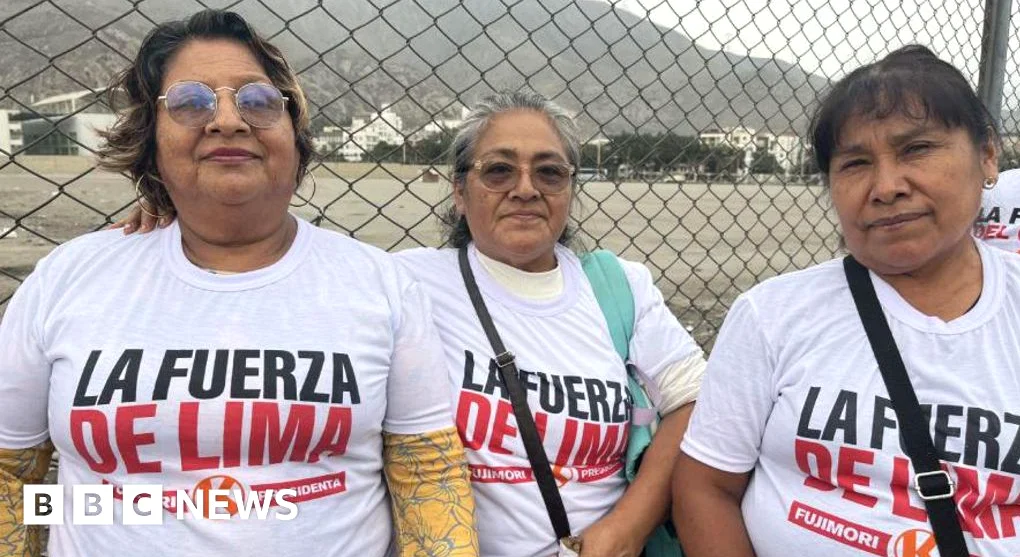
Insecurity and instability are driving voters in Peru’s tight presidential race, according to BBC News. A criminal gang sent a message demanding $15,000 to a bus company in a poor suburb of Lima, which preceded an armed attack on a driver. The driver. Toño, was shot in the legs and abdomen and was out of work for four months; he now works with fear, despite his wounds being dry. Toño’s case was one of nearly 30,000 extortion incidents reported in Peru in 2025, many targeting small businesses or transport workers.
Campaign Promises and Voter Fears
Right-wing Keiko Fujimori. Daughter of the late former president, Alberto Fujimori, is running for a fourth time against left-wing Roberto Sánchez; Fujimori has defined her campaign with an array of ‘tough-on-crime’ policies, while Sánchez has promised sweeping changes to the state and higher public spending. In Lima’s suburb of San Juan de Lurigancho, armed police guard the gate to the bus depot where Toño works; According to an independent observatory of crime and violence, 239 drivers were killed last year.
Toño, who now drives with plain-clothed armed police on board for his protection, wants whoever the next president is to have a ‘strong hand against crime’. Eiffel Calla, head of security at the depot, says five drivers from their company have been attacked. One was killed, another was left in a vegetative state. Fears of insecurity have driven other Latin American nations further right in recent elections, boosting leaders who promise a hardline approach to law and order.
Economic Policies and Political Instability
At her final campaign rallies, Fujimori declared ‘war’ on extortionists, promising to deploy the military against organised crime, control prisons, and work with financial institutions to block extorted money. She’s invoked the memory of her father, Alberto Fujimori – president from 1990-2000 – whose hardline approach resulted in him being jailed for human rights abuses. His supporters, though, remember him for bringing order to the country and stabilising the economy.
Despite having churned through eight presidents in the last 10 years, Peru’s economy has remained relatively stable. It is a major exporter of critical minerals and metals such as copper. Fujimori’s supporters pit her free market approach to the economy and pledge to attract more US investment against Sánchez’s proposals to review mining contracts, increase some corporate taxes, raise the minimum wage and give the state more control over natural resources – ideas that have unsettled financial markets. Sánchez argues Peru’s wealth originating from its natural resources doesn’t reach ordinary people or the often rural communities where a lot of mining takes place.
Voter Frustration and Political Fatigue
Sánchez’s supporters, such as María Elena Linares, disagree that his policies will bring economic instability. ‘We are going to nationalise, but we are also going to accept foreign countries that want to contribute to our country. Don’t believe this negative idea that communism throws out foreign investors – they’re grossly wrong,’ she insists. Another supporter, Raúl, backs Sánchez’s plans to expand the state and hopes it will bring more investment in health and education, as well as infrastructure outside of Peru’s major cities.
Sánchez has also promised to free former left-wing president Pedro Castillo, who was imprisoned after trying to dissolve congress and rule by decree to avoid impeachment. No party has a majority in Peru’s congress, which has led to regular presidential impeachments, though Fujimori’s party has the largest minority bloc. Many Peruvians are fatigued by this instability. Last year, ‘Gen Z’ protests erupted, with young people arguing the state was failing to tackle crime, corruption and inequality.
On Friday, a judge said Sánchez could stand trial over alleged undeclared campaign finances from regional elections from 2018-2020. He denies the accusations and is expected to appeal. Fujimori spent years under investigation over campaign financing allegations too, which were dropped last year. But she spent nearly a year-and-a-half in jail in pre-trial detention from 2018-20. Under-30s make up about a quarter of Peru’s electorate, and many who protested feel neither candidate can deliver real change.




Comments
No comments yet
Be the first to share your thoughts