

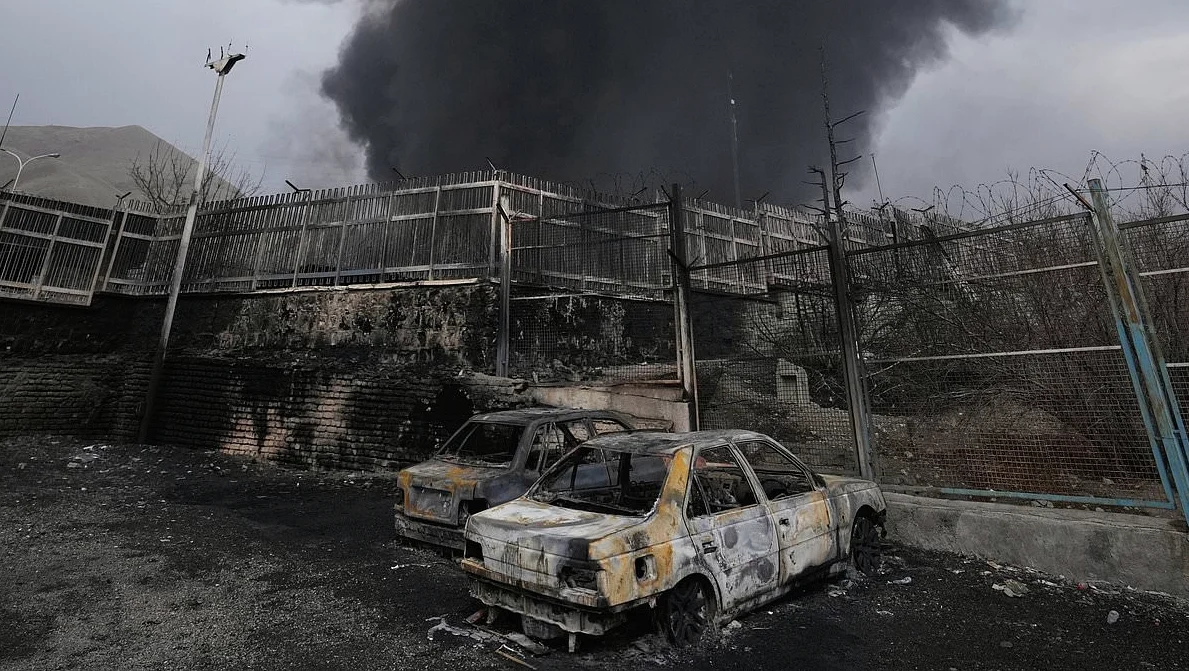
In a move that has deepened regional tensions, Iran announced the selection of a new supreme leader after the death of Ayatollah Ali Khamenei, who was killed in US-Israeli airstrikes that targeted fuel depots in Tehran and surrounding areas. The country’s clerical council, known as the Assembly of Experts, confirmed the appointment, though the identity of the new leader remains undisclosed. The decision comes amid a rapidly escalating conflict that has seen strikes across the Middle East, with civilians and infrastructure bearing the brunt of the violence.
Impact on Regional Security and Civilian Life
The appointment of the new supreme leader is expected to have significant implications for Iran’s foreign and military policies. According to Iran’s Mehr news agency, Assembly of Experts member Ahmad Alamolhoda stated, ‘The vote to appoint the leader has taken place and the leader has been chosen.’ While the official announcement will be made by the body’s secretariat, some members have hinted that the late leader’s son may take on the role.
Meanwhile, Israel has issued a stern warning, stating it is prepared to target the newly appointed leader and the Assembly of Experts. The warning follows a series of Israeli strikes that have extended the conflict into its ninth day. Israel’s military confirmed that its air force had struck ‘fuel storage facilities in Tehran’ to prevent their use by the Iranian military. These strikes have left Tehran with a dark haze and the lingering smell of burning fuel.
The conflict has taken a heavy toll on civilians. Iran’s health ministry reported that at least 1,200 civilians have been killed and around 10,000 wounded, though these figures have not been independently verified. In Lebanon, the health ministry said at least 294 people have been killed in Israeli air strikes over the past week, prompting Prime Minister Nawaf Salam to warn of a looming ‘humanitarian disaster.’
Regional allies of Iran, including Saudi Arabia, Kuwait, and Bahrain, have also reported attacks. Saudi Arabia intercepted a wave of drones aimed at targets in its capital, Riyadh. Kuwait reported an attack on fuel tanks at its international airport, while Bahrain reported damage to a water desalination plant. The attacks have left many residents in a state of fear and anxiety.
Iran’s Military Capabilities and War Strategy
Iran’s Major Guards have stated they have enough supplies to continue their aerial drone and missile war over the Middle East for up to six months. Guards spokesman Ali Mohammad Naini said that so far, Iran has used only first- and second-generation missiles but plans to deploy ‘advanced and less-used long-range missiles’ in the coming days.
Tehran has vowed to target US assets in the region, and the US has not ruled out sending ground troops into Iran. President Donald Trump, who attended the return of the bodies of six American service members killed in a drone strike on a US base in Kuwait, has suggested that Iran’s economy could be rebuilt if a leader ‘acceptable’ to Washington replaces the late supreme leader. However, Tehran has rejected this notion.
Analysts warn that there is still no clear path to ending the conflict, which US and Israeli officials say could last a month or longer. Trump has insisted that the war is ‘all but won,’ despite the ongoing Iranian missile and drone strikes. Meanwhile, China’s top diplomat Wang Yi has called for an end to the war, stating, ‘The war in the Middle East should never have happened,’ and urging the world to avoid ‘the law of the jungle.’
China and Russia have largely stayed on the sidelines despite their close ties with Iran. Their non-intervention has raised questions about their influence in the region and their willingness to support Tehran in the face of growing international pressure.
Inside Iran, the damage to infrastructure and residential areas is mounting. Tehran’s governor told the IRNA news agency that fuel distribution had been ‘temporarily interrupted’ in the capital while repairs were carried out. A 26-year-old teacher, speaking anonymously to AFP, described the fear of living under bombardment, saying, ‘I don’t think anyone who hasn’t experienced war would understand it.’
With the situation showing no signs of abating, the next few weeks will be critical in determining the trajectory of the conflict. The appointment of the new supreme leader is likely to shape Iran’s response to the ongoing crisis, and the international community remains closely watching for any developments that could lead to a resolution or further escalation.





Comments
No comments yet
Be the first to share your thoughts