

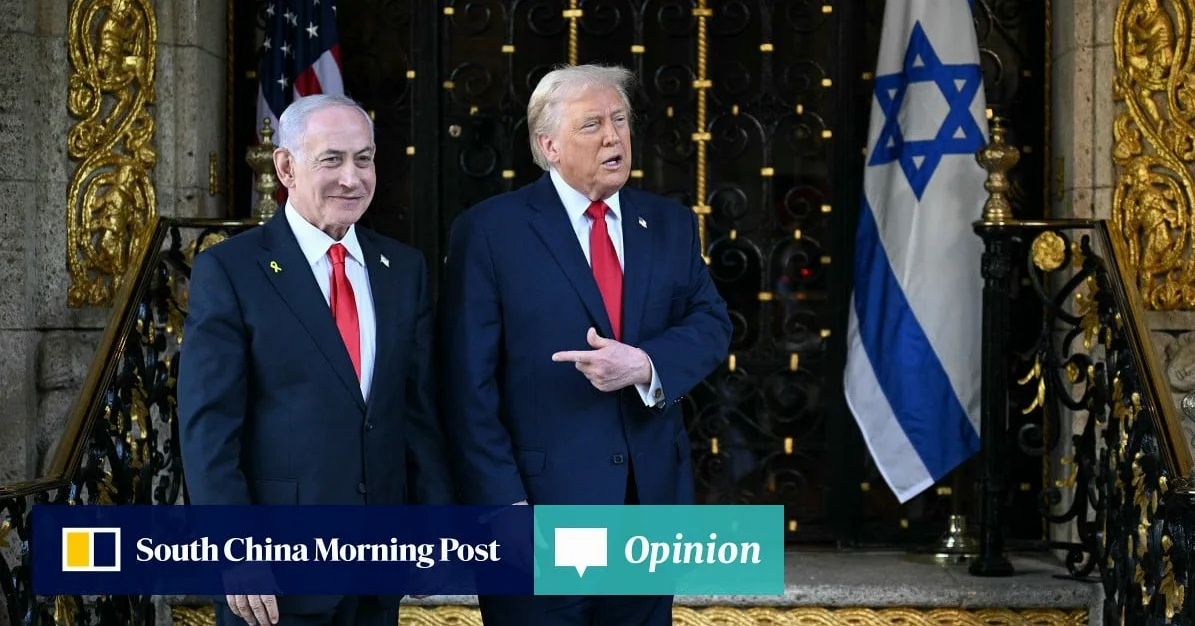
Escalating Regional Tensions and Military Responses
Recent military actions have significantly heightened tensions in the Middle East, with reports indicating that the United States has deployed advanced drone technology to counter Iranian threats. According to Fortune, the U.S. military has been using cost-effective Shahed drones, which are believed to be inspired by Iranian designs, to conduct targeted strikes. This move has raised concerns about the potential for an arms race in the region, as both nations seek to outmaneuver each other in technological advancements. The use of such drones not only showcases the evolving nature of warfare but also highlights the strategic importance of maintaining a technological edge in this volatile region.
Analysts from the London School of Economics suggest that recent U.S. strikes could have transformed Iran from a state with latent nuclear capabilities into one with a significant nuclear grievance. This shift in perception could lead to a more assertive Iran, potentially accelerating its nuclear ambitions to counter perceived threats from the West. The LSE emphasizes that the geopolitical landscape is rapidly changing, and the implications of this shift could be far-reaching, affecting not just the Middle East but also global nuclear non-proliferation efforts.
Meanwhile, the South China Morning Post notes that the situation in the region is further complicated by the involvement of other global powers, particularly China, which has been expanding its influence in the Middle East. The article highlights how China’s growing economic presence could play a crucial role in shaping the dynamics of the conflict, potentially offering Iran an alternative to Western alliances. This could influence Iran’s strategic decisions regarding its nuclear program, as it seeks to balance its relationships with both the West and emerging powers like China.
Iran’s Strategic Position and Nuclear Ambitions
As the conflict continues, Iran has been using its strategic position in the Persian Gulf to assert its influence. According to the Korean newspaper, Iran is reportedly holding the Strait of Hormuz, a vital waterway for global oil trade, and possesses weapons-grade uranium, which could be key in its nuclear ambitions. This combination of geographical advantage and nuclear material could allow Iran to play a significant role in the region’s power dynamics, especially as the conflict enters its third week. The newspaper suggests that Iran is prepared to withstand prolonged pressure, indicating a confidence in its ability to hold out against external pressures.
The South China Morning Post also reports that the Iranian leadership is likely considering the implications of its nuclear program in the context of the ongoing conflict. As the war in the region intensifies, Iran’s leaders may view the development of a nuclear capability as a necessary measure to deter further aggression from the United States and its allies. This perspective could be reinforced by the perception that the international community is not adequately addressing the security concerns of Iran, leading to a sense of urgency in pursuing nuclear options.
Furthermore, the London School of Economics highlights the potential for a nuclear arms race in the Middle East, with Iran’s nuclear ambitions potentially prompting other regional powers to pursue similar capabilities. This could lead to an environment where the proliferation of nuclear weapons becomes a more pressing concern, not only for the region but also for global security. The LSE suggests that the international community must address these concerns proactively to prevent a destabilizing arms race.
International Reactions and Diplomatic Efforts
As the situation escalates, the international community is grappling with the implications of Iran’s potential nuclear ambitions. According to the Spanish newspaper, the only viable solution to prevent the spread of nuclear weapons is through diplomatic efforts. The article emphasizes that only through dialogue and negotiation can the international community hope to address the growing tensions and prevent further escalation. This perspective is echoed by various analysts who argue that the current trajectory of the conflict could lead to a dangerous arms race if left unchecked.
The South China Morning Post reports that the United States is seeking additional funding for its military operations in the region, with a request for $200 billion to support its offensive against Iran. This financial commitment highlights the U.S. determination to maintain its military presence in the Middle East and to counter any perceived threats from Iran. However, this approach could be seen as exacerbating the conflict rather than de-escalating it, potentially leading to further instability in the region.
In contrast, the Korean newspaper highlights the importance of local reactions to the conflict, noting that the situation has had a significant impact on the people of Iran and the surrounding countries. As the war continues, the local populations are increasingly affected, with many fearing for their safety and livelihoods. This local perspective is crucial for understanding the broader implications of the conflict, as the human cost of the war could influence international responses and diplomatic efforts.
What’s Next for the Region and Global Security
The future of the Middle East and the implications for global security hinge on the actions of both Iran and its adversaries. According to the South China Morning Post, the international community must consider the potential consequences of an Iranian nuclear program, including the risk of a regional arms race and the destabilization of global non-proliferation efforts. Analysts warn that the situation could spiral out of control if diplomatic channels are not reopened and if the international community fails to engage in meaningful dialogue with Iran.
The London School of Economics suggests that the next phase of the conflict could involve increased military posturing from both sides, with the potential for further escalation. The LSE warns that without a concerted effort to de-escalate tensions, the situation could lead to a full-scale war, with catastrophic consequences for the region and the world. This highlights the need for a unified international approach to address the underlying issues driving the conflict.
As the conflict continues, it is imperative that the international community prioritize diplomatic solutions over military confrontation. The Spanish newspaper emphasizes that only through dialogue can the world hope to prevent the spread of nuclear weapons and ensure a more stable future for the region. This perspective is crucial as the world grapples with the potential implications of an Iranian nuclear bomb, which could reshape the geopolitical landscape and have far-reaching consequences for global security.






Comments
No comments yet
Be the first to share your thoughts