

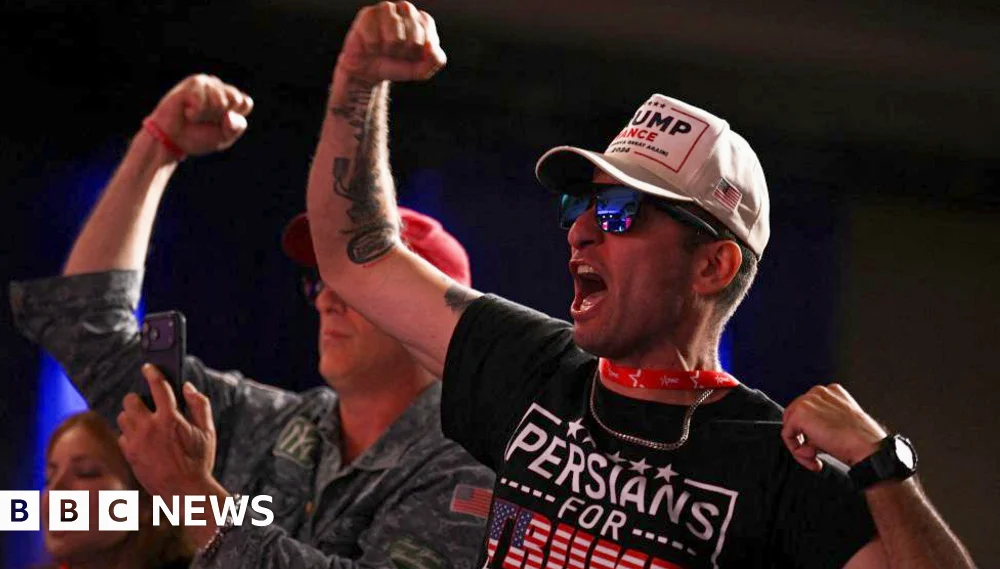
The ongoing war with Iran has sparked a growing divide among US conservatives, with older and younger members of the party displaying starkly different perspectives on how to approach the conflict. This schism has intensified as pressure builds on former President Donald Trump to outline a clear exit strategy from the war, according to multiple sources.
Generational Divide in Conservative Views
At the Conservative Political Action Conference (CPAC), the war was a dominant topic of conversation, with older conservatives emphasizing the need for a strong military stance against Iran. In contrast. Younger conservatives were more vocal about the economic and human costs of prolonged conflict and called for a diplomatic resolution. According to BBC reports. This generational divide has become more pronounced as the war enters its second month, with younger activists pushing for a reevaluation of US foreign policy in the Middle East.
“We cannot afford to keep spending billions on a war that has no clear end,” said a young conservative activist from California, who spoke at a CPAC panel. “The American people want results, not just rhetoric.”
Meanwhile, older conservatives, many of whom were active during the Iraq War, argue that the US must maintain a firm stance to deter Iranian aggression. “Iran is a threat to global stability, and we must not back down,” said a retired military general who attended CPAC. “This is not a time for retreat.”
Trump’s Exit Strategy Under Scrutiny
As the war continues, pressure on Trump to define an exit strategy has intensified. According to Reuters. Trump’s special envoy to the Middle East has stated that the US is hopeful of meetings with Iran “this week,” suggesting that diplomatic talks may be on the horizon. However, the lack of a clear timeline or specific objectives has led to frustration among both political factions.
“We need a plan. Not just hope. ” said a Republican senator from Texas, who has been critical of Trump’s handling of the war. “The American public deserves transparency and a roadmap for de-escalation.”
Trump’s recent comments on the war have been inconsistent, with some advisors pushing for a more aggressive stance and others advocating for a negotiated settlement, though this internal debate has only deepened the generational divide among conservatives, with younger members urging the former president to take a more pragmatic approach.
Local Impact and Public Sentiment
The war has had a tangible impact on American citizens, with rising gas prices and increased military spending affecting everyday life. According to a recent survey by the Pew Research Center, 63% of Americans believe the war is not worth the cost, with younger Americans disproportionately opposing the conflict.
In states with large military bases, such as Texas and California, families of service members have expressed concern over the ongoing hostilities. “We are tired of our children being sent to war without a clear purpose,” said a mother whose son is currently stationed in the Middle East. “We need a different approach.”
In contrast, older Americans, particularly those who have lived through previous conflicts, tend to support the current military posture. “We’ve seen this before, and we know what happens when we back down,” said a 75-year-old veteran from Florida. “Iran will only grow stronger if we show weakness.”
International Reactions and Diplomatic Tensions
The war has also drawn international attention, with European allies and Middle Eastern countries closely monitoring the situation. The United Kingdom has called for increased diplomatic efforts, while France has warned of potential regional instability if the conflict continues.
“The world is watching, and the US must act responsibly,” said a French diplomat in an interview with Le Monde. “Prolonged conflict risks destabilizing the entire region.”
In the Middle East, reactions have been mixed. While some Arab countries support the US stance, others have called for a de-escalation. Iran itself has remained silent on the possibility of diplomatic talks, though internal sources suggest that some factions within the government are open to negotiations.
What’s Next and Why It Matters
As the war continues, the generational divide among US conservatives is likely to become more pronounced. The pressure on Trump to define a clear exit strategy will only increase, especially as public opinion shifts against the war. The outcome of potential diplomatic talks with Iran will be serious in determining the future of the conflict.
“The next few weeks will be decisive,” said a political analyst from the Brookings Institution. “Whether Trump chooses to pursue a more aggressive or diplomatic approach will shape the trajectory of the war and its impact on American society.”
The war’s economic and human costs are already being felt across the country, with rising inflation and military spending placing a strain on the economy. If a resolution is not reached soon, the divide among conservatives could deepen, with lasting implications for US foreign policy and domestic politics.






Comments
No comments yet
Be the first to share your thoughts