

Iran Launches Missiles and Drones at UAE and Ships
On Monday, the United Arab Emirates said it had been attacked with 12 ballistic missiles, three cruise missiles, and four drones, according to the Gulf nation’s Ministry of Defense. Three people were moderately injured. Since the conflict began, UAE air defenses have engaged a total of 549 ballistic missiles, 29 cruise missiles, and 2,260 drones. Iran claimed it had struck an American warship, but the U.S. Central Command denied any U.S. vessel was hit. According to the U.S. military, two commercial vessels safely transited the key waterway Monday under U.S. protection.
Iran also launched drones at a ship in the Strait of Hormuz, UAE authorities said. The Iranian administration says it received a U.S. response to its 14-point peace proposal, which it says is aimed at ending the war, not extending the current ceasefire. President Donald Trump said over the weekend that he’d likely reject the Iranian proposal, as “they have not paid a big enough price.”
U.S. Announces New Naval Mission for Strait of Hormuz
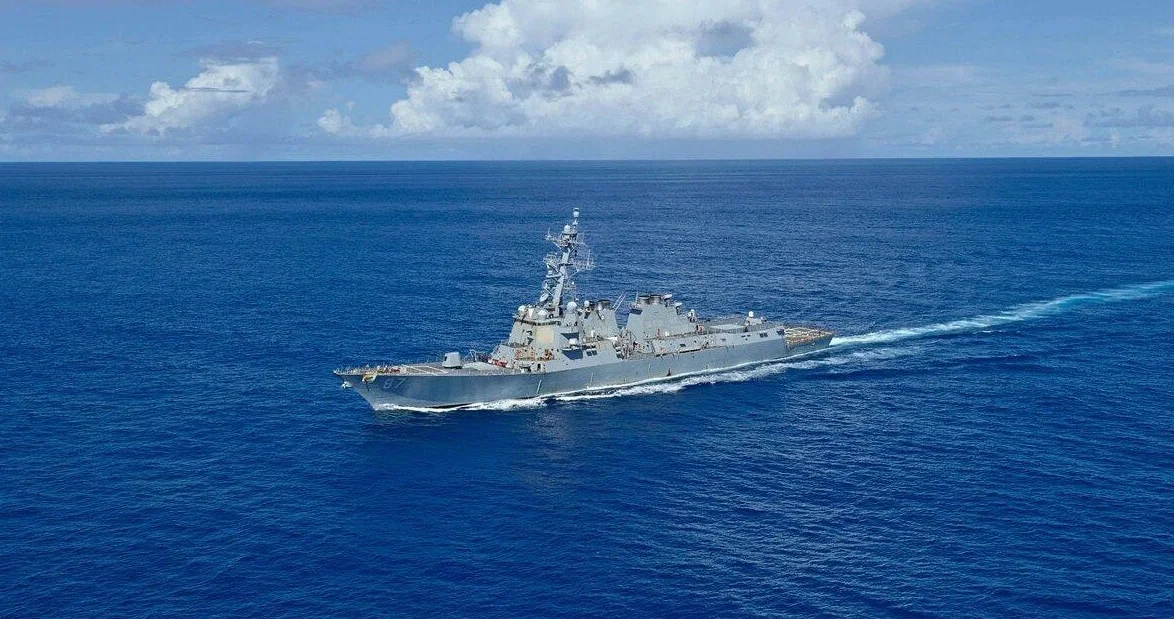
U.S. President Donald Trump announced on Truth Social that the U.S. military will guide stranded ships out of the Strait of Hormuz. He called this effort “Project Freedom,” but did not provide details on how it will work in practice. According to U.S. Central Command Admiral Brad Cooper, the U.S. Navy is providing “a thick layer of defense” to commercial shipping to allow them to proceed out of the Arabian Gulf. Cooper said that Iran was “initiating aggressive behavior,” including launching multiple cruise missiles at U.S.-flagged ships and at the U.S. Navy vessels protecting the commercial vessels. However, both the U.S. and Iran denied any damage to their own vessels.
A group representing independent oil tanker operators, Intertanko, has called for “clear, verified information” on how “Project Freedom” will work in practice. Philip Belcher, the Marine Director at Intertanko, said it is unclear whether the U.S. would intervene in the event of an Iranian response, or how traffic flows would be managed by the Omani Coast Guard. According to Belcher, the U.S. would provide “oversight from naval and air assets,” and ships would be expected to transit within territorial waters, with the Omani Coast Guard responsible for coordinating ship movements.
Iran Warns Against U.S. Military Involvement in Strait
Iran’s Central Command issued a warning that any foreign military, particularly the U.S., would be targeted if it attempted to enter the Strait of Hormuz. Ali Abdollahi, a representative from the Iranian Zentralkommando, stated on Irib that “every foreign military force, and especially the aggressive U.S. military,” would be attacked if it intended to approach or enter the strait. Shortly after Trump’s announcement, Iranian parliamentarian Ebrahim Asisi warned that any U.S. involvement in the new maritime regulations in the Strait would be considered a violation of the ceasefire.
Iranian state media reported that it had no plans to target the UAE, but the country’s military has already threatened to retaliate after the U.S. Navy attacked an Iranian freighter in the Gulf of Oman. According to Trump, the USS Spruance had intercepted the Touska after it refused to halt its journey toward the Strait of Hormuz. The U.S. Navy reportedly damaged the ship’s engine room and boarded it to search its cargo. Iran described the attack as “armed maritime piracy” and a violation of the ceasefire, vowing to retaliate. According to the Iranian General Staff’s spokesperson on Telegram, Iranian forces soon launched drone attacks on several U.S. warships.






Comments
No comments yet
Be the first to share your thoughts