

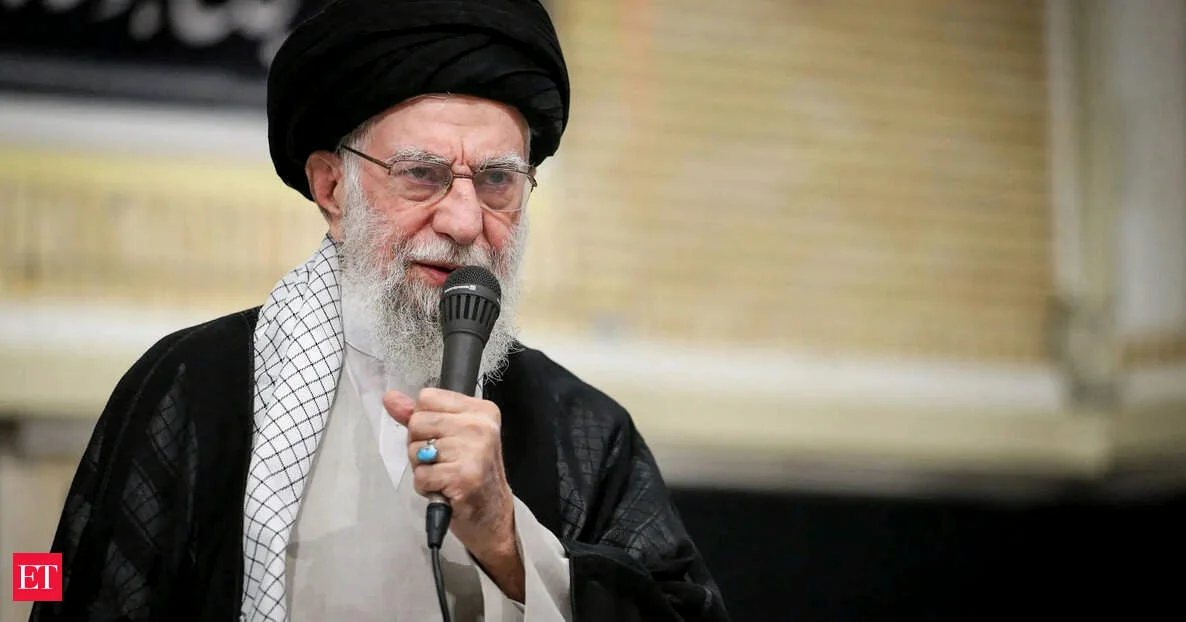
Iranians will pay their final respects to Supreme Leader Ayatollah Ali Khamenei in a three-day mourning ceremony beginning Wednesday evening, according to a senior Iranian official. The public viewing of his body will take place at the Imam Khomeini Prayer Hall in Tehran, with the event expected to draw large crowds.
Public Viewing and Funeral Plans
According to Hojjatoleslam Mahmoudi, head of Iran’s Islamic Propagation Council, the farewell ceremony will last for three days, with the funeral procession to be announced at a later date. The public will be able to pay their respects to Khamenei’s body starting at 10 p.m. local time (1830 GMT) at the Imam Khomeini Prayer Hall, as confirmed by Iranian state media.
Mahmoudi said the Mosalla, or prayer hall, would be open to visitors, allowing the public to participate in the ceremony and demonstrate their support for the late leader. ‘The dear people can attend and take part in the farewell ceremony and mark a strong presence once again,’ he said in comments carried by Iranian media.
Significance of Khamenei’s Leadership
Ayatollah Ali Khamenei, who ruled Iran with an iron grip based on hostility toward the U.S. and Israel, died on Saturday at the age of 86. His death comes at a time of heightened tensions between Iran and both nations, particularly following recent air strikes attributed to the U.S. and Israel.
Khamenei had long been a central figure in Iran’s political landscape, overseeing policies that emphasized resistance to Western influence and the preservation of Iran’s theocratic system. His leadership was marked by a strong anti-Israel stance and a deep distrust of the United States, which he often accused of interfering in Iran’s internal affairs.
The late leader’s death is expected to have a significant impact on Iran’s domestic and foreign policy. Analysts suggest that the transition of power will be closely watched, as Khamenei had been the dominant figure in Iran’s political hierarchy for decades.
Regional Implications and Next Steps
The mourning period for Khamenei is likely to be a time of national reflection and political maneuvering. The funeral procession, which is yet to be announced, will be a key moment in determining the direction of Iran’s leadership and its stance on international relations.
Experts note that the period following Khamenei’s death could see increased scrutiny of Iran’s military and political strategies, particularly regarding its nuclear program and relations with Israel. The Iranian government has not yet confirmed who will succeed Khamenei as the Supreme Leader, but it is expected to be a figure aligned with his hardline policies.
The ceremony is also expected to draw international attention, as it will be a rare public display of mourning for a high-ranking Iranian official. Diplomatic observers will be watching closely to see how the event unfolds and what it might signal about Iran’s future direction.
According to Iranian state media, Khamenei’s death was the result of air strikes by the U.S. and Israel, though no official confirmation has been provided. The claims have not been independently verified, and both the U.S. and Israel have not commented on the incident.
The event marks the end of an era in Iranian politics, with Khamenei having served as the country’s Supreme Leader since 1989. His legacy will be a topic of discussion for years to come, particularly in the context of Iran’s evolving role in the Middle East.






Comments
No comments yet
Be the first to share your thoughts