

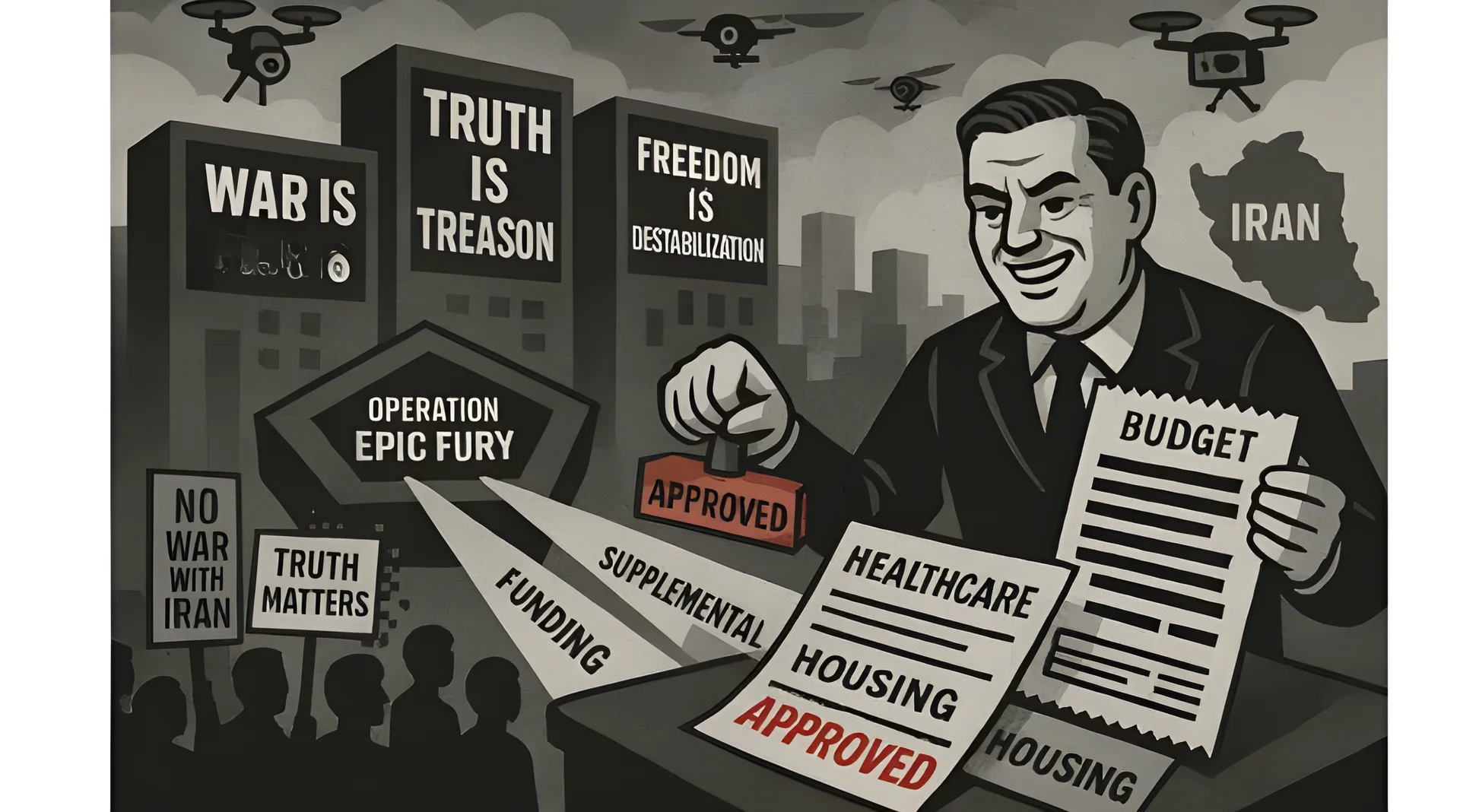
The justification for recent military actions against Iran has come under intense scrutiny, with claims about the country’s nuclear program and potential threats being heavily questioned by experts and analysts. Despite assertions from U.S. officials, the narrative surrounding Iran’s nuclear ambitions has been called into doubt by those who argue that the evidence does not support the premise of an imminent threat.
Origins of the Nuclear Debate
The debate over Iran’s nuclear program is not new. When the United States invaded Iraq in 2003, many argued that the American public was being misled about the existence of weapons of mass destruction. The same skepticism has now resurfaced in discussions about Iran’s nuclear capabilities. Reliable intelligence assessments have consistently stated that Iran has not pursued a nuclear weapon since 2003, and this assessment remains in place today.
In 2023, U.S. intelligence services, including those under the Trump administration, confirmed that Iran has not been in pursuit of a nuclear weapon. This contradicts the claims made by some officials, who have asserted that Iran poses a significant threat to the region.
Strategic Maneuvers and Diplomatic Efforts
Iran has long used nuclear enrichment as a means of gaining use in negotiations with the West. This strategy, while controversial, was not entirely without justification. By engaging in nuclear enrichment, Iran sought to counterbalance the influence of its regional adversaries, particularly Israel, which is widely believed to possess a significant nuclear arsenal.
Despite these tensions, Iran demonstrated flexibility in diplomatic negotiations, most notably with the 2015 JCPOA agreement. Under this deal, Iran agreed to intrusive inspections by the International Atomic Energy Agency (IAEA) and committed to not stockpiling enriched uranium. These concessions were made despite the fact that the United States had not fulfilled its commitments under the agreement, including lifting sanctions and encouraging investment in Iran’s economy.
Omani Foreign Minister Yusuf bin Alawi made a notable statement the day before Israel and the United States launched their attack on Iran, indicating that he had foreknowledge of the impending conflict. He stated that Iran had agreed to IAEA inspections and would not stockpile enriched uranium, a position that was unprecedented given Oman’s usual discretion in such matters.
Imminent Threat Claims Examined
Another central claim used to justify the attack on Iran was the existence of an imminent threat to U.S. troops in the region. Secretary of State and National Security Adviser Marco Rubio argued that Iran would retaliate against any attack, and that waiting for such an attack would result in higher casualties for the U.S.
This reasoning has been widely criticized as circular. If the threat was imminent, it would be irrational to wait for an attack that the U.S. itself could prevent. The Pentagon has since clarified that there was no intelligence indicating Iran was planning an attack. This undermines the rationale for the preemptive strike.
Israeli Prime Minister Benjamin Netanyahu has been vocal about the need to act against Iran, claiming that the country was building underground facilities to protect its nuclear and missile programs. However, this argument has been deemed misleading. Iran’s decision to reinforce its facilities is a logical response to the military superiority of its adversaries, particularly the United States and Israel. It is a standard practice for nations to protect their strategic assets.
Furthermore, the U.S. had the opportunity to address concerns about Iran’s nuclear program through diplomatic means. An agreement with Iran could have allowed the IAEA full access to underground facilities, ensuring transparency and reducing the perceived threat.
As the debate continues, the focus remains on the validity of the claims that led to the military action. With no clear evidence of an imminent threat or a nuclear program in pursuit, the justification for the attack remains in question. The implications of these actions on international relations and the stability of the region are yet to be fully understood.




1 Comment