

 Washington Post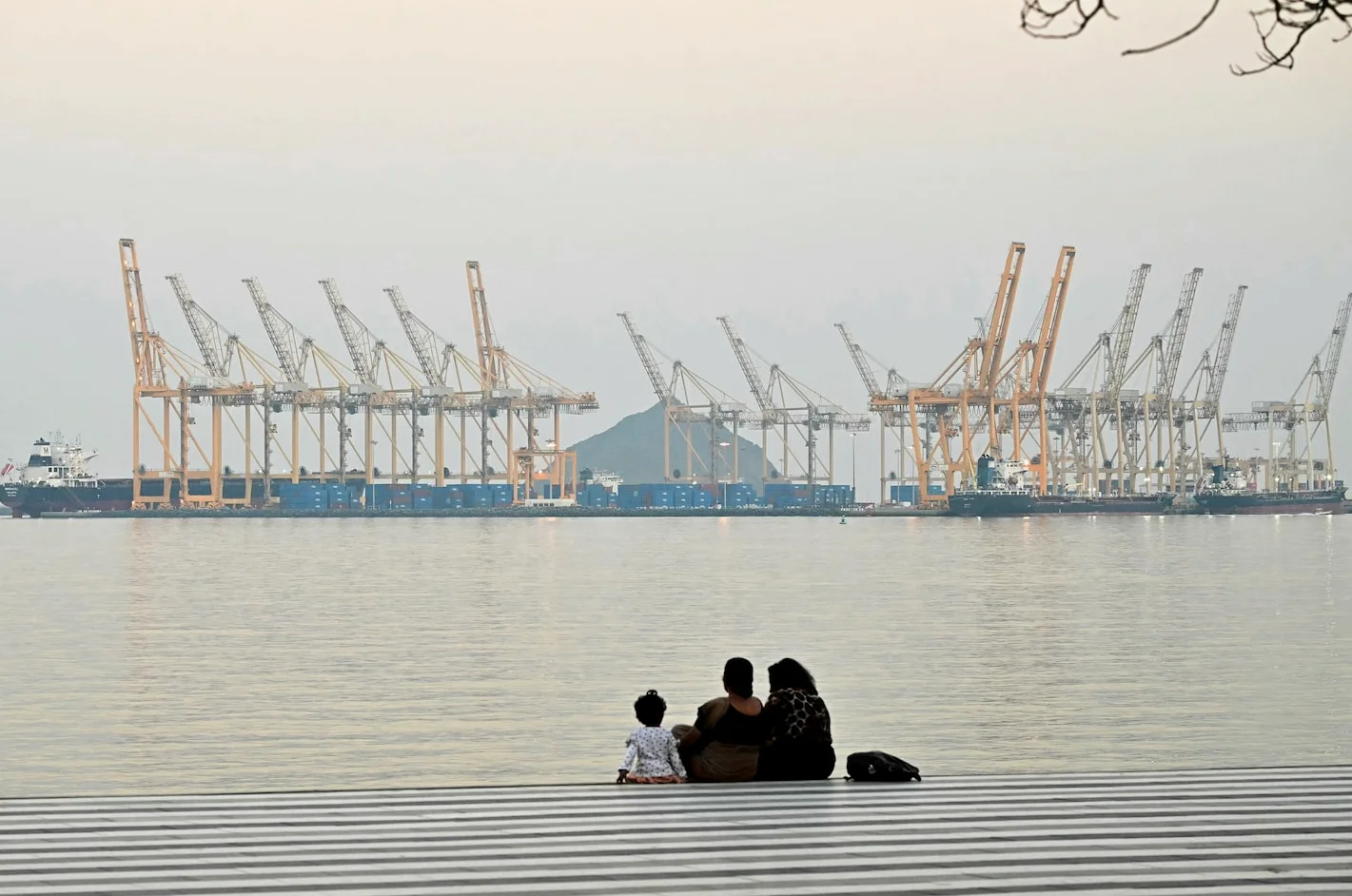
A dockyard in the Strait of Hormuz, seen in February, has become a focal point of a growing economic crisis as Iranian missile and drone attacks have disrupted critical global trade routes. The war’s economic impact is now being felt far beyond the oil and natural gas shipments that typically flow through the region, affecting air and maritime logistics between Asia and Europe.
Disruption in Air and Ocean Freight
Just one week into the U.S.-Israeli assault on Iran, the war’s economic toll has extended to air and ocean freight. The closure of several international airports, including Dubai’s, has idled nearly one-fifth of global airfreight capacity. This has led to a 45 percent increase in shipping costs from Asia to Europe, more than twice the rise seen for shipments to the United States, according to Flexport CEO Ryan Petersen.
The shipping impact reflects a broader economic truth: Europe and Asia are being hit harder and faster by the war than the United States. ‘Europe and Asia are heavily dependent on energy imports, making them more vulnerable to negative macroeconomic spillovers,’ said Maurice Obstfeld, former chief economist for the International Monetary Fund.
Regional Impact and Rising Costs
Gasoline prices in the United States have risen to $3.41 a gallon, up from $2.98 a week ago, according to AAA. Meanwhile, European and Asian economies are feeling the brunt of the crisis. Tanker traffic through the Strait of Hormuz has dropped 90 percent from prewar levels, according to tracking service MarineTraffic. In addition, 57 container ships are trapped in the region, causing ripples through global supply lines.
Maersk, one of the world’s largest ocean carriers, has suspended new bookings on almost all cargo in or out of the United Arab Emirates, Oman, Iraq, Kuwait, Qatar, Bahrain, and Saudi Arabia. ‘Those containers will then just sit at origin ports around the world and not get loaded,’ said Petersen of Flexport.
Air Freight Disruptions and Rising Fuel Costs
Air cargo has been more heavily affected than seaborne shipments. The closure of airspace in several countries, including the UAE, Qatar, Bahrain, Kuwait, Iraq, and Iran, has led to a sharp reduction in cargo capacity. For each week that air shipments are suspended, cargo carriers need at least a week-and-a-half to catch up, according to DHL Global Forwarding CEO Oscar de Bok.
Aircraft flying between Asia and Europe must now take longer routes, increasing fuel costs. One European gauge of jet fuel prices is up 72 percent since the war began, approaching its 2022 peak following Russia’s invasion of Ukraine. ‘Spiking airfreight costs on the Asia-to-Europe route will act like surge pricing on Uber,’ said Brian Bourke of SEKO Logistics.
As supply chain managers adapt to another crisis, the constraints on airport runway and warehouse capacity are becoming apparent. ‘The good news is planes can fly to different airports. However, it’s not like these airports have infinite capacity to take cargo from other areas,’ said Chris Rogers of S&P Global.
The economic impact of the Iran war is spreading rapidly, with countries like India, China, and South Korea facing significant challenges. The war is not only affecting trade but also government finances, as seen in India’s currency hitting a 50-year low against the dollar. ‘If this is a protracted conflict, Asia is going to feel a very difficult sting out of this,’ said Eric Robertsen of Standard Chartered PLC.






Comments
No comments yet
Be the first to share your thoughts