

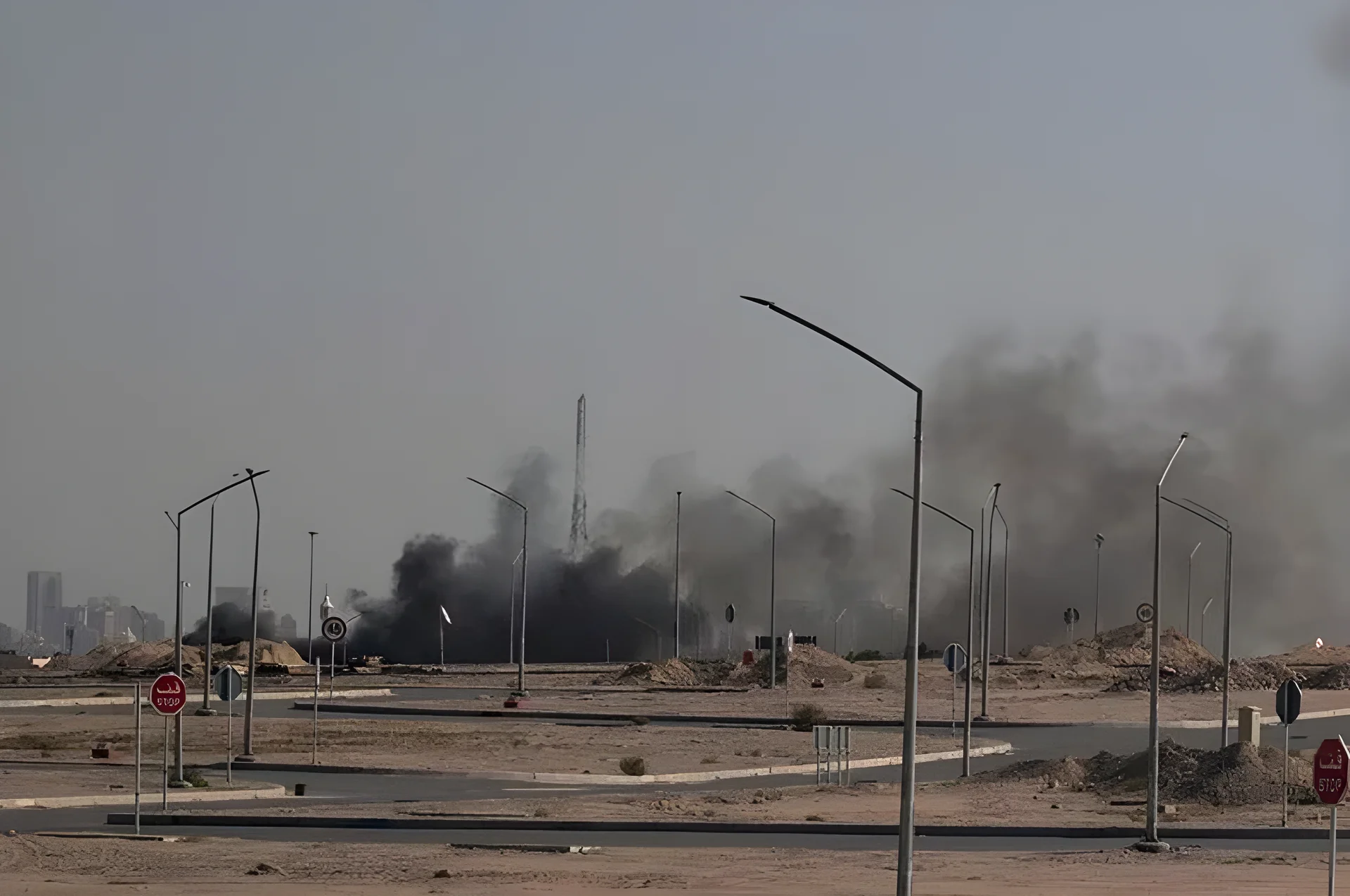
Iran has told the United Nations that it will continue defending itself until US-Israeli attacks stop, as the death toll from the ongoing regional conflict surpasses 1,332, with children making up nearly a third of the casualties. The escalation has sparked global concern, with nations across the world reacting to the intensifying violence in the Middle East.
Regional Impact and Civilian Toll
According to the Iranian Red Crescent Society, at least 1,332 people have been killed in Iran since the start of the US-Israeli military campaign, which began earlier this week. Among the dead are children, who account for roughly 30% of the casualties, according to Iranian government spokeswoman Fatemeh Mohajerani. The attacks have also struck residential areas, including near Tehran University, and have spread to southern and eastern Lebanon, where Israeli airstrikes have displaced thousands of civilians.
Residents of Beirut have been forced to flee the southern suburbs after Israeli strikes on the Lebanese capital. More than 120 people have been killed in Lebanon, with a dozen fatalities in Israel and six US soldiers also reported dead. The Norwegian Refugee Council (NRC) estimates that 300,000 people in Lebanon have been displaced due to evacuation orders issued by Israel, with the potential for the number to exceed one million.
Technological and Military Responses
Planet Labs PBC, a leading provider of high-resolution satellite imagery, has announced a 96-hour delay in releasing images of Gulf states targeted by Iranian drone attacks. The company, based in California, said the temporary measure was part of its commitment to responsible data practices and the safety of personnel on the ground. The delay excludes images of Iran itself, but includes areas in the Gulf and adjacent conflict zones.
The move follows a similar 30-day delay imposed on images from the Israeli military campaign in Gaza. In a statement, Planet Labs said the measure is intended to prevent adversarial actors from endangering the safety of allied and NATO-partner personnel and civilians in the region.
In the United Arab Emirates, a fire broke out at the Fujairah Oil Industry Zone after debris from an intercepted drone ignited flames in the area. The Emirates News Agency (WAM) reported that the fire was brought under control, but the incident highlights the growing risks posed by the conflict to critical infrastructure in the region.
International Reactions and Diplomatic Efforts
France has deployed a helicopter carrier to the Mediterranean to reinforce its military presence in the context of the Middle East crisis. A spokeswoman for the French military confirmed the move, which follows the deployment of its flagship aircraft carrier and a frigate earlier in the week. This is the second time France has sent a similar vessel to the region, with one previously deployed near Lebanon in 2024.
Germany’s Chancellor Friedrich Merz warned that the ongoing war must not lead to the collapse of the Iranian state, emphasizing the potential consequences for Europe, including migration and energy security. “An endless war is not in our interest,” Merz said, adding that proxy conflicts on Iranian soil could have far-reaching effects.
Saudi Arabia’s defense ministry announced that it had intercepted and destroyed a cruise missile near the central Al-Kharj area. The incident highlights the growing threat posed by the conflict to regional security and the potential for further escalation.
Egypt’s Minister of Foreign Affairs, Badr Abdelatty, reaffirmed Cairo’s solidarity with both Bahrain and Lebanon, calling for an end to the attacks and the prevention of further military escalation. He discussed the situation with Bahraini and Lebanese counterparts, stressing the need for de-escalation.
In a separate development, the Islamic Major Guards Corps (IRGC) claimed that its drone and missile units had destroyed US THAAD and FPS132 radars stationed in different countries in the region. The claims, if confirmed, would mark a significant technological and strategic blow to US military assets in the Middle East.
Meanwhile, Iran’s Major Guard announced that it had targeted American forces at two military bases in the Gulf — Al Dhafra Air Base in the United Arab Emirates and Ali Al Salem Air Base in Kuwait. Both bases host US military personnel, and the attacks are part of Iran’s ongoing campaign to retaliate against US-Israeli actions.
As the conflict intensifies, the United Nations has called for answers after a deadly strike on an Iranian elementary school, with a New York Times investigation suggesting the United States may be responsible. The UN rights chief has urged accountability for the incident, which has drawn international condemnation.
Amid the chaos, residents of Tehran have described living under the constant threat of airstrikes. A 29-year-old resident told The Associated Press that the psychological pressure is real, with the sound of explosions and the uncertainty of what might happen next making it hard to sleep. Despite the fear, many choose to remain in the city, hoping the situation will eventually stabilize.






Comments
No comments yet
Be the first to share your thoughts