

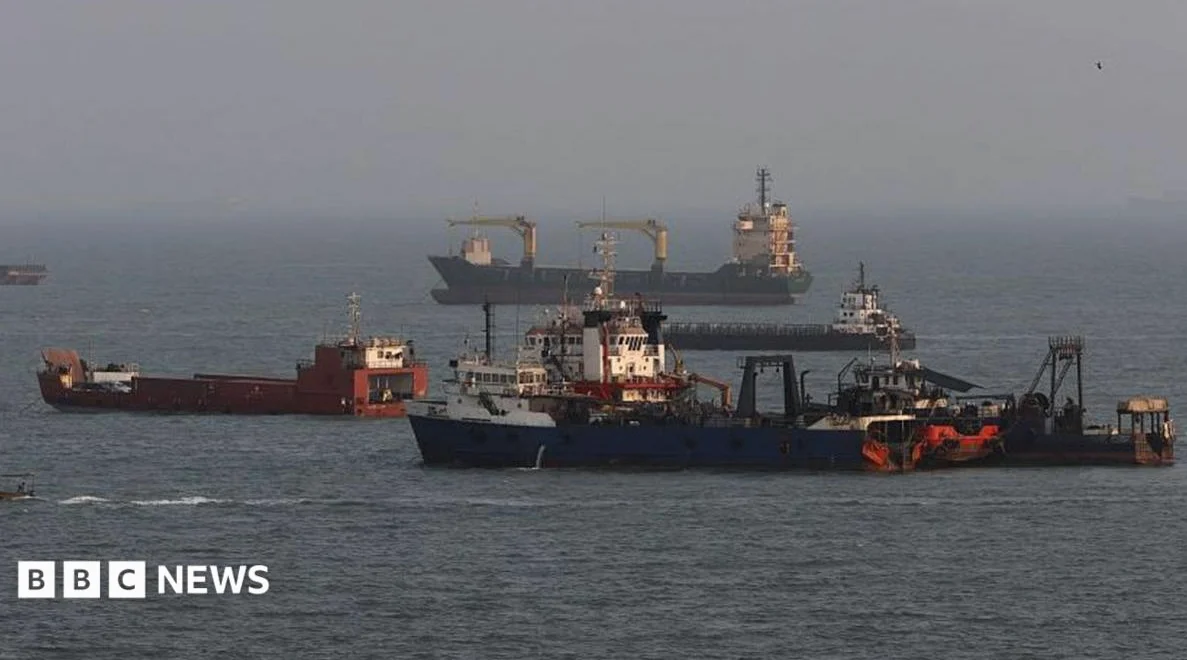
Two Filipino seafarers were killed in an Iranian attack on a Saudi vessel in the Strait of Hormuz, the country’s Foreign Ministry said on Wednesday; the ship, SIDR, belongs to Saudi Arabia’s national shipping company, Bahri. The incident occurred at approximately 11:40 p.m. local time, the company said earlier on Wednesday.
“The company extends its deepest condolences and sincere sympathies to the families, relatives, and colleagues [of the two Filipino seafarers] during this difficult time, and offers full support to the affected families and colleagues,” Bahri stated. “The safety and well-being of Bahri employees remain at the top of its priorities, and the company is committed to operating in accordance with the highest standards of safety, security, and environmental protection,” the company stated.
Iran Claims Tankers Hit Sea Mines
Also on Wednesday, Iran’s Islamic Major Guards Corps (IRGC) said that two oil tankers hit sea mines and were disabled while attempting to transit the Strait of Hormuz. The statement said the tankers had been forced to disembark their crews and were placed in the hands of US operatives to pass through what it called an “illegal route” in the strategic waterway, despite earlier warnings from the Guards’ navy about the dangers of crossing the mined passage.
Escalation in Gulf Tensions
Iran fired on U.S. allies in the Gulf early Wednesday following a night of American bombardment that Iranian state media says included a deadly strike on a wedding party. The latest violence came after a monthlong lull in fighting; the six-month war has led to a spike in oil prices, roiled the global economy and posed increasing political problems for U.S. President Donald Trump’s Republican Party ahead of November midterm elections.
Fighting has escalated since the American military hit Iranian rocket launchers on an island in the Strait of Hormuz over the weekend, saying Iran was planning to use them to lay mines. Iran retaliated by firing missiles at American bases in Jordan that were intercepted.
American military resources are stretched and political pressure in Washington is mounting, while Iran’s economy has been battered by sanctions and an American naval blockade. Iran’s currency hit another record low on Wednesday, with traders in Tehran exchanging 2.20 million rials for one U.S. dollar, a 10% hike from last week’s record.
Analysts Warn of Escalation
Neither side can continue indefinitely between full-scale war and a truce, said Hamidreza Azizi, senior Iran analyst at the Crisis Group, an international think tank; “At some point, one of the sides may see a need to escalate in order to break this cycle,” he cautioned. “So that could bring the two sides to a point that they have been trying to avoid until now, which is a full-scale war.”
The struggle is focused on the Strait of Hormuz and oil prices, though the latest flare-up in violence came as the standoff seemed to be shifting slightly more in the U.S. direction.



Comments
No comments yet
Be the first to share your thoughts