

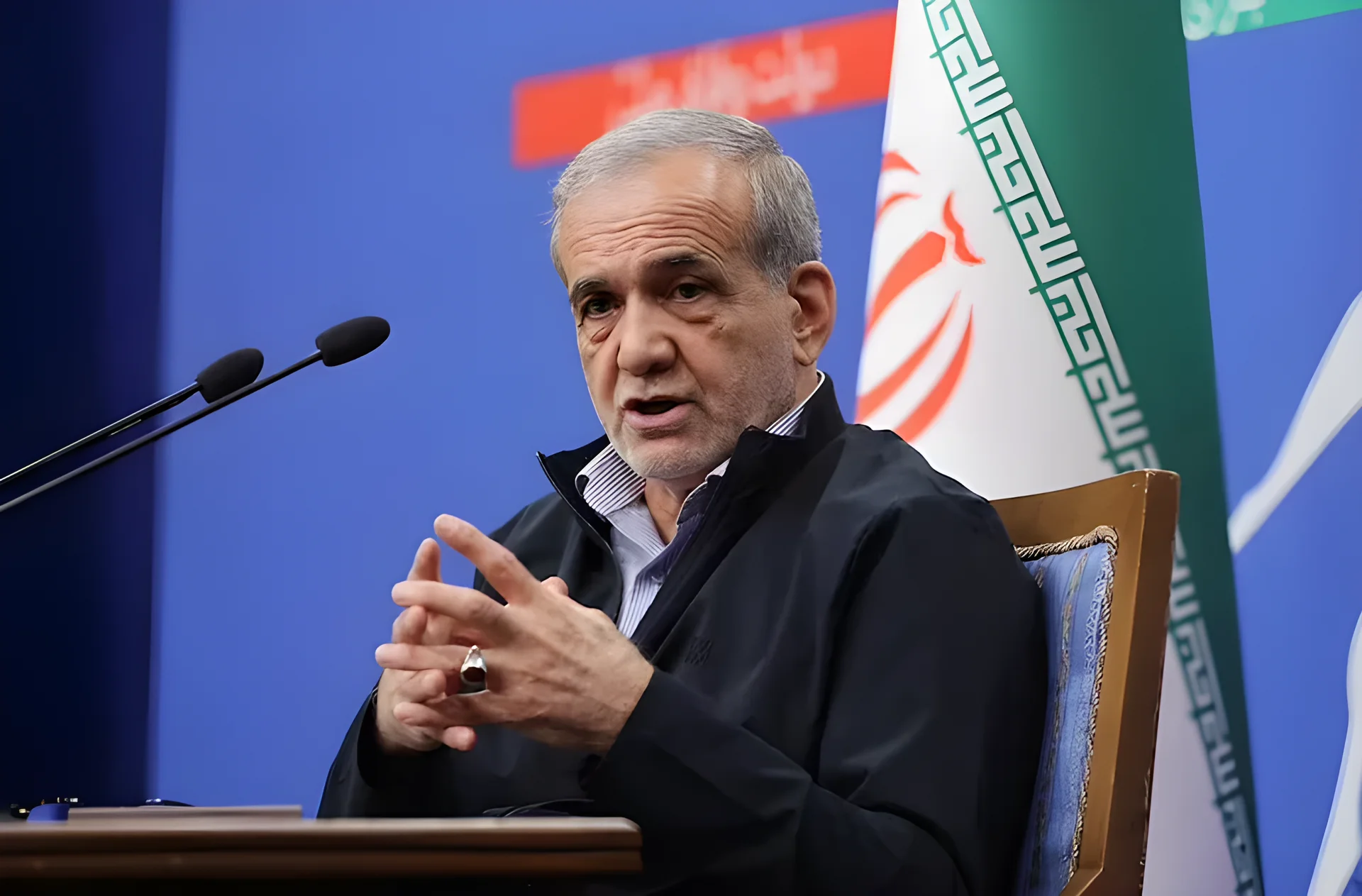
Iranian President Masoud Pezeshkian has declared that his nation was compelled to defend itself after recent military strikes by the United States and Israel, which he described as an unprovoked act of aggression. The remarks were made via his X account on Wednesday evening, addressed to regional leaders.
Details of the Attacks and Iran’s Response
According to the Islamic Republic News Agency (IRNA), the attacks occurred on Saturday, February 28, and targeted multiple sites across Iran, including schools, hospitals, and sports halls. The Iranian government described the strikes as an unprovoked act of aggression, prompting a retaliatory response from Iran.
Iran launched a series of missile and drone attacks targeting locations within Israel and American military bases across the region. The attacks were reportedly aimed at strategic military installations and infrastructure, causing significant damage and raising concerns about the potential for further escalation in the region.
Regional Diplomacy and Tensions
Pezeshkian emphasized in his message that Iran had made every effort to avoid war through diplomacy and with the support of regional leaders. He expressed respect for the sovereignty of neighboring countries and reiterated his belief that regional stability must be maintained by the countries of the region.
His comments come amid heightened tensions in the Middle East, where Iran has long been at odds with both the United States and Israel over a range of issues, including Iran’s nuclear program, regional influence, and alleged support for militant groups.
According to IRNA, the attacks by the U.S. and Israel marked a significant escalation in the conflict, with both sides accusing each other of provocation. The situation has raised fears of a broader regional conflict, with several countries closely monitoring the developments.
International Reactions and Implications
The international community has been closely watching the situation, with calls for de-escalation and dialogue. The United Nations and several regional organizations have urged all parties to exercise restraint and avoid further military actions that could lead to a wider conflict.
Analysts have warned that the recent attacks and retaliatory strikes could have long-term implications for regional security and international relations. The potential for further military engagements remains a concern, especially with the involvement of major global powers like the United States and Israel.
According to a report by the Institute for the Study of War, the number of Iranian military assets deployed in the region has increased by approximately 30% in the past six months, indicating a growing military presence and readiness for potential conflicts.
Iran’s response to the attacks has also raised questions about the effectiveness of diplomatic efforts to prevent such escalations. While regional leaders have expressed concern over the rising tensions, there is still no consensus on how to address the underlying issues driving the conflict.
As the situation continues to unfold, the international community is closely monitoring developments, with a focus on potential diplomatic solutions to de-escalate the crisis. The next few weeks will be critical in determining whether the conflict can be contained or if it will lead to further military actions.



Comments
No comments yet
Be the first to share your thoughts