

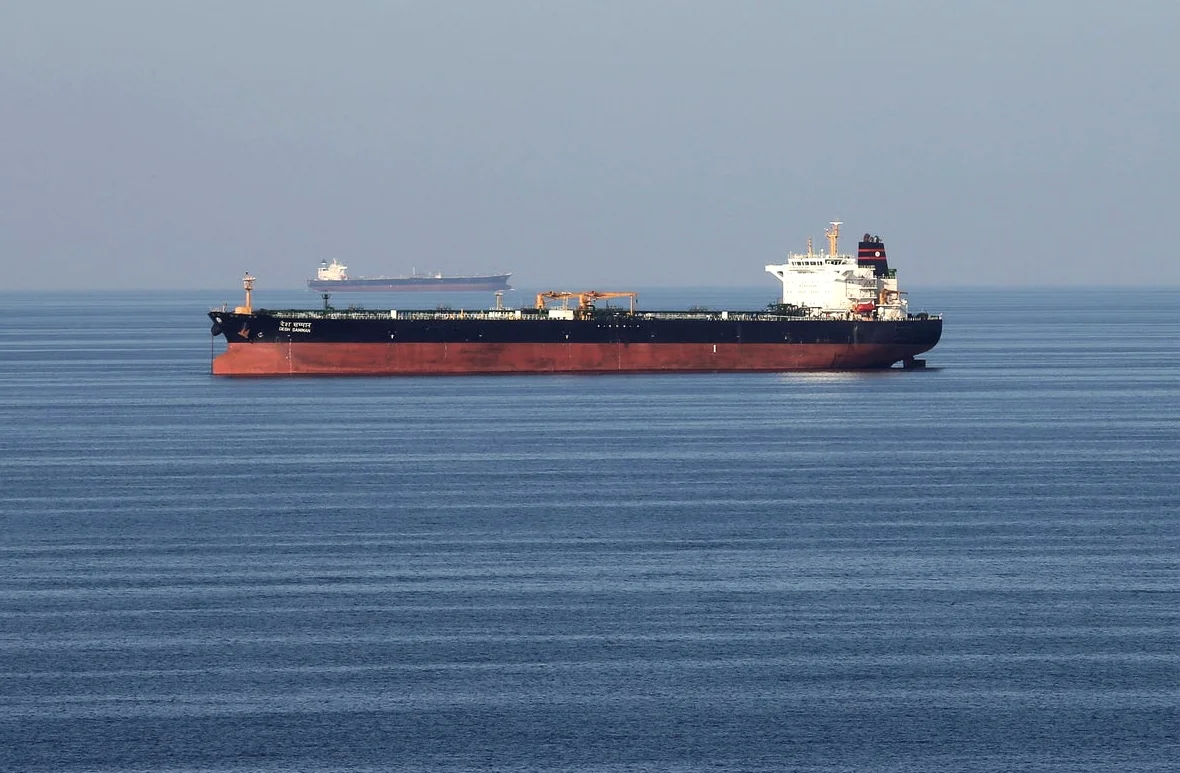
Iran has asserted ‘complete control’ over the Strait of Hormuz, a critical waterway through which nearly 20% of the world’s oil passes, following a series of escalations in the Middle East. The move has led to an 80% drop in maritime traffic, according to Lloyd’s List Intelligence, with experts warning of potential oil prices surging into triple digits.
Strategic Importance of the Strait of Hormuz
The Strait of Hormuz is a 100-mile-long, 21-mile-wide passage connecting the Persian Gulf to the Arabian Sea. At its narrowest point, it is controlled by both Iran and Oman, with international law allowing each nation to claim a 12-nautical-mile zone around their coast. The strait serves as a vital artery for global oil trade, with around 20 million barrels of oil passing through daily, according to the U.S. Energy Information Administration.
Approximately 500 million barrels of oil and 6 million tonnes of liquefied natural gas transit the strait each month, with much of it destined for Asian markets like China, India, and Japan. This volume represents one-fifth of global oil consumption and one-third of the world’s liquefied natural gas supply, according to Lloyd’s List Intelligence.
The strait is flanked by some of the world’s largest oil-producing nations, including Saudi Arabia, Kuwait, the United Arab Emirates, and Iran itself. While some oil can be transported via pipelines, most still rely on the strait for export. Around 3,000 ships pass through the strait each month, totaling over 30,000 annually, according to Lloyd’s List.
Escalation and Consequences
The current crisis began after U.S. missiles sank several Iranian ships, prompting Iran to close the strait. By Sunday, maritime traffic had dropped by 80%, with some reports citing a 94% decline. Only three ships passed through the strait, far below the average of 138, according to the Joint Maritime Information Centre in Bahrain.
At least four tankers were hit during the chaos, and maritime insurers have pulled coverage, increasing the risk for shipping companies. At least one Indian crew member was killed, with several others reportedly injured. Around 150 vessels have dropped anchor near the strait, while hundreds more have anchored near Gulf countries, creating a significant backlog.
Iran’s Major Guard Corps (IRGC) has warned that any ships attempting to pass through the strait could face fire, according to an official statement from IRGC Navy official Mohammad Akbarzadeh. The move has been met with a response from U.S. President Donald Trump, who said the U.S. Navy would begin escorting oil tankers through the strait ‘as soon as possible.’
‘No matter what, the United States will ensure the FREE FLOW of ENERGY to the WORLD,’ Trump stated on Truth Social. He also ordered the U.S. International Development Finance Corporation to provide ‘political risk insurance and guarantees’ for maritime trade in the region.
Global Economic and Political Implications
The disruption to the Strait of Hormuz has raised concerns about global energy security. Senior portfolio manager Hakan Kaya of Neuberger Berman warned that a full closure of the strait for a month or more could push oil prices, currently around $80 per barrel, into the triple digits and send European natural gas prices back to crisis levels seen in 2022.
China and Japan, which rely heavily on oil imports through the strait, have called for an immediate de-escalation of the conflict. A Chinese foreign ministry spokesperson stated that the country would take ‘necessary measures’ to safeguard its energy security, according to a Tuesday press briefing.
Experts note that the current crisis is reminiscent of the 1980s, when Iran briefly closed the strait during the Iran-Iraq War. However, the current situation is being exacerbated by a broader regional conflict, including the recent Israel-Iran tensions and U.S. military involvement in the region.
Analysts suggest that a full or near-full closure of the strait could have severe economic repercussions, not only for oil and gas prices but also for global supply chains. The U.S. and its allies are expected to take further steps to ensure the security of the strait, though it remains to be seen how effective these measures will be in the face of ongoing hostilities.
The situation highlights the strategic importance of the Strait of Hormuz and the potential for regional conflicts to have far-reaching global consequences. As the crisis continues to unfold, the world watches closely for any developments that could either de-escalate the situation or further destabilize the region.





Comments
No comments yet
Be the first to share your thoughts