

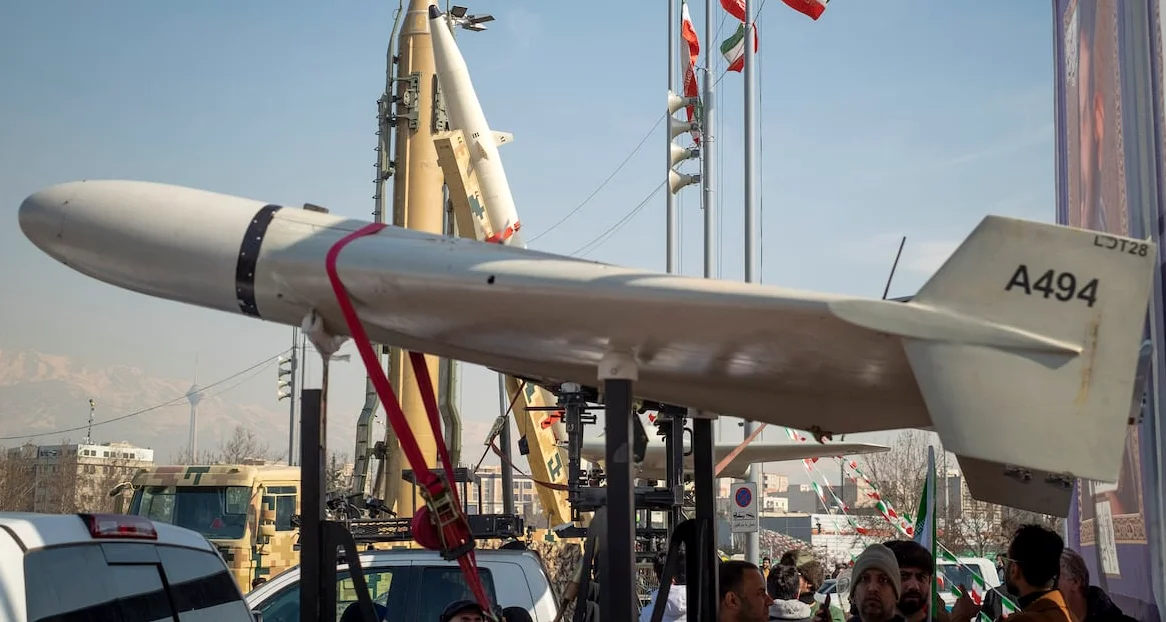
Iran has launched over 1,000 Shahed drones, and experts warn that the threat is long-term due to the country’s ability to mass-produce the weapons in small factories. The Shahed-136, a relatively slow-moving but heavily armed drone, has been a key tool in Iran’s military strategy, with attacks targeting Gulf states and Cyprus in recent weeks.
Defensive Strategies Take Shape
Military experts have advised Gulf nations to adopt a multi-layered approach to counter the Shahed drone threat. This includes using heavy machine guns and anti-aircraft artillery placed on rooftops, city outskirts, and even pickup trucks, as well as employing helicopter gunships for additional protection.
The UK has announced plans to deploy experts from Ukraine to assist Gulf partners in developing the best systems available to intercept the drones. This strategy aims to preserve the more expensive Thaad and Patriot missile systems, which cost $12 million and $1 million per interception, respectively.
The Shahed-136, with a top speed of 185 km/h, carries a warhead of up to 50 kg and has a maximum range of 2,500 km. Even if only a small percentage of the drones reach their targets, the potential for significant damage is high, especially in massed attacks.
Advanced Systems and Tactics
Germany’s Skyranger 35, a state-of-the-art mobile anti-aircraft system, is being considered as a key defense against the Shahed drones. It can fire 1,000 rounds per minute at a range of 4,000 meters using a powerful AESA radar. The system is capable of targeting drones, cruise missiles, and aircraft and can be mounted on either tracked or six-wheeled armoured vehicles.
Other available options include the Gepard AAA tank, which mounts double or quadruple 35mm Oerlikon cannons, and jamming guns adapted from Ukrainian tactics. However, these have limited range and could cause unintended collateral damage.
Fighter jets such as the Rafale, F-16s, and the UK’s Typhoons are also being deployed to track and intercept the drones using their advanced radar systems. Pilots can use their jet wash to knock down drones in a last-ditch effort, a tactic tested in the 1982 Falklands War.
The involvement of Ukraine’s F-16 pilots, who have successfully countered Shahed drones attacking their own cities, is expected to be a crucial element in the defense strategy.
Challenges and Future Threats
Air power expert Tim Ripley emphasized the challenge of detecting and engaging the drones far enough from populated areas to avoid debris falling on cities. The Shahed drones’ predictable flight patterns and lack of evasive maneuvers make them vulnerable, but their numbers and range pose a significant threat.
Military expert Francis Tusa noted that the Shahed’s simplicity and low cost allow for mass production in small, decentralized factories. He estimated that a single engineer could produce 12 drones in a ten-hour shift under ideal conditions.
Iran’s ability to disperse drone batteries across the country and launch them from underground car parks or forest clearings makes detection extremely difficult. This decentralized production and launch capability complicates efforts to disrupt the supply chain.
Experts stress the importance of maintaining an integrated air defense system that combines jets, radars, missiles, and machine guns. This system must be adaptable to counter evolving threats and avoid friendly fire incidents, such as the recent accidental shooting down of three U.S. fighter jets in Kuwait.
As Iran continues to develop its drone capabilities, Gulf states and their allies are working to implement a coordinated defense strategy that balances cost-effectiveness with technological innovation. The challenge lies in maintaining a strong and flexible defense system in the face of a persistent and evolving threat.






Comments
No comments yet
Be the first to share your thoughts