

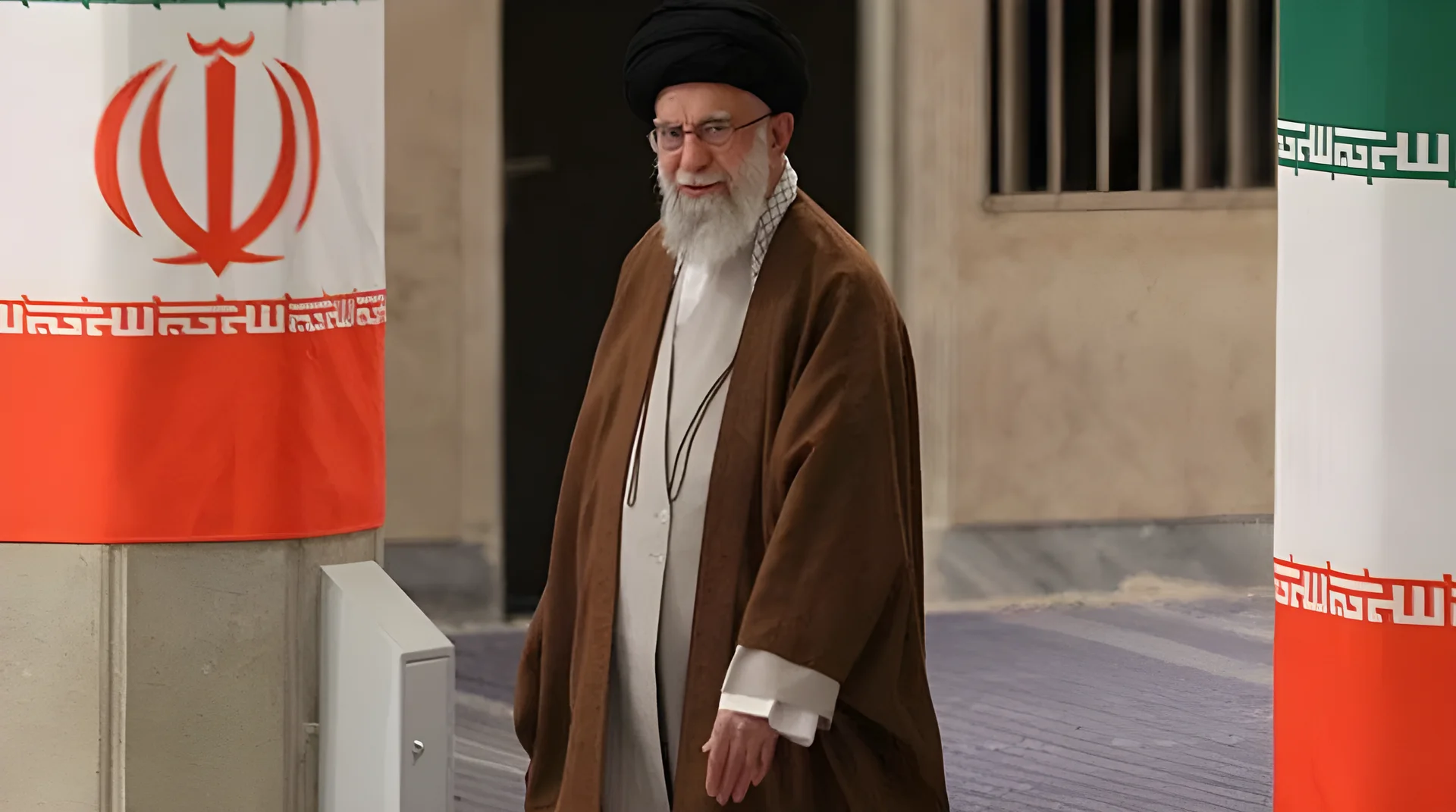
Ayatollah Ali Khamenei, Iran’s supreme leader for over three decades, was killed in air strikes by the United States and Israel on Saturday, according to Iranian state media. The attacks targeted his compound in central Tehran, marking a dramatic end to a tenure that saw Iran evolve into a major regional power with significant influence across the Middle East.
Legacy of a Major Figure
Khamenei, who ruled since 1989, rose from a relatively unknown cleric to one of the most influential figures in the Islamic Republic. His tenure saw Iran develop a formidable military and political presence, with a focus on countering Western influence, particularly the United States.
According to Karim Sadjadpour of the Carnegie Endowment for International Peace, Khamenei went from being ‘a weak president to an initially weak supreme leader to one of the five most powerful Iranians of the last 100 years.’
Khamenei’s leadership was defined by his fierce opposition to the United States, a stance that intensified after the Trump administration withdrew from the 2015 nuclear deal. He criticized Trump’s policies and denounced the U.S. as ‘the Great Satan,’ a term that resonated with Iran’s hardline factions.
Regional Influence and Internal Challenges
Under Khamenei’s rule, Iran extended its influence across the Middle East through its support of groups such as Hezbollah in Lebanon and Hamas in Gaza. However, recent years have seen that influence wane, with the ousting of Syrian President Bashar al-Assad and significant military setbacks for Iran’s allies.
In 2024, Khamenei faced growing internal dissent, particularly after the death of Mahsa Amini, a 22-year-old Iranian-Kurdish woman who died in custody of morality police. He responded with a crackdown on protesters, intensifying the country’s political tensions.
Khamenei’s tenure also saw the expansion of Iran’s financial empire through the Setad organization, which amassed assets worth tens of billions of dollars. His control over the Major Guards and the military ensured that no single group could challenge his authority.
Final Days and the Aftermath
The air strikes that killed Khamenei came amid ongoing diplomatic tensions between Iran and the United States. Negotiations had taken place as recently as Thursday, but U.S. officials said Iran had not agreed to abandon its uranium enrichment program, which Washington argued would enable Iran to develop nuclear weapons.
Iranian state media reported that Khamenei was killed in the attacks, which targeted his central Tehran compound. The strikes marked the most ambitious U.S. and Israeli offensive against Iran in decades, following a series of escalating conflicts, including Israel’s war on Hamas in Gaza and the subsequent missile exchanges between the two nations.
Khamenei had long rejected any normalization of relations with the United States, accusing Washington of backing extremist groups like Daesh to inflame regional sectarian tensions. He also issued a fatwa in the mid-1990s declaring the production and use of nuclear weapons to be against Islamic principles.
The death of Khamenei leaves Iran’s leadership in a state of uncertainty, with internal dissent growing and the country facing unprecedented military and diplomatic challenges. The attacks by the U.S. and Israel may mark the beginning of a new era of conflict in the region.




Comments
No comments yet
Be the first to share your thoughts