

 BBC
BBC 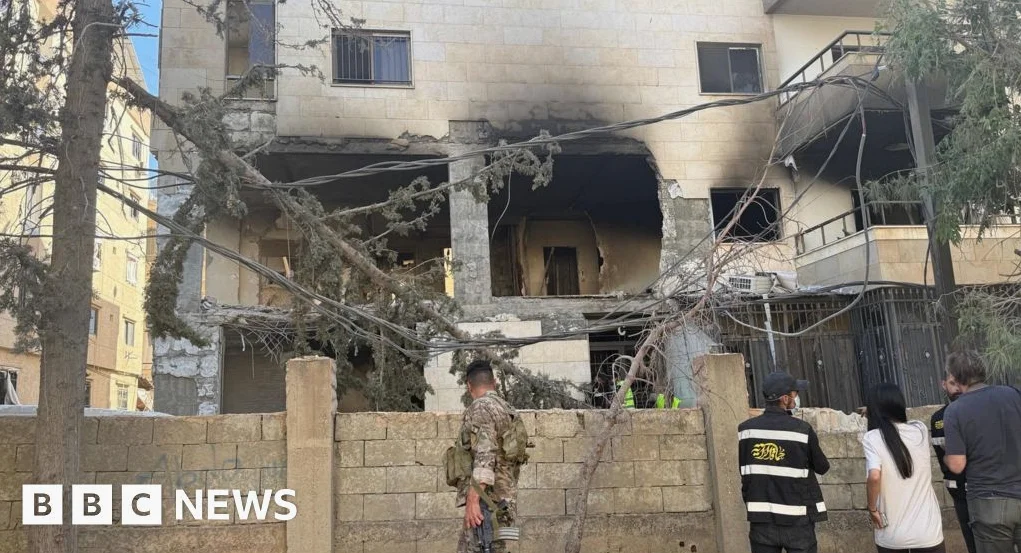
Israel has hit the Lebanese capital. Beirut, for only the second time since the start of a ceasefire last month, according to the Israel Defense Forces (IDF). The attack occurred at about 14:00 (11:00 GMT) and was described as a “targeted strike,” though no specific details were provided; Israeli media reported the target was the head of an Iranian militia.
Escalation in the Region
Israel had previously avoided striking Beirut at the request of the US; the latest attack came after a series of Israeli strikes targeting Hezbollah infrastructure in southern Lebanon, the powerful Shia group backed by Iran. Both Israel and Hezbollah have accused each other of repeatedly violating the ceasefire agreement.
Thick smoke was visible from residential buildings in Dahieh, a densely populated Shia suburb and Hezbollah stronghold, following the attack — Residents were seen calling out to neighbors and relatives to check on their safety as rescue crews arrived on the scene.
Mohamad, a local resident, said he was asleep when the strike hit; he found a three-month-old baby on the ground and rushed her to the hospital, but she did not survive. “There’s nothing here!” he said. Gesturing helplessly. While “Everything happening here. This pressure on people,is just to make us hate Hezbollah, but that’s not going to happen, We’re not the kind of people who turn against others like that.”.
Target and Aftermath
According to Israeli media, the target of the strike was Ali al-Husni, the head of the missile force in the Imam Hossein Division,an Iranian militia allied to Hezbollah. The strikes followed Israeli Prime Minister Benjamin Netanyahu’s announcement of an expanded ground operation after Hezbollah drone attacks on Israeli troops and civilians in northern Israel.
The IDF issued an evacuation order on Wednesday, urging residents to move north of the Zahrani River, about 40km (25 miles) from the Israeli border. The order warned of “extreme force” if necessary. On Thursday, at least 11 people were killed in two sets of Israeli strikes in Tyre and an area to the east of the city, according to the Lebanese health ministry.
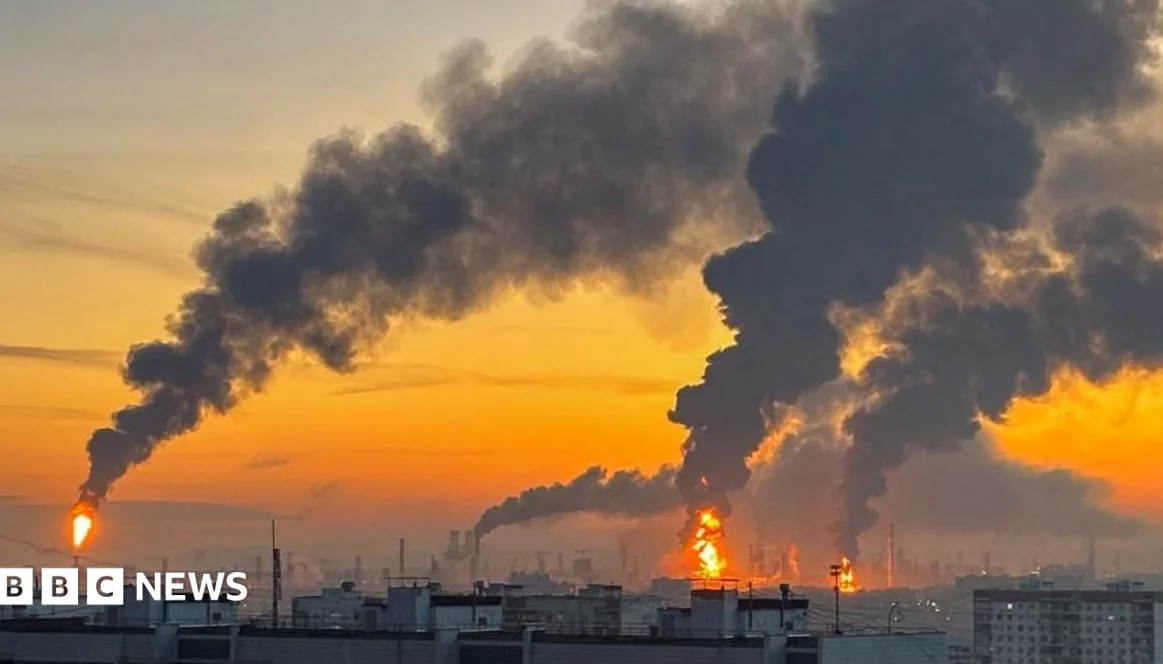
Social media footage from Tyre showed streets lit orange by flames, smoke-filled roads, and at least one vehicle engulfed in fire. By daylight, a massive fireball was captured near a cluster of high-rise buildings, sending a mushroom-shaped column of smoke into the sky. Stunned residents watched as debris spread across surrounding streets.
A Hezbollah member in Tyre told the BBC that rescue and recovery teams had to halt their work due to “too dangerous” conditions. Israeli military calls warned them to evacuate the area.
The evacuation order covered about 300 towns and villages—approximately 14% of Lebanese territory—and was the largest since the ceasefire began. Many residents, including those already displaced from other parts of southern Lebanon, have nowhere to go. In Saida, a coastal city north of the Zahrani River and south of Beirut, the streets were oddly busy on Thursday. The marina area was filled with beachgoers, with no visible signs of displacement.
Humanitarian Concerns
With shelters exceeding capacity, humanitarian workers and city officials urged displaced individuals to keep moving north. There is no more room for them in Saida, which has not been hit as severely as cities like Tyre or Nabatieh. Hanaa Jamaa, 46, was shocked when an apartment she owned in Saida was struck in the early hours of Thursday. A missile hit the building at approximately 02:40, tearing through the structure after striking the roof.
Five people were killed and 21 injured in the attack. The man renting the apartment from Hanaa had been living there for three years and was a civilian. She said through tears, “We aren’t with Hezbollah and we aren’t with Israel. We just want peace.”
Israeli officials have stated that Hezbollah’s attacks are violations of the temporary ceasefire deal between Israel and Lebanon, which has been extended twice since it began last month. Lebanese officials, however, have pointed to the Israeli strikes themselves as violations of the same agreement.
The escalation threatens to derail ongoing talks aimed at ending the conflict between the US and Israel on one side and Iran on the other. Iran insists any deal must also cover Lebanon, while Israel maintains it reserves the right to continue its fight against Hezbollah.
Lebanon was drawn into the conflict on 2 March when Hezbollah launched rockets into Israel in retaliation for an Israeli strike that killed Iran’s supreme leader. Israel responded with an air campaign and a ground invasion across Lebanon. According to the Lebanese health ministry, more than 3,280 people have been killed in Lebanon since the war began, though the figures do not distinguish between combatants and civilians. Israel reports that 23 of its soldiers and four Israeli civilians have been killed on both sides of the border during the same period.

Comments
No comments yet
Be the first to share your thoughts