

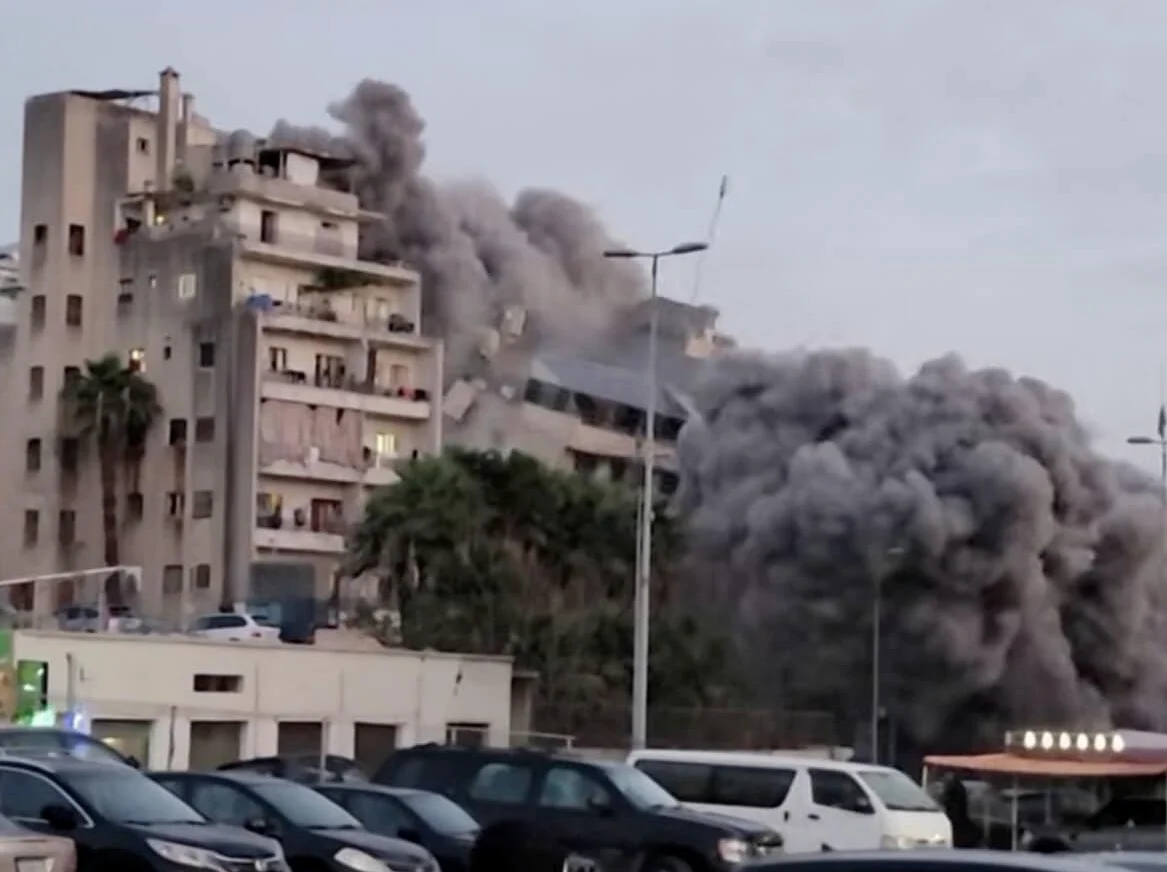
Israel has openly admitted that it will not allow displaced Lebanese people to return home, which is the textbook definition of ethnic cleansing. This revelation comes amid ongoing military operations in southern Lebanon, where entire communities have been forced to flee their homes. According to Middle East Eye, the Israeli government has made it clear that the displaced population will not be permitted to return, effectively altering the demographic makeup of the region.
Historical Precedents of Displacement
Analysts say this admission is not new, given Israel’s history of forcibly displacing populations. Since October 2023, the Israeli military has been engaged in a sustained campaign in Gaza, leading to the displacement of over 1.5 million Palestinians. This has raised concerns about a pattern of forced displacement that dates back to the early years of the state’s formation.
During the 1948 Nakba, Israel ethnically cleansed over 700,000 Palestinians, effectively dismantling Palestinian society. The very creation of the Zionist state involved the forced expulsion of hundreds of thousands of Palestinians, a fact that many scholars argue has shaped Israel’s approach to territorial expansion and control.
Israel has long spoken of a ‘Greater Israel’ project, first articulated in 1967 after the Six-Day War. This ideology refers to the territories Israel occupied during that conflict, including the Palestinian territories, the Golan Heights, and Egypt’s Sinai Peninsula. However, the term has also been used to refer to a much broader vision that includes all of Palestine, Lebanon, Jordan, and significant parts of Syria, Iraq, Egypt, and Saudi Arabia.
Political Advocacy and Ideological Expansion
In 2024, Bezalel Smotrich, Israel’s finance minister, publicly advocated for the expansion of Israel’s borders. He cited scriptural references to suggest that the future of Jerusalem lies in the direction of Damascus, invoking the ‘Greater Israel’ ideology. Smotrich’s statements align with the broader political narrative that seeks to consolidate control over a vast region.
According to Middle East Eye, Smotrich suggested that Israel would gradually expand its borders to encompass not only all Palestinian territories but also parts of Jordan, Lebanon, Egypt, Syria, Iraq, and Saudi Arabia. This vision, while largely symbolic, has been echoed in various political and military circles within Israel.
During the Gaza war, an IDF soldier was photographed wearing a patch on his uniform that displayed a map of ‘Greater Israel’. This map included parts of Syria, Iraq, Egypt, and Saudi Arabia. The presence of such imagery in military uniforms has raised concerns about the normalization of territorial expansion and the potential for future conflict with neighboring states.
Military Operations and Civilian Impact
Israel has been conducting extensive military operations in southern Lebanon, including carpet bombing of Beirut in a manner similar to its approach in Gaza. These attacks have caused widespread destruction and displacement, with entire neighborhoods reduced to rubble. The Israeli military has demonstrated an ability to target specific buildings and apartments with extreme precision, yet it has also resorted to destroying entire blocks of housing.
Human rights organizations have documented the disproportionate impact of these attacks on Black and Brown communities, with little regard for civilian life. The use of heavy artillery and aerial bombardments has led to a high number of civilian casualties, with many reports indicating that the Israeli military has deliberately targeted areas with high population density.
Despite the scale of destruction and the clear patterns of displacement, the international community has been slow to label these actions as ethnic cleansing. Many governments, including the United States, continue to support Israel’s military operations, often dismissing criticism as antisemitism. This has created a vacuum in accountability, allowing Israel to continue its policies with little consequence.
Analysts argue that the current situation in Lebanon is a continuation of a long-standing pattern of displacement and territorial expansion that has defined Israel’s foreign policy for decades. The lack of international response to these actions has emboldened Israel, leading to a cycle of violence and retaliation that shows no sign of abating.
As the conflict in Lebanon continues, the international community faces a critical decision: whether to address the growing humanitarian crisis and hold Israel accountable for its actions. With the displacement of thousands of Lebanese citizens and the destruction of entire communities, the need for a unified global response has never been more urgent.






Comments
No comments yet
Be the first to share your thoughts