

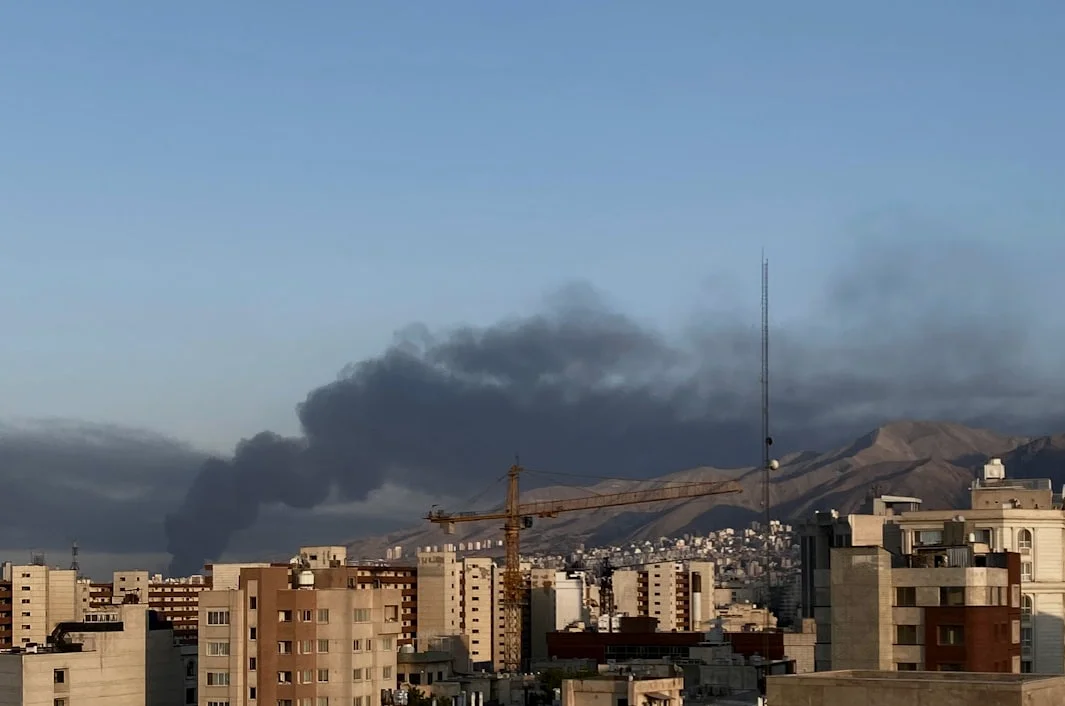
Israel’s Defense Minister confirmed that the country launched airstrikes against Iran, with reports of massive explosions in Tehran. The attacks reportedly hit areas along University Street and in the Jomhouri district of the Iranian capital, with thick smoke rising near Pasteur Street, which houses key government buildings. The extent of the damage and the number of casualties remain unclear, but the strikes have triggered widespread regional concern and immediate safety measures.
Regional Airspace Closures and Flight Divertions
The airstrikes have led to the closure or restriction of airspace across several countries in the Middle East and Central Asia, disrupting international flight operations. Airlines have been forced to reroute flights to avoid restricted zones, affecting a range of carriers and destinations.
Flight tracking platform Flightradar24 reported that multiple flights were diverted, including FZ984 from Kazan to Dubai, which was rerouted to Baku. AI126 from Chicago to Delhi was flying over Syria, while G9950 from Sharjah to Moscow was rerouted over Pakistan. EK225 from Dubai to San Francisco also adjusted its route to avoid restricted airspace, flying over Afghanistan and Pakistan.
Air India’s Delhi-Tel Aviv flight, AI126, was forced to divert mid-flight as a safety precaution, according to reports. The flight, which had departed from Delhi, was flying over Syria instead of its intended route to Tel Aviv. The airline emphasized that the safety and security of its passengers and crew remained its top priority.
Low-cost carrier IndiGo also issued an advisory, stating that it was closely monitoring the situation in Iran and its airspace. The airline said it would continue to update passengers on any changes to flight operations.
Israeli Precautionary Measures and Regional Tensions
In response to the potential missile threat, Israel issued precautionary alerts, with air raid sirens sounding across the country. Residents were advised to remain in protected spaces, and schools were ordered to close nationwide. Public gatherings were banned, and citizens were encouraged to work from home.
The Israel Defense Forces (IDF) stated that advance alerts were sent to mobile phones, instructing residents to seek shelter. The military described the alert as a precautionary measure amid the possibility of missile launches toward Israel.
The situation has occurred at a particularly tense time in U.S.-Iran relations, with discussions ongoing regarding a potential nuclear agreement. U.S. President Donald Trump recently described Iran as ‘very difficult’ and ‘very dangerous,’ escalating the already fraught diplomatic climate.
A third round of negotiations between U.S. and Iranian officials took place in Geneva earlier this week, with another round scheduled for later on Saturday. These talks come amid increasing tensions over Iran’s nuclear program and its regional influence.
The airstrikes have raised concerns about the potential for further escalation in the region. Analysts warn that the situation could have far-reaching implications for global security, trade routes, and energy markets. The closure of airspace and flight rerouting have already impacted international travel and logistics, with further disruptions likely if the situation escalates.
According to officials, the Israeli government has not yet provided full details about the targets of the airstrikes or the extent of the damage in Iran. However, the immediate response from regional countries and airlines highlights the significant impact of the strikes on international air traffic and regional stability.
The developments underscore the fragile nature of Middle Eastern politics and the potential for rapid escalation in conflicts involving major global powers. As negotiations between the U.S. and Iran continue, the international community remains closely watching for any signs of de-escalation or further military action.






Comments
No comments yet
Be the first to share your thoughts