

 Associated Press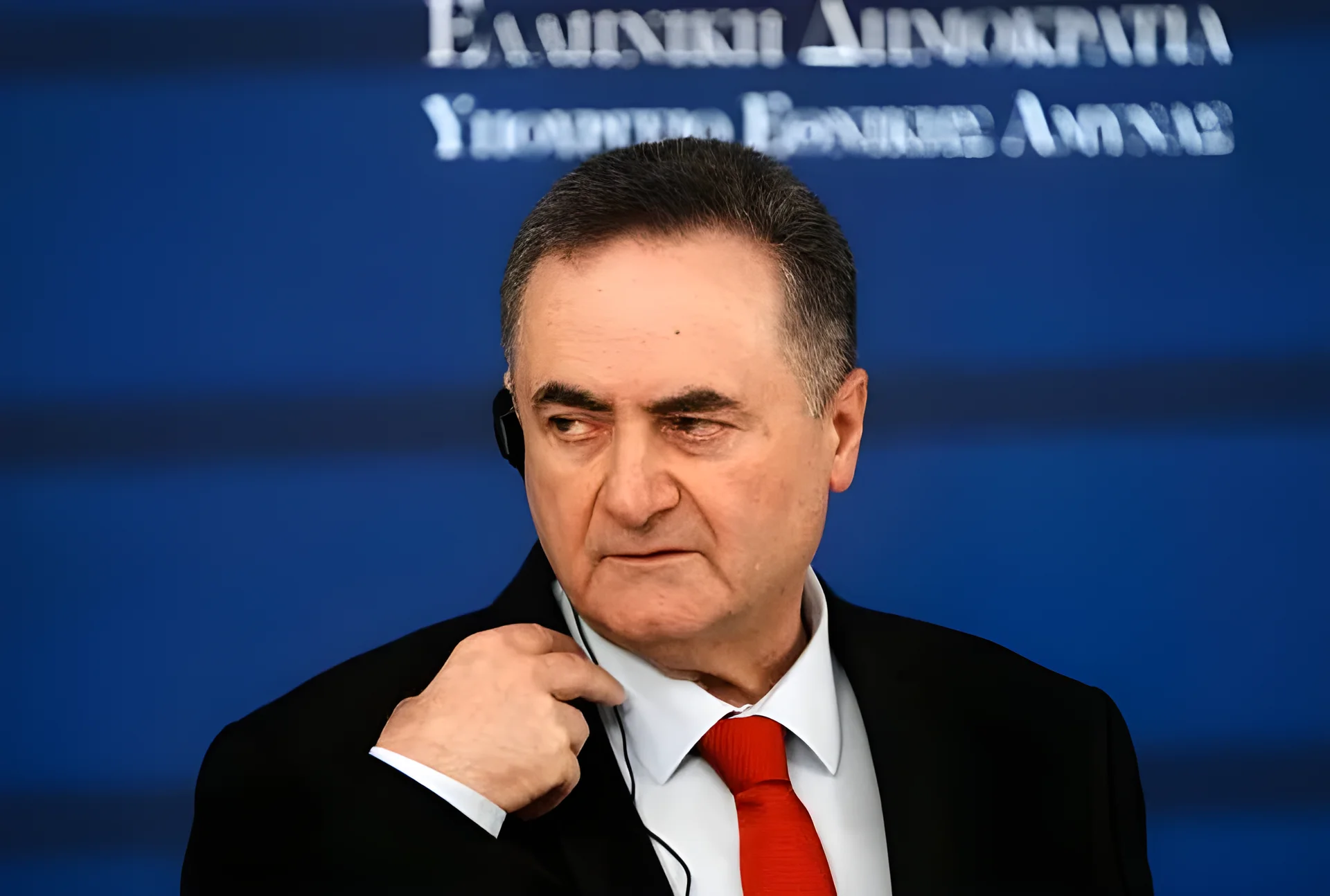
Israeli officials confirmed Saturday that Supreme Leader Ayatollah Ali Khamenei has died, marking a potential turning point in the future of Iran’s theocratic regime. The announcement came after a major strike on Iran, with no immediate response from the U.S. or Iran on the status of Khamenei.
Impact on Iran’s Political Landscape
Khamenei, who succeeded Ayatollah Ruhollah Khomeini, the architect of the 1979 Islamic Revolution, was the final authority on all major policies in Iran. He led the country’s clerical establishment and personally commanded the Major Guard, the two main pillars of Iran’s power structure. His death, if confirmed, could trigger a power vacuum, as there was no designated successor.
In a nationally televised address, Israeli Prime Minister Benjamin Netanyahu said there were “growing signs” that Khamenei had been killed during an Israeli strike on his compound early Saturday. Two Israeli officials, speaking on condition of anonymity, confirmed the death of the 86-year-old leader, though they provided no further details.
The attack took place during the holy fasting month of Ramadan, adding to the sensitivity of the situation. According to Iranian state media, at least 201 people were killed and more than 700 injured in the strikes. Iran retaliated by firing missiles and drones at Israel and U.S. military bases in the region, with exchanges of fire continuing into the night.
U.S. and Iran’s Reactions
Iranian Foreign Minister Abbas Araghchi told NBC News that Khamenei and President Masoud Pezeshkian are “alive as far as I know.” He called the attack “unprovoked, illegal and absolutely illegitimate.” However, Iranian state media reported strikes near Khamenei’s compound, with smoke rising from the capital as part of attacks that reportedly occurred nationwide.
President Donald Trump, in a video announcing the “major combat operations,” urged Iranians to “seize control of your destiny” and rise up against the Islamic leadership that has ruled the nation since 1979. “When we are finished, take over your government. It will be yours to take. This will be probably your only chance for generations,” he said.
The U.S. military reported no casualties and minimal damage at U.S. bases despite “hundreds of Iranian missile and drone attacks.” Targets included Major Guard command facilities, air defense capabilities, missile and drone launch sites, and military airfields. According to a U.S. official, the attacks targeted members of Iran’s leadership, though there was no immediate confirmation of fatalities among top officials.
Despite the strikes, regime change in Iran is not guaranteed. Democrats criticized Trump for taking action without congressional authorization, while the White House spokesperson said the administration had informed both Republican and Democratic leaders in advance.
Escalating Regional Tensions
Tensions have risen sharply in recent weeks with the movement of American warships into the region. Trump has sought a deal to constrain Iran’s nuclear program, as the country faces growing dissent following nationwide protests. The trigger for Saturday’s strikes appeared to be the failure of the latest round of nuclear talks on Thursday.
Israeli and American strikes last June weakened Iran’s air defenses, military leadership, and nuclear program. A regionwide conflict sparked by Hamas’ Oct. 7, 2023, attack on Israel has left Iran’s network of proxies across the Middle East significantly weakened. U.S. sanctions and global isolation have also taken a heavy toll on Iran’s economy.
Iran responded by launching missiles and drones targeting Israel and U.S. military installations in Bahrain, Kuwait, and Qatar. Israel’s military reported that Iran fired “dozens” of missiles at Israel, with many intercepted. Emergency responders noted 89 “lightly injured” people.
At least three explosions were heard Saturday evening near the Intelligence Ministry building in northern Tehran, with witnesses noting that air defense systems had begun operating there. Israel’s military said it had begun new strikes against missile launchers and aerial defense systems in central Iran.
In southern Iran, at least 85 people were reported killed when a girls’ school was struck, and dozens more were wounded, the local governor told Iranian state TV. U.S. Central Command spokesperson Capt. Tim Hawkins said he was “aware of reports” that a girls’ school was struck and they were looking into the incident.
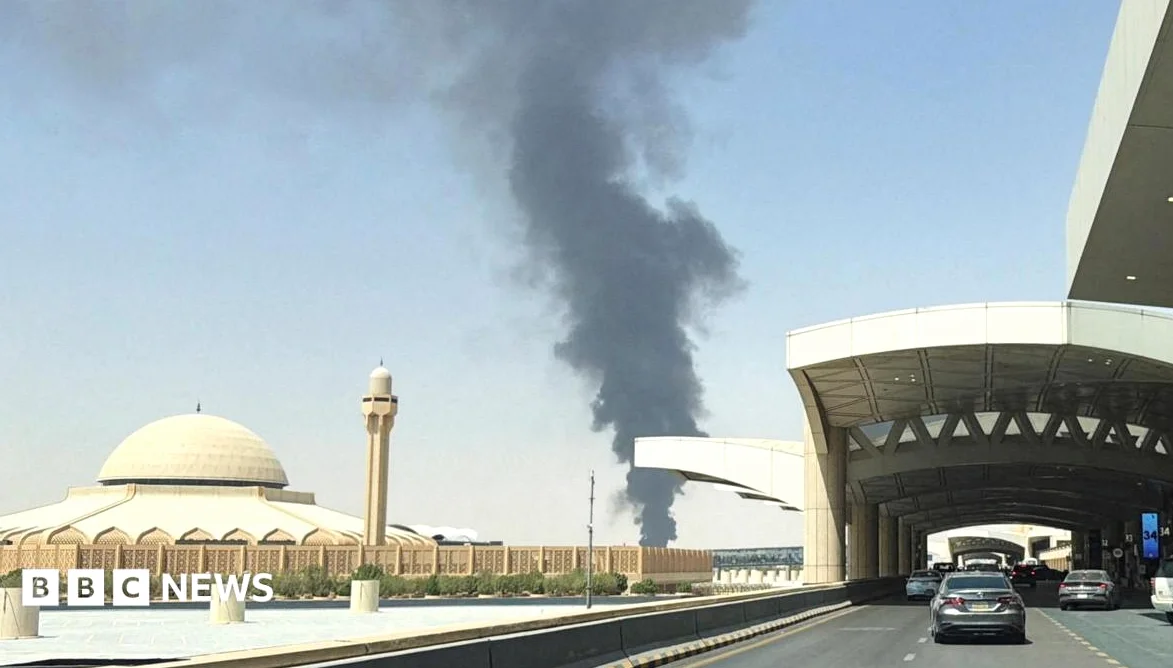
Iran’s state news agency IRNA reported at least 15 people killed in the southwest, quoting the governor of Lamerd, Ali Alizadeh, as saying a sports hall, two residential areas, and a hall near a school were hit. Flights across the Middle East were disrupted, and air defense fire thudded over Dubai, the UAE’s commercial capital. Shrapnel from an Iranian missile attack on the UAE capital killed one person, state media said.
“Active and serious negotiations have yet again been undermined,” said Oman’s Foreign Minister Badr al-Busaidi, a key mediator in the nuclear talks. “Neither the interests of the United States nor the cause of global peace are well served by this.”
Israel said the operation had been planned for months with the United States. Air Force pilots were striking “hundreds of targets across Iran,” according to Israeli military chief of staff Lt. Gen. Eyal Zamir. Targets included Iran’s military, symbols of government, and intelligence targets.
Trump, in justifying the military action, claimed Iran has continued to develop its nuclear program despite asserting last year that the program had been “obliterated” by an earlier round of strikes. He acknowledged Saturday that American casualties could occur, saying “that often happens in war.”
Trump also aimed to “annihilate” the Iranian navy and destroy regional proxies supported by Tehran. He called on the Iranian Major Guard to lay down arms, offering immunity or facing “certain death” if they did not comply.
Iran had hoped to avert a war but maintained its right to enrich uranium. It did not want to discuss other issues, such as its long-range missile program or support for armed groups like Hamas and Hezbollah. Iran has said it hasn’t enriched uranium since June but has blocked international inspectors from visiting the sites the U.S. bombed.



Comments
No comments yet
Be the first to share your thoughts