

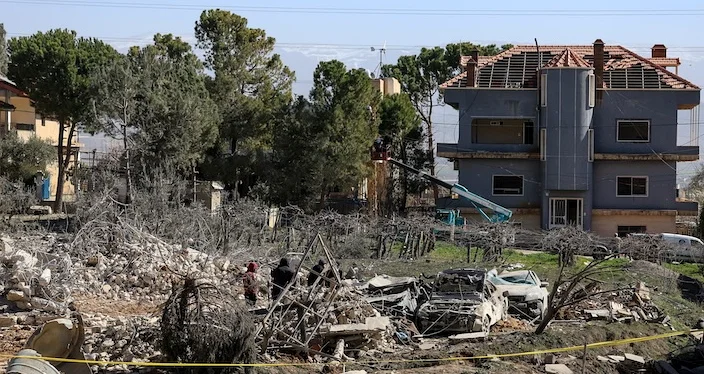
Israeli forces launched strikes Friday in eastern Lebanon’s Bekaa Valley that killed 10 people and wounded 50 others. Two security sources confirmed the toll to reporters. The Israeli military said it hit Hezbollah command centers in the Baalbek area.
Among the dead were eight Hezbollah fighters, the group reported Saturday. Hussein Mohammad Yaghi, a commander in Hezbollah’s missile array, was one of them. The Israeli Defense Forces stated they eliminated several terrorists operating from three command centers. Those sites were accelerating Hezbollah’s readiness and planning fire attacks on Israel, the military said in a statement.
The operation marks one of the deadliest attacks in eastern Lebanon in recent weeks. It comes amid a shaky U.S.-brokered ceasefire from late 2024 between Israel and the Iran-backed group. That deal aimed to halt more than a year of cross-border fire that peaked with Israeli operations weakening Hezbollah.
Violations have dogged the truce. Israel and the U.S. have urged Lebanese officials to dismantle Hezbollah’s arsenal. Lebanese leaders counter that wider Israeli actions could unravel their crisis-hit country, plagued by political deadlock and economic collapse.
Lebanese President Joseph Aoun slammed the strikes Saturday as a fresh breach of sovereignty. The presidency said he called on stability backers, including the United States, to demand an immediate stop and prevent escalation. Aoun specifically condemned hits near Sidon and in Bekaa towns.
In a related development, the Israeli military struck a Hamas command center in the Ain al-Hilweh Palestinian refugee camp south of Sidon. Militants operated from there, the IDF said. The crowded camp lies near the coastal city.
Hamas rejected the claim. The group said the site belonged to the camp’s Joint Security Force, which handles internal security. No immediate casualty figures emerged from that strike.
Friday’s Bekaa Valley raids risk further straining the ceasefire. Hezbollah has not detailed any response. Past exchanges have drawn in broader regional players, including Iran. U.S. diplomats brokered the 2024 halt after intense fighting displaced tens of thousands on both sides of the border.
Israeli officials have tied the strikes to ongoing threats. Hezbollah maintains a vast rocket stockpile despite losses. Lebanese authorities face mounting pressure to enforce disarmament, though domestic politics complicate efforts.
The incidents highlight persistent tensions. Ain al-Hilweh has long harbored militant factions amid Lebanon’s instability. Broader southern Lebanon sees frequent Israeli operations against Hezbollah infrastructure.




Comments
No comments yet
Be the first to share your thoughts