

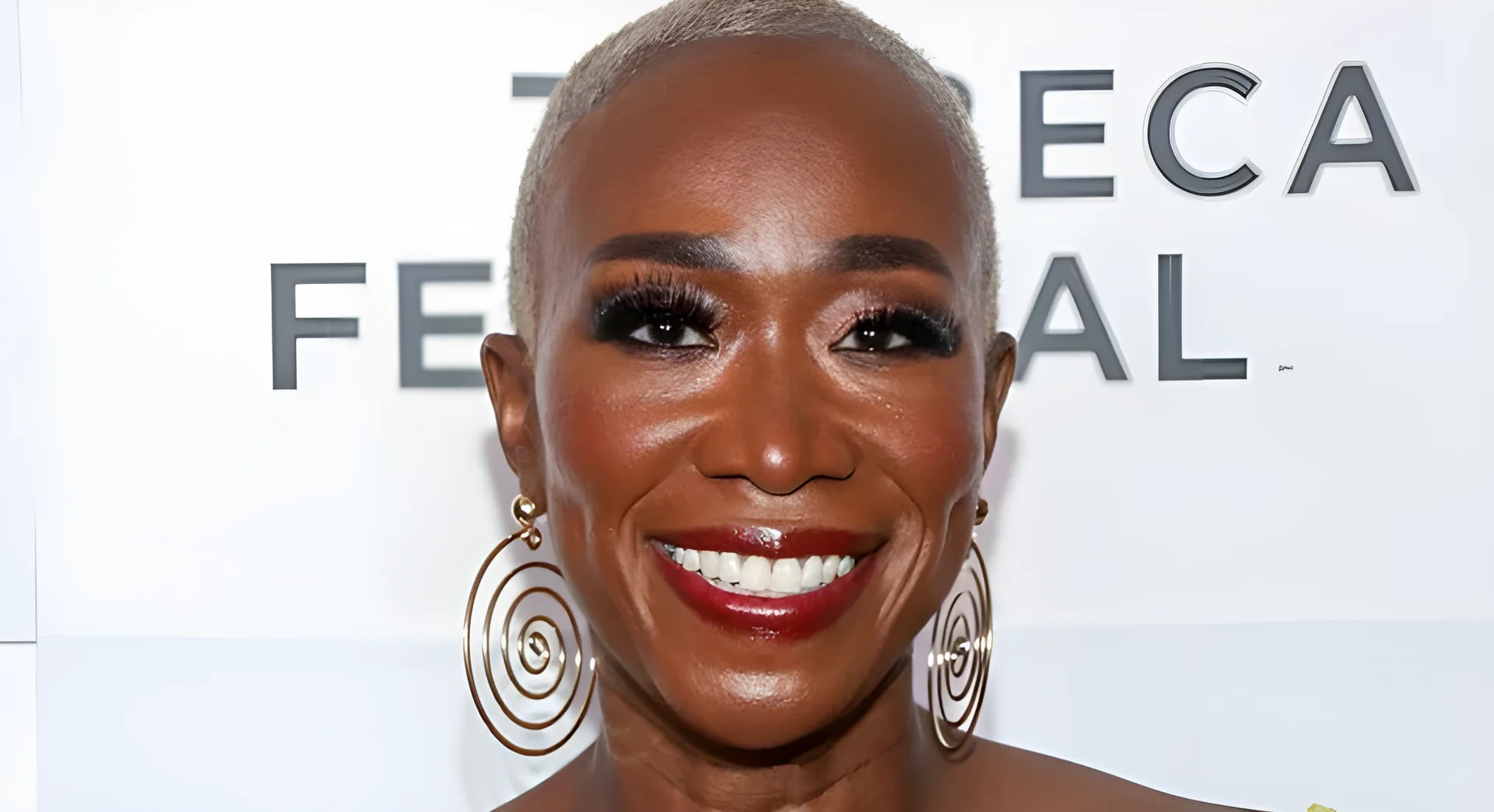
Joy Reid, a former MSNBC host and prominent progressive commentator, has publicly criticized the United States and its political landscape, particularly under the Trump administration. During a recent appearance, Reid compared the U.S. unfavorably to Iran, suggesting that the Islamic Republic might be a preferable alternative to the current state of affairs in America. This sentiment has sparked debate among her audience and critics alike.
Comparing Regimes: U.S. vs. Iran
Reid’s comments centered around the idea of moral equivalency between the United States and Iran, a comparison that many have found controversial. She claimed that the U.S. has a ‘regime’ with secret police, despite the absence of such a formal structure in the U.S. government. Reid also criticized the Trump administration for its policies on women’s rights, including restrictions on abortion, which she claimed mirrored the oppressive conditions in Iran.
According to Reid, the U.S. is ‘oppressing women’ by limiting their access to certain positions in science and technology. She suggested that the U.S. is not as progressive in these areas as Iran, where women are supposedly achieving high rates in STEM fields. However, this claim is misleading, as countries like Iceland and the Netherlands have higher percentages of women in STEM careers than Iran.
Women’s Rights in the U.S. and Iran
Reid’s comments on women’s rights have drawn criticism for their inaccuracies. She claimed that the U.S. is ‘kicking women out of the military’ and that diversity, equity, and inclusion (DEI) policies are preventing women from being hired for high positions in the sciences. However, this narrative is not entirely accurate. The U.S. military has been making adjustments to accommodate women in combat roles, which is seen as a positive development for national security and military effectiveness.
Reid also suggested that the U.S. is oppressing women ‘for Christianity,’ while Iran does so ‘for Islam.’ This comparison has been widely criticized as it ignores the complex realities of religious influence in both countries. In the U.S., restrictions on abortion are not uniformly applied across all states, and the issue is often framed within the context of religious freedom rather than systematic oppression.
Reid’s View of Iran and Its Implications
Despite her criticisms of the U.S., Reid has expressed a form of admiration for Iran, particularly in terms of women’s participation in STEM fields. However, this view is based on a misrepresentation of the actual situation in Iran, where women face significant legal and social restrictions. For example, women in Iran can be imprisoned or even executed for not wearing a hijab, a condition that is not present in the U.S.
Reid’s suggestion that Iran might be a better alternative for women has been met with skepticism. Critics argue that the Islamic Republic of Iran is a regime that enforces strict religious laws, which can be oppressive to women and minorities. The country has a history of human rights violations, including the persecution of women, journalists, and political dissidents.
Reid’s comments have sparked discussions about the role of media personalities in shaping public opinion. Her remarks highlight the importance of accurate information and the dangers of drawing unfounded comparisons between different political systems. While Reid’s criticisms of the U.S. may resonate with some of her audience, her portrayal of Iran as a more progressive alternative is seen as misleading.
Experts have pointed out that the situation for women in Iran is far from ideal. According to the United Nations, women in Iran face significant legal and social barriers, including restrictions on their freedom of movement and access to education. These conditions are in stark contrast to the relative freedoms enjoyed by women in the U.S.
Reid’s comments have also raised questions about the broader implications of her views. If she were to take her suggestions seriously and consider moving to Iran, she would likely encounter a very different reality than the one she described. The Islamic Republic of Iran is a country with a complex political landscape, where the government exercises strict control over its citizens.
As the debate over women’s rights and political systems continues, Reid’s comments serve as a reminder of the importance of accurate information and the need for critical thinking. Her views, while controversial, have sparked important discussions about the state of women’s rights in both the U.S. and Iran.






Comments
No comments yet
Be the first to share your thoughts