

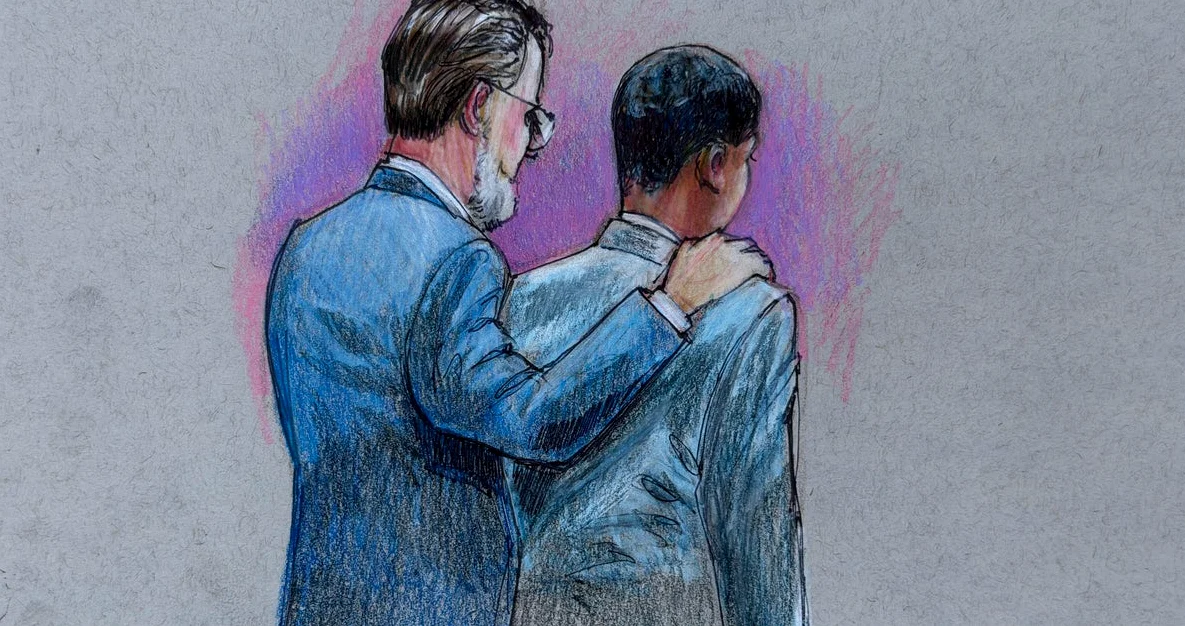
Karmelo Anthony. 18, was sentenced to 35 years in prison in April 2025 for the fatal stabbing of Austin Metcalf, a 17-year-old student, during a high school track event in Frisco, Texas. Anthony’s defense has filed an appeal. With his attorney. Mike Howard, stating the case involves several legal issues suitable for review by appellate courts; the appeal does not automatically trigger a new trial but marks the first step in a potentially lengthy legal process.
Prosecution Defends Verdict and Jury Selection
Collin County First Assistant District Attorney Bill Wirskye defended the jury’s decision and its composition, emphasizing that the trial was “never about race” or “self-defense.” Wirskye said the case was straightforward and that justice had been served with the 35-year sentence. “We’re just gratified that 12 local citizens saved our way,” he said. He also addressed concerns over the lack of Black jurors, noting the jury and alternates represented a “diverse cross-section” of Collin County.
Greg Willis, Collin County District Attorney, added that the prosecution had to work through external attempts by online influencers to manipulate evidence with fabricated photos and videos. “The jury got to see what was what was noise and what the person, what that person actually saw or heard that day at the track meet,” Willis said.
Anthony’s Appeal Focused on Legal Errors
The defense filed a formal notice of appeal with the court, according to Univision. The notice does not vacate the conviction or guarantee a retrial. Instead, it allows the appellate court to assess whether any legal errors occurred during the trial. Possible grounds for appeal include alleged missteps in jury selection, evidence handling, jury instructions, or sentencing. If the appellate court finds such errors significant enough to affect the verdict, it may order a new trial or reduce the sentence.
Anthony’s defense team argued during the trial that he acted in self-defense, a claim the jury rejected. The prosecution maintained that lethal force was not justified. The jury also rejected the defense’s request to apply the legal doctrine of “sudden passion,” which could have led to a lesser charge or sentence.
Public and Social Media Influence
During the trial, hundreds of people gathered outside the courthouse, and social media played a significant role in shaping public opinion. The case gained widespread attention online, with many users attempting to sway the outcome. Prosecutors acknowledged having to filter out misinformation and fabricated evidence, including manipulated videos and images. The influence of social media and public sentiment added a layer of complexity to an already high-profile case.
Anthony’s appeal will now move into a more technical legal phase, where the focus shifts from emotional testimony and courtroom drama to procedural and legal arguments. The appellate court will determine whether the trial was conducted fairly and in accordance with the law.






Comments
No comments yet
Be the first to share your thoughts