

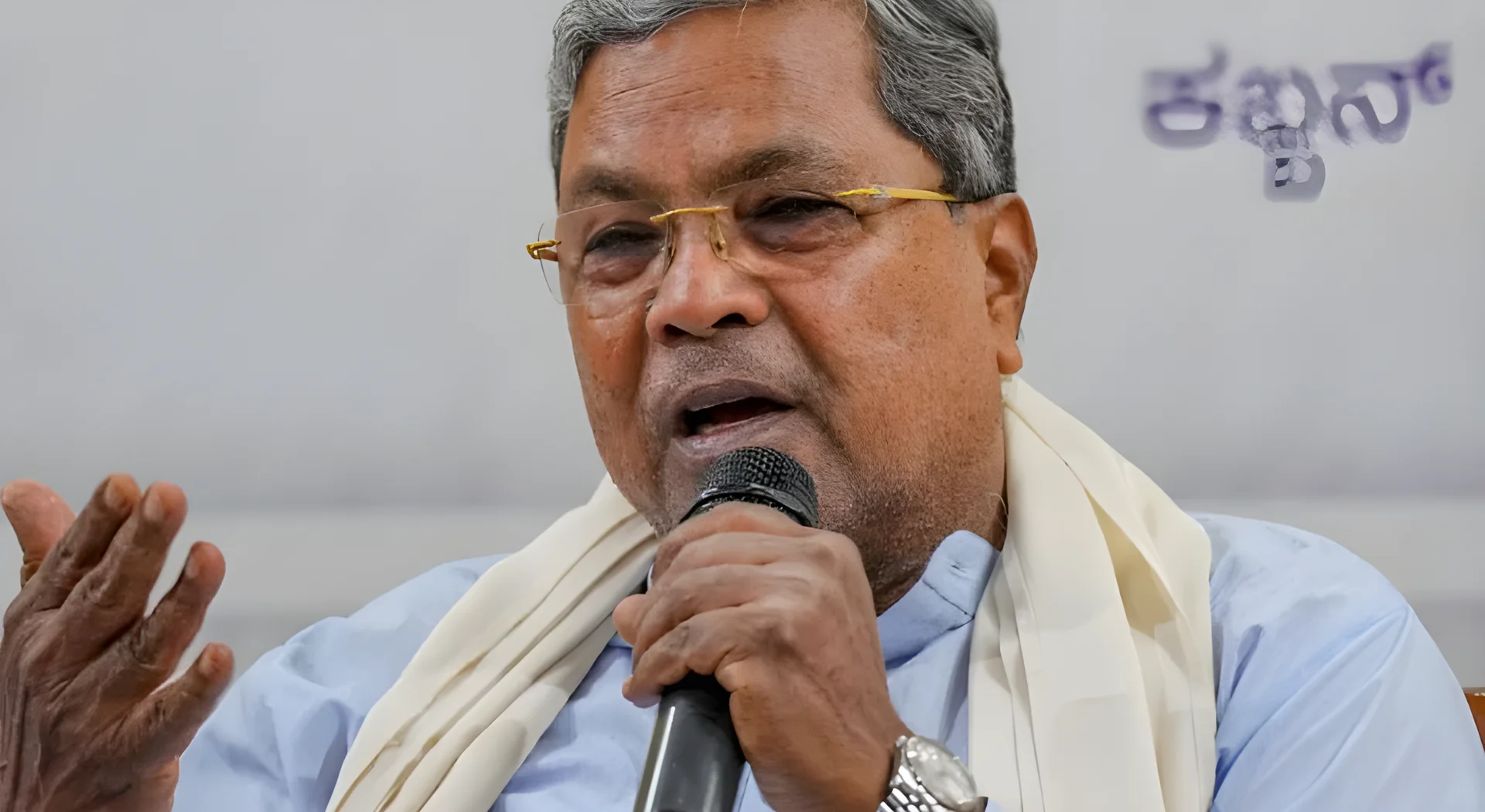
Karnataka Chief Minister Siddaramaiah revealed a Rs 4.48 lakh crore budget for the financial year 2026-27, prioritizing artificial intelligence, infrastructure development, and environmental sustainability. The budget, presented at the state legislature in Bengaluru, aims to position the state as a hub for emerging technologies while addressing revenue losses caused by changes in the goods and services tax (GST) structure.
Revenue Impact from GST Rationalization
Siddaramaiah highlighted that the state’s finances have been affected by the GST rate rationalization implemented in the previous fiscal year. He noted that average monthly GST revenue growth, after adjusting for refunds, dropped to approximately 4 per cent in 2025-26, down from around 10 per cent previously. This change is projected to reduce the state’s GST collections by Rs 10,000 crore in the current financial year and Rs 15,000 crore in 2026-27.
The budget outlines a strategic approach to mitigate these losses, with a focus on capitalizing on advancements in artificial intelligence and other emerging technologies. A key initiative involves the establishment of an Artificial Intelligence Centre of Excellence in Bengaluru, in collaboration with the Institute of Bioinformatics and Applied Biotechnology, the Centre for Cellular and Molecular Platforms, and Nasscom, at a cost of Rs 16 crore.
Infrastructure Development and Railway Expansion
Infrastructure development remains a cornerstone of the budget, with significant allocations for railway connectivity. The state government has proposed developing nine new rail routes in a 50:50 cost-sharing agreement with the central government. To date, the state has already spent Rs 2,950 crore on land acquisition and Rs 2,682 crore on construction for these projects. An additional Rs 600 crore has been allocated for the current financial year to continue the work.
The proposed routes include Ginigera-Raichur, Tumakuru-Rayadurg, Chikkamagaluru-Belur, Kudchi-Bagalkot, Gadag-Wadi, Tumakuru-Davanagere, Belur-Hassan, Shivamogga-Shikaripura-Ranibennur, and Dharwad-Kittur-Belagavi. These projects are expected to enhance regional connectivity and support economic growth across the state.
Industry experts have welcomed the emphasis on infrastructure, noting that it could bolster Bengaluru’s expanding housing market. Ramani Sastri, Chairman and MD of Sterling Developers, stated, ‘The Karnataka State Budget reflects a continued emphasis on infrastructure development as a key driver of urban growth. The allocation for urban development, along with proposals such as a second international airport for Bengaluru and investments to strengthen domestic aviation infrastructure, are important steps toward improving regional connectivity and supporting the city’s long-term economic expansion.’
Social Sector Initiatives and Environmental Projects
The budget also includes social sector initiatives aimed at improving educational opportunities for minority communities. The government plans to establish 25 new post-matric hostels, each with a capacity of 150 students, in districts where demand is high. Additionally, the intake capacity at 25 existing hostels will be increased by 50 seats each.
Environmental projects are also a key focus, with a Rs 5 crore allocation for a leopard rehabilitation centre at Bannerghatta Biological Park. This facility will house leopards captured from residential areas around Bengaluru. The state has also committed Rs 5,000 crore for disaster management and flood mitigation projects in Bengaluru over five years under the Karnataka Water Security and Resilience Programme, a World Bank-supported initiative aimed at strengthening urban water systems and climate resilience.
Sastri further emphasized the importance of large-scale mobility projects in reducing congestion and improving connectivity between key commercial and residential zones. ‘The approval of the Rs 40,000 crore tunnel road network connecting major corridors across Bengaluru is another significant development. Large-scale mobility projects can unlock new opportunities for planned housing development and make emerging micro-markets more accessible to homebuyers,’ he added.
However, Sastri noted that sustained investments in urban infrastructure and stronger planning frameworks are essential to ensure housing supply keeps pace with the city’s rapid growth. The government has also implemented digital counseling for the transfer of excise department officials to improve transparency and efficiency in administrative processes.





Comments
No comments yet
Be the first to share your thoughts