

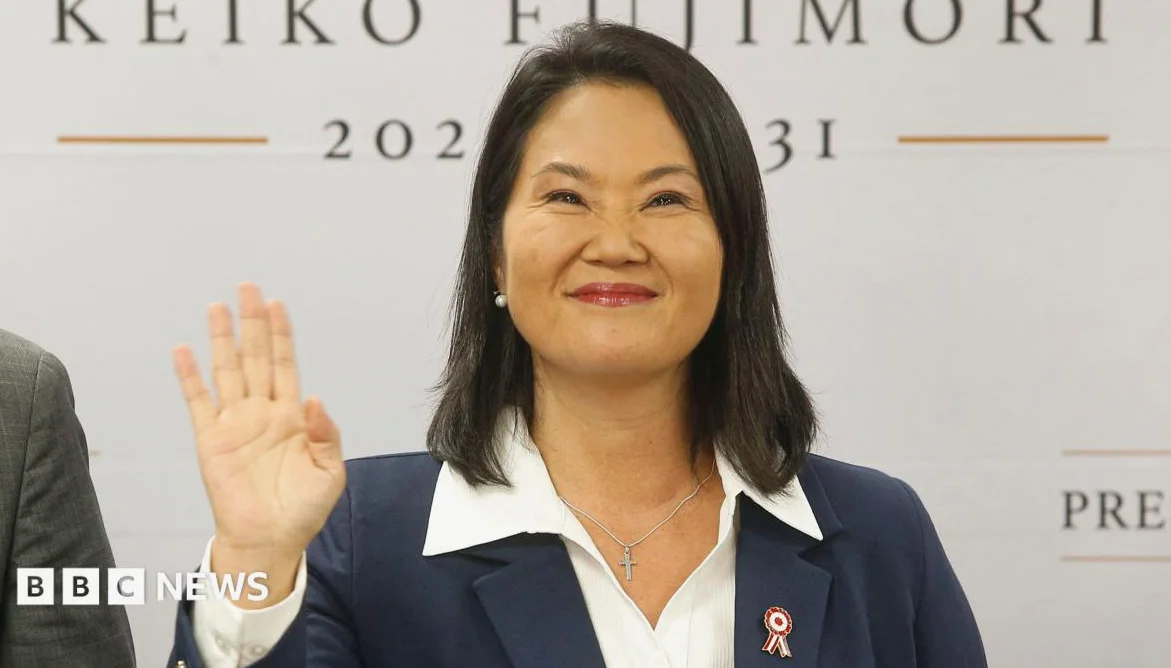
Keiko Fujimori, daughter of Peru’s controversial former president Alberto Fujimori, has been declared the winner of the country’s presidential election. According to official tallies released on Friday, Fujimori received 9,223,000 votes to 9,173,000 for her leftist rival, Roberto Sánchez. The final count confirmed a razor-thin margin of victory,50.14% for Fujimori and 49.86% for Sánchez, according to Todo Alicante.
Political Legacy and Electoral Challenges
Fujimori’s win marks a return to the presidency for a family long associated with Peru’s political field. Her father, Alberto Fujimori, served from 1990 to 2000 before being imprisoned for corruption and human rights abuses. Despite her own legal troubles,including nearly two years of pre-trial detention for alleged corruption between 2018 and 2022—Fujimori has retained a strong political base, particularly in urban areas and among overseas voters, according to CNBC.
The election process, however, was marked by delays and controversy. The final vote count took more than three weeks, with claims of irregularities and fraud from Sánchez, who received strong support from rural and Indigenous communities. Sánchez, seen as a political heir to the late leftist President Pedro Castillo, has not provided evidence for his allegations but has criticized changes in election procedures that loosened requirements for digitizing overseas votes, according to Al Jazeera.
Polarization and Regional Trends
Fujimori’s victory follows a pattern of political instability in Peru, which has seen the ousting of multiple leaders in the past decade. When she assumes power on July 28, she will be the 10th president since 2016, succeeding interim President José Balcazar, who took office in February after a series of presidential dismissals over corruption allegations. Fujimori’s win also reflects a broader rightward shift in Latin America, with leaders like Argentina’s Javier Milei and El Salvador’s Nayib Bukele offering their congratulations, according to CNBC.
The U.S. Secretary of State Marco Rubio also congratulated Fujimori, stating the Trump administration looks forward to deepening cooperation on security, investment, and trade. Sánchez, meanwhile, has not accepted the outcome and has filed a complaint with the Inter-American Commission on Human Rights, according to CNBC.
Future Governance and Public Expectations
Upon her victory, Fujimori expressed a commitment to unity and dialogue, writing on social media that “each day of this transition process is an opportunity to listen, engage in dialogue, and arrive prepared at the start of the new government.” She has promised to crack down on crime and stabilize the country’s struggling economy, a platform that resonated with many urban voters and overseas Peruvians, according to Al Jazeera.
Fujimori will be the first woman to serve as Peru’s president, a position she previously held briefly as first lady during her parents’ troubled divorce. Her administration will face significant challenges, including political polarization and ongoing questions about the legitimacy of her victory. Election monitors have so far found no evidence of fraud or irregularities, according to Al Jazeera.




Comments
No comments yet
Be the first to share your thoughts